
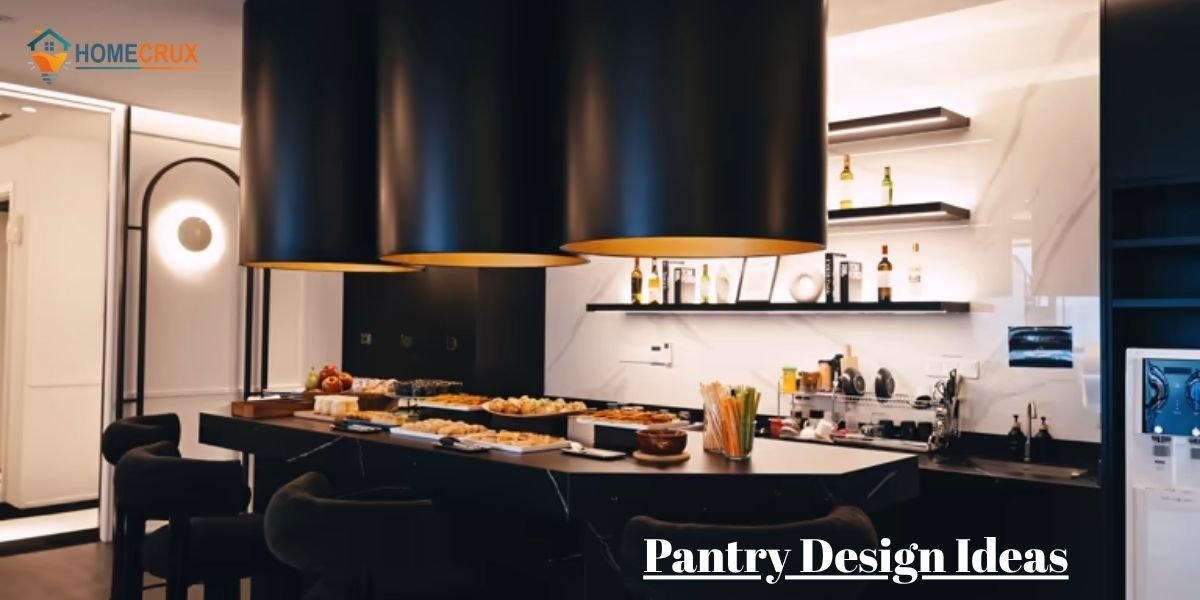
The kitchen is the high-traffic engine of the home where meals are prepared multiple times a day. Because of this constant activity, a stylish and well-organized pantry system is mandatory to help you manage groceries, heavy cookware, small appliances, and specialized ingredients. Without a dedicated storage strategy, even the most expensive kitchen can become a source of daily frustration.
A messy and unorganized kitchen is a logistical nightmare. When you are in the middle of cooking a complex meal, there is no time to hunt for misplaced spices or dig through deep cabinets for a specific dish. I am covering 14 best kitchen pantry design ideas that are practical, highly functional, and architecturally designed to elevate your kitchen look.
Based on different kitchen styles and sizes, this guide includes both walk-in and built-in pantry systems so you can find a suitable option for your specific storage needs. Let’s dive into these professional systems to help you plan and design a superior kitchen storage environment.
Walk-In vs Built-In Pantry Systems
Before selecting a specific design, you must determine which structural system fits your floor plan. These two options serve different lifestyles and architectural constraints in modern U.S. homes.
What is a Walk-In Pantry? (Full Space Storage System)
A walk-in pantry is a dedicated architectural room used exclusively for food and kitchen supply management. In modern residential layouts, it is usually positioned as a transition space between the garage and the kitchen or tucked behind a primary cabinet wall.
This system is ideal for large family homes where bulk shopping is the norm. It provides enough volume to store secondary appliances, large stockpots, and months of dry goods. Professional designers typically categorize these by size:
- Small Walk-ins: 5×5 ft or 6×6 ft.
- Medium Walk-ins: 6×8 ft or 8×10 ft.
- Luxury Sculleries: 10×10 ft and larger, often featuring sinks and wine cooling.
The core logic of a walk-in system is workflow. It allows the cook to step out of the high-heat environment of the kitchen to gather everything needed in one organized trip.
What is a Built-In Pantry? (Integrated Cabinet System)
A built-in pantry is integrated directly into the kitchen’s cabinetry run. It does not require additional square footage beyond the kitchen footprint, making it the preferred choice for apartments, condos, and minimalist open-concept homes.
Common forms include tall larder cabinets, vertical pull-out units, and corner “magic” cabinets. While they offer less total volume than a walk-in, they prioritize visual cleanliness and immediate proximity to the stove or prep island.
Walk-In Pantry Design Ideas: Real U.S. Home Systems
1. U-Shaped Walk-In Pantry with Zoned Storage
A U-shaped layout is the gold standard for large pantry ideas. It utilizes three walls of shelving to ensure that every item is visible the moment you walk through the door. Professional designers recommend a 36-inch minimum walkway width to allow for comfortable movement and door swing clearance.
For material, professionals use 3/4-inch furniture-grade plywood with a melamine or wood veneer finish to prevent shelf sagging under the weight of canned goods. The pricing for a custom U-shaped setup typically ranges from $3,500 to $7,000, depending on the cabinetry finish.
Key technical features include LED under-shelf lighting to eliminate shadows in the corners and heavy-duty drawers at the base for heavy goods like flour sacks. Designers recommend a 12-inch depth for eye-level shelves to prevent items from getting lost in the back.
2. Hidden Door Walk-In Pantry (Cabinet Wall Integration)
This is a premium custom pantry design where the entrance is completely concealed within a wall of kitchen cabinets. To the casual observer, it looks like a standard tall cabinet, but it opens to reveal a massive storage room.
This design requires precision millwork and high-quality Soss invisible hinges or heavy-duty pivot systems that can handle a door weight of up to 200 lbs. Because of the specialized labor and hardware, this entrance alone can cost $2,500 to $5,000 before the interior shelving is even built.
The interior often features MDF shelving with a high-pressure laminate (HPL) finish for easy cleaning. It is a favorite for homeowners who want a minimalist kitchen look without sacrificing the massive storage capacity of a walk-in.
3. Butlers Walk-In Pantry with Prep Station
The “Butler’s Pantry” is a hybrid space that functions as both storage and a secondary prep kitchen. It reduces the mess in the main kitchen by providing a hidden area for coffee preparation, blending, or plating dishes during a dinner party.
A functional prep pantry includes:
- Quartz or granite countertops at a standard 36-inch height for heat and scratch resistance.
- 20-amp dedicated circuits for high-draw appliances like espresso machines or air fryers.
- Under-mount stainless steel sinks for quick rinsing of prep tools.
- Pricing: Due to plumbing and electrical needs, these start at $10,000 and can go up to $25,000.
4. Industrial Open Shelving Walk-In Pantry
For a modern pantry design that feels more organic, many renovators are opting for industrial open shelving. This style uses matte black powder-coated steel framing paired with solid natural wood shelves like white oak or walnut, usually 1.5 to 2 inches thick.
This layout provides maximum airflow, which is critical for storing produce like onions or potatoes. The material cost for high-quality wood shelving is roughly $150 to $300 per linear foot. It is an aesthetic-focused choice that works best when items are stored in coordinated glass jars to maintain a clean look.
5. Bulk-Storage Walk-In Pantry for Large Families
Designed specifically for households that prioritize efficiency and bulk buying, this layout maximizes every vertical inch. It uses extra-deep lower shelving (18 to 24 inches) to accommodate oversized boxes from warehouse clubs.
To keep this space functional, designers integrate vertical dividers for baking sheets and reinforced flooring for a secondary upright freezer. The shelving is typically made of wire mesh or ventilated wood to support heavy weights without trapping moisture. A full-scale bulk pantry retrofit usually averages $4,000 to $8,000.
6. Corner Walk-In Pantry Optimization Layout
In kitchens where space is irregular, a corner walk-in is a clever solution. It uses an L-shaped shelving configuration that wraps around the corner. To prevent the deep corner from becoming a “dead zone,” professionals install curved corner shelves or Lazy Susans.
This design often uses frosted glass bifold doors to save space in the main kitchen walkway. By using adjustable track shelving, you can customize heights as your storage needs change. This is a more budget-friendly walk-in option, often costing between $1,500 and $3,500.
7. Glass Door Display Walk-In Pantry
This design treats the kitchen pantry as a visual feature. Using fluted or reeded glass doors, the pantry remains semi-visible, adding depth to the kitchen without showing every unorganized box.
Inside, motion-activated LED tape lighting (3000K warm white) and perfectly coordinated storage containers create a boutique-like environment. The interior walls are often finished with tile backsplashes or decorative wallpaper to enhance the display. This high-end approach is a staple in modern pantries, usually adding a 20% premium to standard cabinetry costs.
Built-In Pantry Design Ideas: Modern Kitchen Integration
Built-in systems represent the pinnacle of space-saving engineering, designed to disappear into the kitchen architecture while offering maximum utility. Unlike walk-ins, these designs must work within the standard 24-inch depth of traditional cabinetry. This requires specialized hardware and intelligent internal layouts to ensure that items stored in the back are just as accessible as those at the front.
8. Floor-to-Ceiling Pantry Cabinets
The dedicated pantry tower is a cornerstone of American suburban kitchen design. Standing 8 to 10 feet tall, these units maximize vertical volume by utilizing the space all the way to the ceiling.
The most effective versions move away from fixed shelving in favor of full-extension roll-out trays (ROTs). Each tray is typically constructed from 5/8-inch solid wood dovetail boxes or high-density furniture board. These drawers are mounted on undermount soft-close slides capable of holding 100 lbs per drawer.
This configuration allows you to pull the entire contents of the shelf out into the light, eliminating the need to dig through dark corners. A standard 36-inch wide floor-to-ceiling unit in a shaker or flat-panel style generally costs between $1,500 and $3,500, depending on whether you choose a paint-grade finish or a high-end wood species like walnut.
9. Pull-Out Vertical Pantry Towers
Ideal for compact urban kitchens or as a secondary storage unit next to the refrigerator, these slim units, ranging from 12 to 18 inches wide, act as a single, massive vertical drawer. When pulled, the entire internal rack glides out on heavy-duty bottom and top-mounted tracks.
The frames are usually constructed from powder-coated steel or chrome-plated wire with adjustable baskets. This design is highly functional because it provides access from both the left and right sides simultaneously.
Professional-grade hardware from brands like Hafele or Kesseböhmer is often used here. These systems are prized for their ergonomic efficiency, though the specialized mechanical hardware alone can add $800 to $1,500 to the cost of a single cabinet.
10. Appliance Garage Pantry System
A dedicated garage within your built-in cabinetry is designed to keep the primary kitchen counters completely clutter-free. This system stores high-use items like blenders, stand mixers, and espresso machines behind a specialized door.
Common door styles include:
- Tambour Doors: These roll up into the top of the cabinet, requiring no clearance in front.
- Pocket Doors: These open and then slide back into the sides of the cabinet, keeping the workspace open and accessible.
- Flip-up Doors: These use hydraulic hinges to lift upward, staying out of the way during use.
The interior base is often a reinforced pull-out shelf made of heat-resistant laminate or quartz, allowing you to operate the appliance without moving it. Including dedicated GFCI outlets at the back of the garage is a strict requirement for safety. Adding a custom appliance garage typically adds $1,000 to $2,000 to a cabinetry quote.
11. Corner Magic Cabinet Pantry System
Blind corners are the most difficult areas to organize in a built-in kitchen. The Corner Magic Cabinet often called a LeMans or Cloud pull-out, uses a sophisticated multi-basket system that swings entirely out of the cabinet when the door is opened.
The shelves are usually finished with anti-slip coatings and chrome railings to prevent items from falling into the cabinet base. These units are perfect for storing bulky dry goods or heavy sets of pots and pans.
While it is one of the most expensive hardware upgrades, typically costing $900 to $1,600 for the mechanism and professional installation, it transforms a dead corner into roughly 15 to 20 square feet of easily accessible pantry space.
12. Seamless Integrated Pantry Wall
In pantry modern design, the invisible pantry wall is a major trend for open-concept living. The storage is hidden behind a series of large floor-to-ceiling panels that match the surrounding kitchen or living room cabinetry exactly.
This setup usually utilizes handle-less push-to-open technology or sleek integrated finger pulls known as J-channels. Inside, the shelving is often a contrasting luxury material, such as dark charcoal melamine, natural birch, or rift-sawn oak.
This system provides a massive amount of storage, often equivalent to a small walk-in, without breaking the visual flow of the home. For a full 8-foot wide integrated wall, homeowners should budget between $6,000 and $15,000.
13. Narrow Gap Pantry Between Appliances
Often used to reclaim the 6 to 12 inches of filler space between a refrigerator and a wall or between two major appliances, these narrow pull-outs are a masterpiece of small-space engineering.
Structure and features:
- Stainless steel rails to prevent glass spice jars from slipping.
- Clear acrylic sides on shelves to maintain visibility.
- Tiered shelving designed specifically for oils, vinegars, and condiments.
- Pricing: These are often custom-built, adding $500 to $900 to the cabinetry package.
14. Glass-Front Built-In Pantry Display Cabinets
For homeowners who prioritize a curated, high-end aesthetic, glass-front built-ins use tempered safety glass, and interior recessed LED puck lights or tape lights.
This design is intended for visual storage, such as artisanal pastas, coordinated canisters, and heirloom serving pieces. The interior walls of these cabinets are often finished with a decorative wood back or a mirrored surface to enhance the light.
To maintain functionality, these are often placed at the end of a cabinetry run to act as a transition piece between the kitchen and dining area. This high-end approach usually adds a 25% premium to the cost of a standard solid-door pantry unit.
Material and Functional Design Principles
Regardless of the layout, the longevity of a custom pantry cabinet depends on high-performance materials and technical specifications.
Structural Materials:
- Furniture-Grade Plywood: Offers the best screw-holding power and resistance to sagging over long spans.
- MDF with Wood Veneer: Provides a perfectly smooth surface for high-gloss or matte paint finishes, common in modern pantries.
- Melamine: The most cost-effective and easiest to clean, as it is resistant to oil and food stains.
Performance Features:
- Soft-Close Hinges: Essential for preventing heavy pantry doors from slamming and shifting the contents of the shelves.
- Adjustable Shelf Pins: Using 5mm metal shelf pins allows the homeowner to reconfigure the vertical spacing as their grocery needs change over time.
- Integrated Lighting: Professional designs use 3000K to 3500K LED strips with a Color Rendering Index (CRI) of 90+ so that food labels are easy to read.
Large vs. Small Pantry Design Strategy
Large Pantry Ideas (Maximize Volume)
In a large pantry, the design challenge is managing depth. Use a rolling library ladder for 10-foot ceilings and ensure there is a landing zone, which is a small section of counter space for unbagging groceries. Adding a secondary prep sink or a dedicated recycling center is a highly recommended upgrade for large-scale walk-ins.
Small Pantry Ideas (Maximize Efficiency)
In a pantry closet, focus on the door and the corners. Use door-mounted spice racks and tiered shelf risers to create a stadium seating effect. For very small spaces, shallow 10-inch shelves are actually better than deep shelves because they force organization and prevent items from being forgotten at the back.
Common Pantry Design Mistakes to Avoid
- Fixed Shelving Heights: Many homeowners regret installing fixed shelves. Always opt for adjustable tracks.
- Ignoring Ventilation: Enclosed walk-in pantries can become humid or trap odors. Ensure there is a 1-inch gap at the bottom of the door or a small passive wall vent.
- Under-specifying Hardware: Using standard drawer slides for pantry drawers is a mistake. Heavy-duty 100lb or 150lb rated slides are necessary for stacks of canned goods.
- Single Light Source: A single overhead bulb creates shadows. Always aim for perimeter lighting or lights that shine directly onto the shelf faces.
FAQs
What is the best pantry design for small kitchens?
The pull-out vertical tower and over-the-door storage systems are the most efficient, offering total accessibility in a footprint as small as 12 inches wide.
How deep should pantry shelves be?
Standard eye-level shelves should be 12 to 14 inches deep. Lower drawers for appliances or bulk bins can be 20 to 24 inches deep.
Is a walk-in pantry better than a built-in pantry?
A walk-in pantry offers superior volume and a hidden prep area, but it requires significant square footage. A built-in pantry is more convenient for high-frequency items and maintains a sleek, integrated look in the kitchen.
What are the most durable materials for pantry shelves?
3/4-inch plywood with a hardwood edge band is the gold standard for strength. For a more budget-friendly but durable option, high-density melamine is excellent for its scratch and stain resistance.
What colors work best for modern pantries?
White and light wood tones remain the most popular because they make it easiest to see the items on the shelves. However, navy and forest green are trending for luxury built-in units.
How much does a custom pantry cost in the U.S.?
A mid-range built-in retrofit costs $2,000 to $8,000, while a high-end walk-in scullery with appliances can reach $10,000 to $25,000+.