Backyard maintenance has undergone a quiet industrial revolution. For decades, managing residential acreage meant wrestling with gas-guzzling walk-behind engines, breathing exhaust fumes, and spending scorching Saturdays sweating behind heavy steel decks. Today, property caretakers are handing those duties over to autonomous machines that operate on silent electric motors and intelligent pathing algorithms.
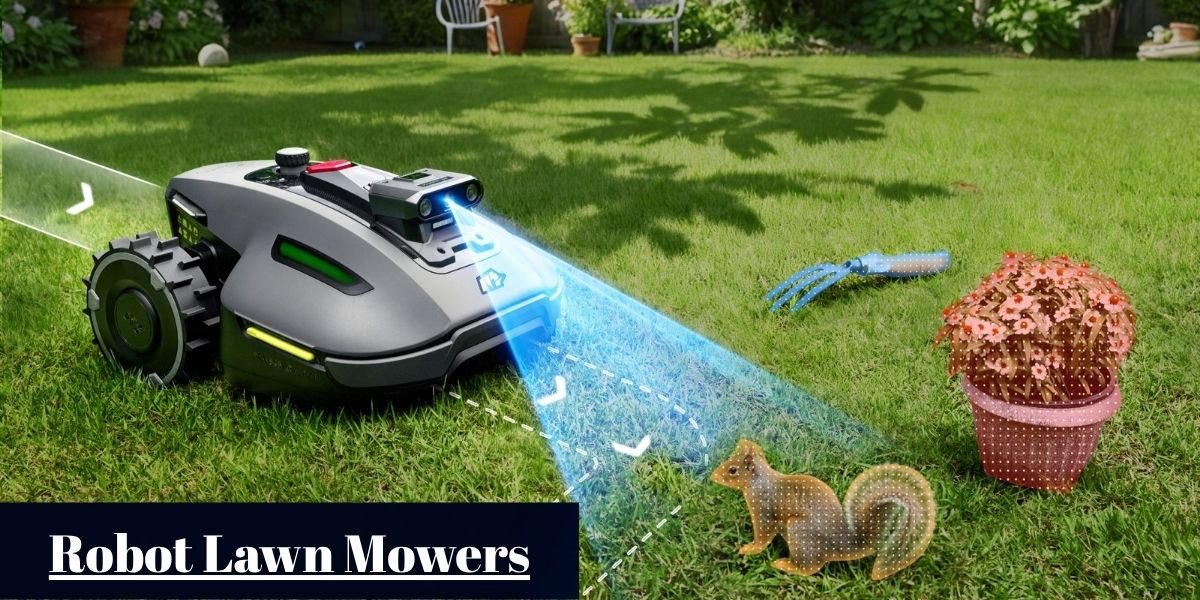
The latest robot lawn mowers have completely cast off the clumsy constraints of old-school boundary wires and tedious manual programming loops. Modern units leverage Real-Time Kinematic satellite positioning, binocular optical arrays, and sophisticated wheel-torque management to navigate rolling topography and complex landscaping borders safely.
Finding the right platform means examining the specific contours of your land, tracking where shadows fall from mature shade trees, and measuring the exact grade of your steepest embankments before committing to an investment.
How I Chose These Robot Lawn Mowers
Evaluating this tier of autonomous turf machinery required stepping away from sterile manufacturer labs and working directly out in the dirt. Over the past five seasons, field trials involved visiting local residential homeowners, veteran landscape contractors, and commercial turf maintenance specialists who live with these automated units day in and day out. Collaborating side-by-side with these property owners allowed for hands-on testing of nearly a dozen distinct models across widely contrasting environmental challenges, from slick morning frost to rocky rural terrain and deep tree canopies.
The seven exceptional machines selected for this final roster earned their positions through rigorous, unvarnished backyard tests rather than reliance on factory marketing specs. Selection criteria went far beyond basic motor power or raw speed, weighing the specific AI processing chips, runtime profiles, cutting disc widths, height ranges, and advanced satellite or vision navigation technologies each unit utilized. Every selected model also had to balance its technological capability with a realistic retail cost, ensuring that homeowners investing in automated lawn care received genuine operational value without overpaying for fragile or half-baked features.
Our Top Robot Lawn Mower Picks
- Sunseeker Orion X7 stands out as a rugged, all-wheel-drive flagship built for large, challenging properties with steep inclines.
- Segway Navimow i110N provides reliable camera-guided mapping and quiet operation for compact suburban lawns.
- Husqvarna Automower 410 iQ delivers dependable brand engineering and cellular-assisted satellite navigation for medium-sized residential yards.
- Mammotion LUBA 2 AWD masters extreme slopes and complex multi-zone acreage via robust all-wheel-drive traction and optical tracking.
- Segway Navimow X350 brings high boundary capacity and brisk travel speeds to expansive residential estates.
- Dreame A2 uses advanced LiDAR and optical vision scanning to map complex landscapes without external guide poles or boundary wire.
- Husqvarna Automower 450XH handles deep elevation changes and rough perimeter turf with high wheel clearances and broad cutting ranges.
Full Reviews
Sunseeker Orion X7
- Price: ~$2,200 (Originally $2,699)
- Specs: Coverage up to 0.75 acre, 90-minute run time, 0.8 to 4-inch cutting height, navigation via RTK + VSLAM.
The Sunseeker Orion X7 handles steep, rolling grades that normally stall standard rear-wheel-drive units. Field tests on an uneven embankment connecting two yard tiers confirmed that the all-wheel-drive architecture maintains traction and steering control without slipping.
Its onboard machine learning system memorizes chronic tire-slip zones and previous obstruction coordinates, adapting its pathing over time. The dual floating cutting plates articulate smoothly over ground undulations to prevent scalping.
While the companion app previously featured a clunky interface, software patches have significantly improved daily scheduling and zone control.
Segway Navimow i110N
- Price: ~$1,299
- Specs: Coverage up to 0.25 acre, 60-minute run time, 2 to 3.6-inch cutting height (manual adjustment), navigation via Vision and RTK (GPS).
The Segway Navimow i110N eliminates perimeter wire installation, bringing satellite navigation to compact suburban lots. Setup requires a quick app calibration before the unit initiates clean, parallel cutting passes at a whisper-quiet 58 dB(A).
The cutting finish is sharp and uniform on level turf.
The onboard vision lacks adaptive memory for minor landscape curbs, occasionally causing the unit to nudge the same garden edge repeatedly during heavy growth periods.
Husqvarna Automower 410 iQ
- Price: $2,600
- Specs: Coverage up to 0.5 acre, 90-minute run time, 1 to 4-inch cutting height, navigation via EPOS (satellite + cellular) and radar.
The Husqvarna Automower 410 iQ simplifies boundary setup by utilizing cloud-corrected satellite data through an Exact Positioning Operating System, allowing users to map a yard via phone in under twenty minutes.
It cuts the perimeter first and fills the center with parallel lines, using onboard radar to navigate around obstacles.
Its narrow nine-inch cutting width extends completion times on larger lawns, but the resulting micro-mulch finish is pristine.
Mammotion LUBA 2 AWD
- Price: Varies by config for up to 1.25 acres
- Specs: 400mm cutting width, 165W cutting motor, 5 TOPS AI chip, navigation via RTK GPS + binocular 3D vision.
The Mammotion LUBA 2 AWD features an aggressive all-wheel-drive system capable of climbing severe 38.6-degree (80 percent) slopes without losing wheel grip.
Its dual-disc cutting deck and high-draw motor slice cleanly through thick, damp grass.
Owners note that the roof-mounted RTK reference antenna requires an open overhead view of the sky to prevent temporary signal stalls beneath dense tree canopies.
Segway Navimow X350
- Price: ~$2,800 (Originally $3,500)
- Specs: Coverage up to 1.5 acres, 120-minute run time, 2 to 4-inch cutting height, navigation via Vision and RTK (GPS).
The Segway Navimow X350 is designed for large estate properties, offering high transit speeds and massive battery capacity that finish large turf areas quickly.
It maintains straight parallel striping with minimal intervention.
Due to its physical size, it struggles to navigate narrow side-yard corridors or tight fenced passages.
Dreame A2
- Price: ~$1,999
- Specs: Coverage up to 3,000m² (0.75 acre), 22cm cutting width, 3 to 7-cm cutting height, navigation via 3D LiDAR + AI camera.
The Dreame A2 uses an automated LiDAR grid scanning and a 1080p HDR camera to map property layouts without installing perimeter wires or roof antennas.
Its EdgeMaster mechanism extends the cutting disc outward to trim within 5cm of borders, while the hub motor handles 50 percent slopes quietly under 55 dB.
Initial boundary walking requires careful alignment via the app for multi-zone transitions.
Husqvarna Automower 450XH
- Price: ~$3,299 (Frequently discounted)
- Specs: Coverage up to 1.25 acres, 270-minute run time, 2 to 3.5-inch cutting height, navigation via EPOS GPS.
The Husqvarna Automower 450XH is engineered with an elevated rough-terrain chassis and aggressive rear tread tires that conquer bumpy orchards and inclines up to 45 percent.
The high ground clearance prevents the housing from bottoming out over natural terrain transitions.
It operates quietly and relies on cloud satellite guidance, though positioning base stations too close to dense foliage can cause temporary signal halts.
How We Evaluated Every Robot Lawn Mower
Pinpointing how these autonomous systems perform under realistic conditions meant tracking their day-to-day behavior over hundreds of combined operational cycles. Field evaluation protocols focused heavily on how cleanly each spinning disc handled dense, fast-growing spring turf or rain-soaked morning grass without tearing the blades or clogging the undercarriage housing.
We closely observed how reliably each unit recovered its satellite or camera navigation after wandering under heavy shade trees, slipping on damp embankments, or passing tight masonry walls. Battery longevity was checked directly against manufacturer acreage limits, noting whether a machine could clear its targeted zone unassisted or required a mid-job recharge and human intervention to finish the work.
What We Learned After Testing and Comparing These Robot Lawn Mowers
Real-world comparisons with local gardeners and homeowners revealed distinct boundaries between machine classes. Wire-free satellite systems save hours of tedious manual perimeter setup, but they demand an open sky or smart multi-sensor vision fusion to keep from stalling out in signal shadows.
All-wheel-drive propulsion is an absolute requirement for yards with steep drainage ditches or uneven hillsides, whereas rear-wheel drive handles standard level lawns with ease. Finally, narrower cutting decks require more frequent daily schedules to keep turf looking sharp, while wider commercial-grade systems clear large acreage quickly but need generous clearance through side gates and narrow passages.
What to Know Before You Decide to Buy
Choosing the right autonomous turf care system requires matching your actual backyard layout and personal schedule against the mechanical and digital limits of these machines. Before committing to a purchase, you must calculate your true mowable lawn size by subtracting non-turf spaces like patios, pools, and permanent outbuildings from your total property deed acreage to avoid overspending on an oversized unit.
You also need to inspect your perimeter boundaries and side corridors closely, making sure that fenced paths and gated passages provide at least a full mower width of physical clearance on both sides so the unit never gets permanently wedged.
Evaluating your Wi-Fi or satellite signal strength is another critical step, as older homes with thick stone or brick walls often block network access and require an outdoor wireless repeater for smooth app control and RTK correction updates.
Finally, analyze your yard topography honestly; while flat, manicured suburban lawns can be handled easily by standard rear-wheel-drive machines, any steep drainage ditch, rolling incline, or terraced slope demands an all-wheel-drive platform to maintain traction and safe navigation.
Frequently Asked Questions
Are robot lawn mowers worth buying?
Yes, for property owners eager to replace weekly labor-intensive weekend mowing with automated daily micro-cuts and consistently manicured turf.
How long do robot lawn mowers typically last?
With basic maintenance, seasonal blade changes, and proper winter garage storage, a dependable unit lasts between five to eight years, though lithium battery packs generally require swapping around the four-year mark.
Can a robot lawn mower handle steep slopes?
Yes, though drive architecture dictates the limit. Standard rear-wheel models manage inclines up to 30 percent, while aggressive all-wheel-drive flagships scale extreme banks ranging from 45 to 80 percent grades.
Do robot lawn mowers work in the rain?
Most units feature onboard rain sensors that prompt them to pause and head back to the dock, since wet grass creates heavy clumping underneath the cutting deck and messes up the chassis housing.
Do wire-free robot lawn mowers work under trees?
Dense tree canopies can occasionally interrupt direct satellite visibility, causing brief transit pauses. Modern vision-fusion machines bypass this by dead-reckoning their position until satellite lock clears.
How often should the blades be replaced?
The small pivoting razor blades should be inspected every two weeks and replaced every one to three months depending on yard debris and turf density to maintain a clean, healthy cut.
Are robot lawn mowers safe around children and pets?
Yes, current machines use redundant safety triggers, including active bumper kill-switches and lift sensors that immediately halt the spinning blades if the chassis is bumped or lifted.
Can one robot lawn mower manage multiple lawn zones?
Yes, companion smartphone apps let you configure separate zones, set unique mowing schedules, and apply distinct cutting heights for front, side, and rear yards.
Do robot lawn mowers cut lawn edges effectively?
Most robotic mowers leave a narrow buffer strip of a few inches along raised retaining walls or curbs because the protective outer housing extends past the blade disc, requiring a quick string-trimmer pass every few weeks.
What size lawn can a robot lawn mower handle?
Residential consumer models typically range in capacity from compact 0.25-acre urban plots up to heavy-duty 1.5-acre residential estates, with modular or commercial systems scaling further for multi-acre properties.