
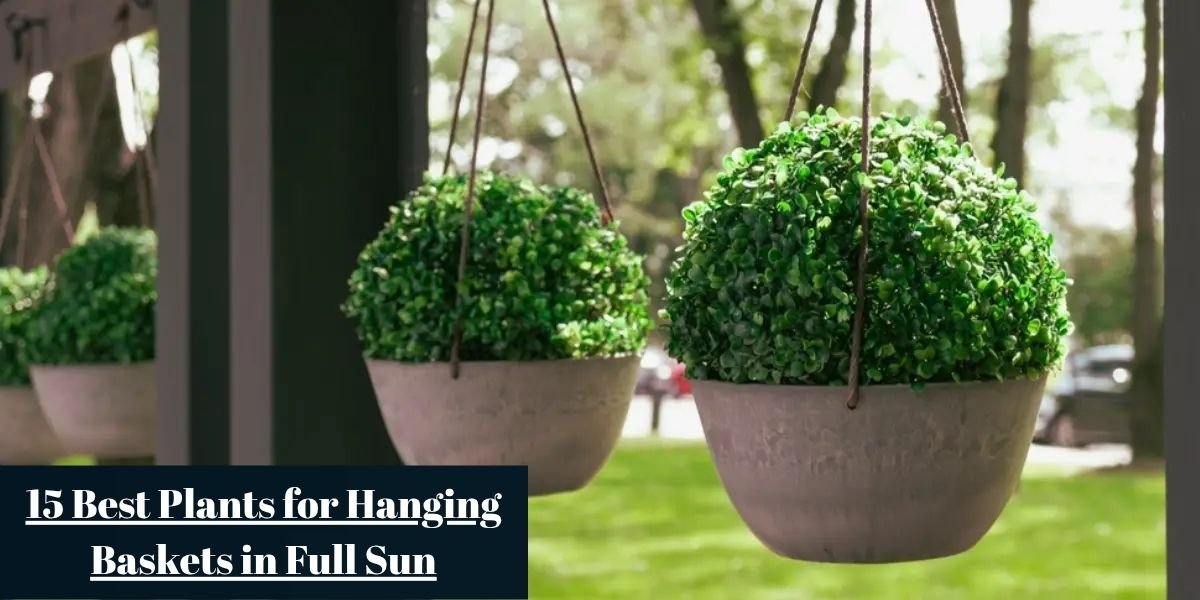
Container gardening overhead presents physical realities distinct from planting directly into ground soil. Hanging baskets remain suspended in open air, leaving their entire outer perimeter exposed to moving winds and intense thermal radiation. Ground soil acts as a natural temperature buffer, retaining sub-surface moisture and keeping roots cool. Soil trapped inside a suspended basket experiences elevated temperatures on all sides, drying out rapidly under intense afternoon light.
Selecting vegetation for these elevated containers demands species with high physiological resilience. Plants situated in full sun hanging baskets endure accelerated transpiration rates and restricted root zones. Achieving season long color depends on selecting species naturally adapted to hot environments, intense light, and variable moisture conditions.
Choosing Plants That Thrive in Sunny Hanging Baskets
Experienced horticulturists assess specific growth attributes before placing any plant species into elevated sunny environments. Success relies on cellular structural durability and root performance under thermal stress.
Look for these essential performance characteristics:
- Structural trailing habits that naturally spill over rim edges to shelter the container from direct solar heat.
- Extensive bloom windows driven by continuous bud initiation from late spring through early autumn frosts.
- Waxy or pubescent leaf surfaces engineered by nature to reflect harsh ultraviolet rays and prevent cellular moisture loss.
- Rapid root establishment capable of processing applied nutrients efficiently inside tight container spaces.
15 Best Plants for Hanging Baskets in Full Sun
Petunia
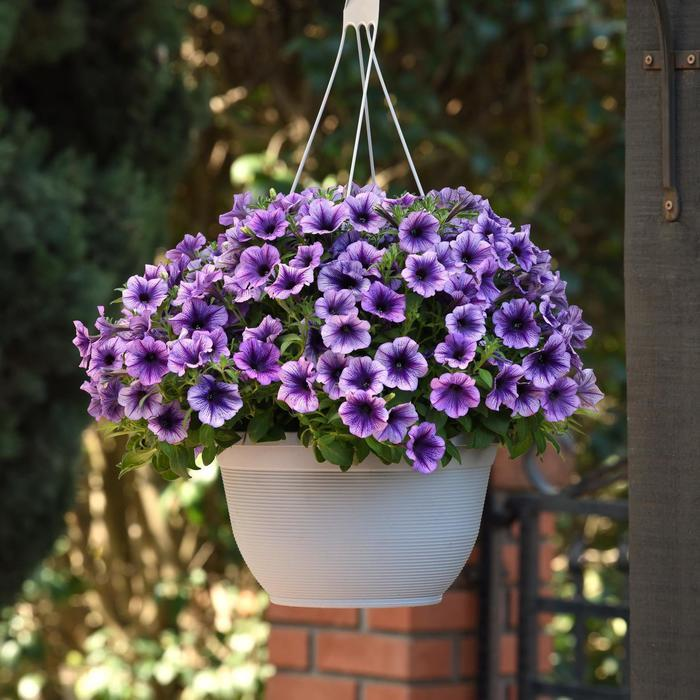
Petunia × hybrida remains the workhorse of the sunny basket for one reason: sheer flower volume. The turning point came in 1995, when PanAmerican Seed introduced the Wave series, a collaboration that traced back to a wild spreading petunia spotted by a Kirin breeder in Japan. Wave Purple Classic won an All-America Selections award that year as the first petunia to spread two to four feet in a season, and the brand marked its 30th anniversary in 2025. For baskets specifically, the Easy Wave and Shock Wave sub-series hold a tidier, more mounded shape than the original ground-hugging type.
Modern spreading petunias are largely self-cleaning, so they keep setting buds without the daily deadheading older grandifloras demand. Give them at least six to eight hours of direct sun and a deep morning drink in free-draining media once summer heat sets in. Feed every 10 to 14 days with a bloom-forward water-soluble fertilizer. If stems go leggy by July, cut them back by a third to force fresh growth from the crown.
- Mature Size: 6 to 12 inches tall, trailing 2 to 3 feet
- Flower Colors: Purple, pink, white, red, deep yellow, magenta, patterned bi-colors
- Best Companions: Sweet Potato Vine, Verbena, Calibrachoa
Calibrachoa (Million Bells)
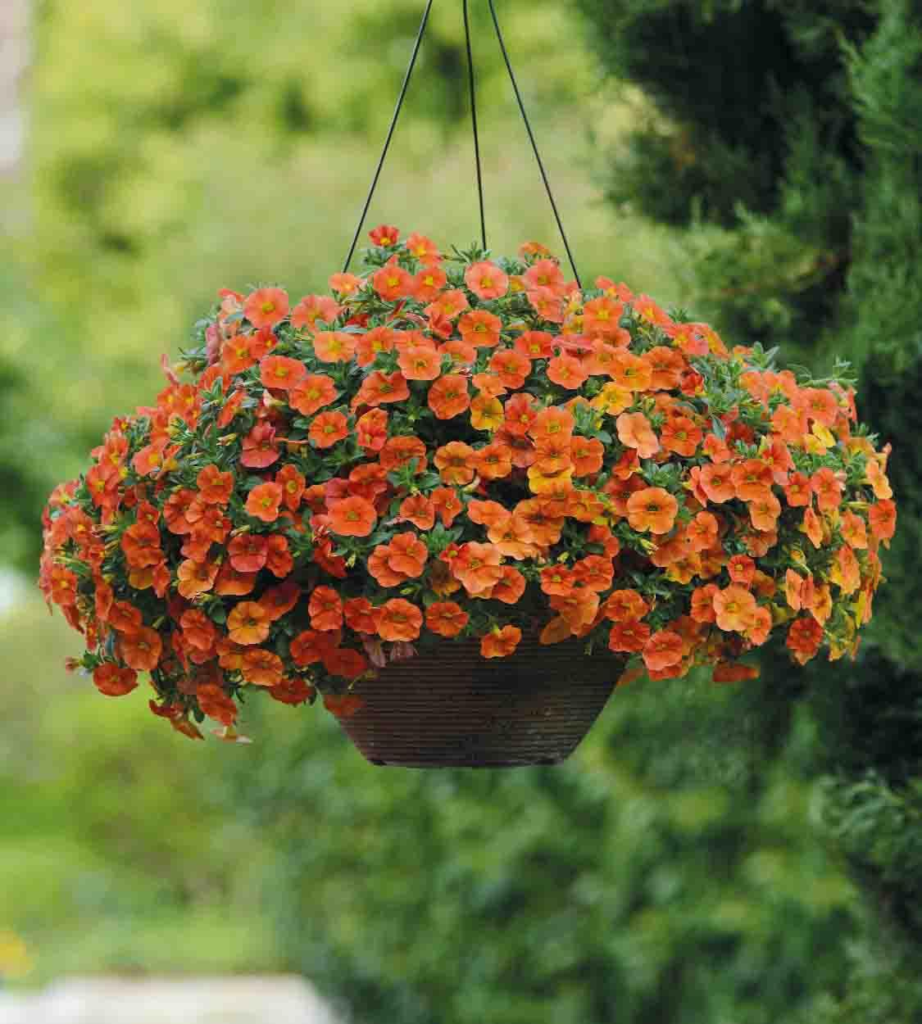
Calibrachoa carries hundreds of miniature, petunia-like flowers on self-cleaning stems and mounds into a dense cascade over the rim. Blooms run from May well into October with strong heat tolerance. Million Bells and Superbells are the trademarked brand names most gardeners recognize, but the plant is the same genus underneath.
The one thing that trips people up is soil pH. Calibrachoa is prone to iron chlorosis, which shows as yellowing on the newest top leaves while the veins stay green, and it prefers a slightly acidic mix around pH 5.5 to 6.0. If chlorosis appears, a chelated iron supplement with a balanced feed usually greens it back up. Keep the root zone evenly moist, never sodden, and shelter it from constant hard wind that snaps the brittle tips.
- Mature Size: 6 to 10 inches tall, trailing 18 to 24 inches
- Flower Colors: Terracotta, violet, hot pink, bronze, deep red, pure yellow
- Best Companions: Bacopa, Lobelia, Dichondra
Verbena
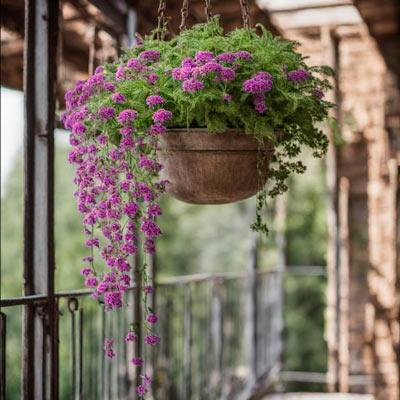
Verbena features tight clusters of small blooms held above finely cut foliage. Its spreading branches form dense mats that shade the top of the potting medium.
The flowering phase spans late spring until the first severe frost. Verbena remains fully operational through peak summer heatwaves that slow down other annual species.
Allow the top inch of soil to dry out between thorough waterings. Overwatering encourages powdery mildew on leaf surfaces, so water directly at the root zone. Apply a balanced 20-20-20 feed every two weeks.
Mount baskets in high heat zones such as south-facing balconies or open patios. Shear back old flower clusters mid-season to trigger secondary branching.
- Mature Size: 8 to 12 inches tall, trailing 18 to 30 inches
- Flower Colors: Deep purple, scarlet, bright rose, white, coral, blue
- Best Companions: Petunia, Lantana, Portulaca
Lantana
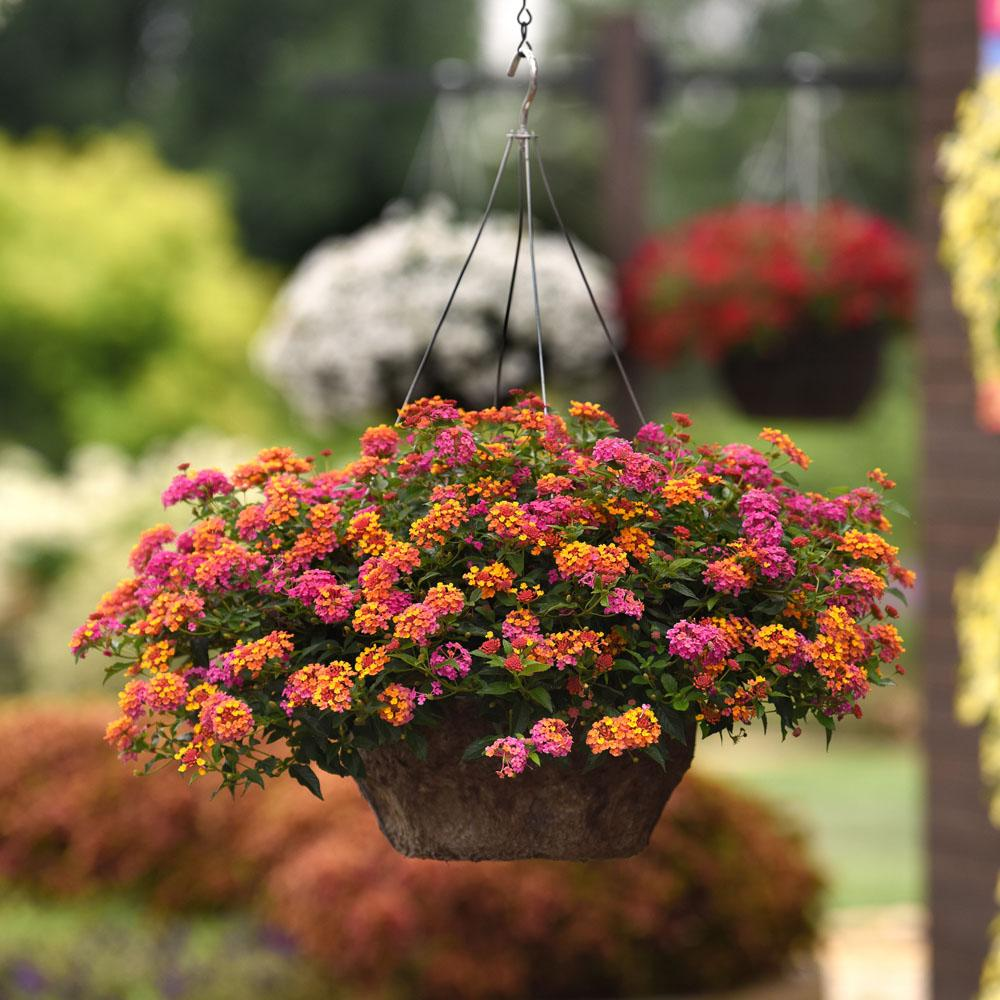
Lantana camara thrives in harsh, hot conditions where other flowering plants struggle. Its multi-colored umbels draw native pollinators throughout summer.
Blooms emerge in late spring and endure high heat through late autumn. The thick foliage naturally resists moisture loss and deters browsing pests.
Water deeply when soil feels dry to the touch, then let the container drain fully. Lantana handles brief drought conditions better than most flowering basket plants. Supply a basic flowering fertilizer monthly.
Place baskets in the sunniest spots available, as reduced light causes weak flowering and sparse foliage. No deadheading is required for continuous blooming.
- Mature Size: 12 to 18 inches tall, trailing 2 to 3 feet
- Flower Colors: Yellow, orange, vibrant red, bright pink, bi-color blends
- Best Companions: Scaevola, Bidens, Purple Fountain Grass
Portulaca (Moss Rose)
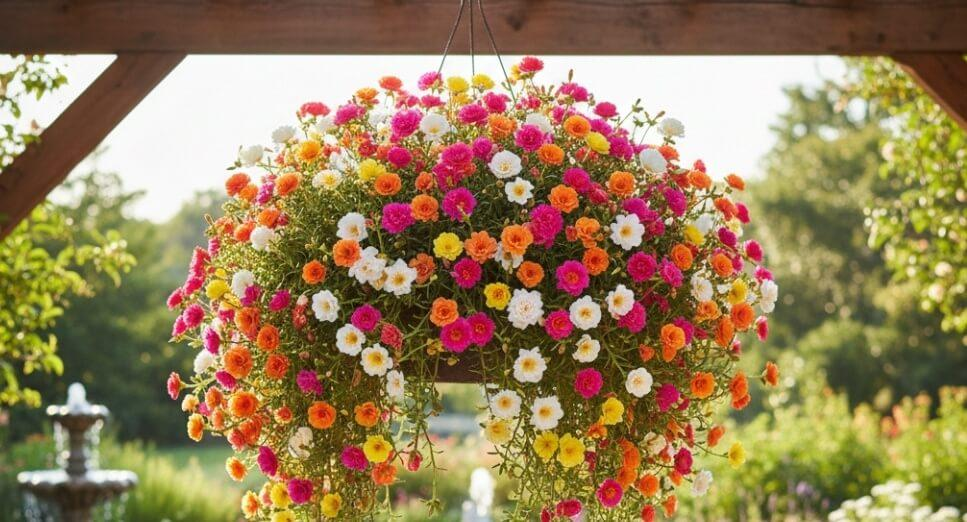
Portulaca grandiflora utilizes succulent leaf structures to retain moisture during extreme summer heat. Its rose-like blooms open under direct sunlight and close during dark hours.
The blooming period runs continuously from early summer until autumn temperatures drop. Individual plants spread quickly, filling open spaces along container edges.
Water sparingly compared to non-succulent annuals. Allow the soil medium to dry out almost completely between applications to protect root structures from rot. Use a light liquid feed once a month.
Select open locations that receive full, bright sun all day long. Shade forces flowers to stay closed and causes stems to stretch out thin.
- Mature Size: 3 to 6 inches tall, trailing 12 to 18 inches
- Flower Colors: Bright yellow, fuchsia, orange, white, coral, cream
- Best Companions: Purslane, Sedum, Lantana
Scaevola (Fan Flower)
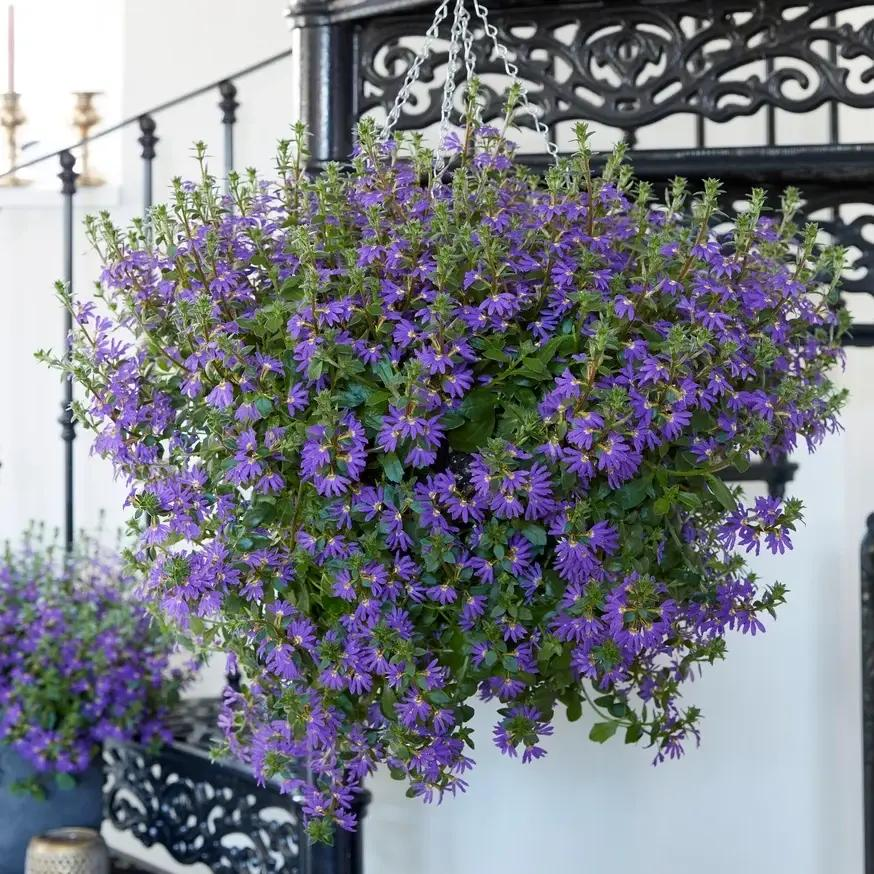
Scaevola aemula features unique half-wheel, fan-shaped flowers set along thick, semi-succulent trailing stems. Native to Australia, it handles hot sun and sea salt breezes easily.
Continuous blooming lasts from late spring through late fall without interruption. The stems trail downward, creating a full appearance around the container base.
Keep soil moisture even, though plants recover quickly if a scheduled watering is missed. Apply balanced liquid plant food every three weeks.
Hang baskets in high sun exposures, including locations near hot walls or paved surfaces. The plant sheds old blooms naturally, eliminating the need for manual cleanup.
- Mature Size: 8 to 14 inches tall, trailing 24 to 36 inches
- Flower Colors: Blue-violet, light lavender, bright white, soft pink
- Best Companions: Lantana, Angelonia, Sweet Potato Vine
Geranium (Zonal Geranium)
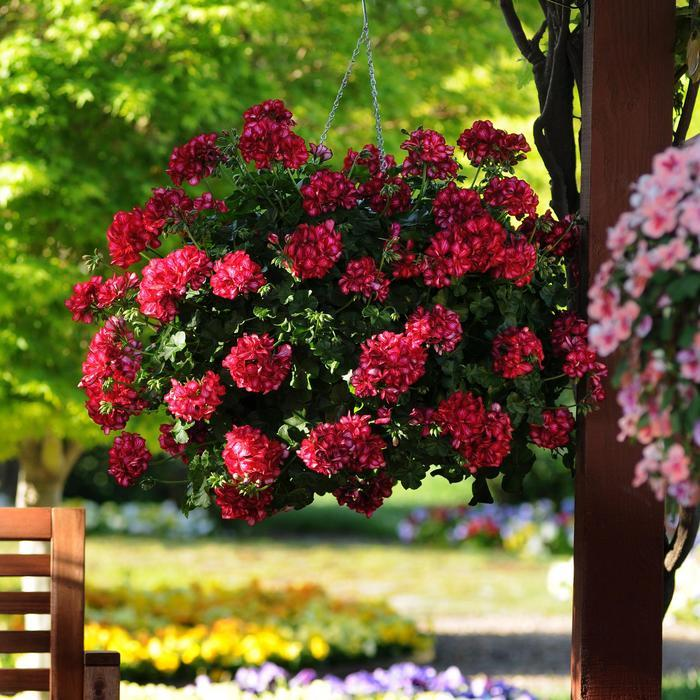
Pelargonium × hortorum delivers sturdy upward growth topped by large rounded flower heads. Thick stems store internal moisture reserves for hot periods.
Floods of blooms appear from spring through autumn when provided steady daylight hours. Its thick foliage releases a distinct herbal scent when touched.
Allow soil to dry slightly below the surface before watering deep into the basket root zone. Excess water leads to stem rot at the soil line. Remove spent flower stalks at their base to encourage new buds.
Provide full sun in morning hours with light afternoon wind protection. Feed with high-potassium fertilizer every fortnight.
- Mature Size: 12 to 18 inches tall, spreading 12 to 15 inches
- Flower Colors: Crimson, salmon, bright pink, pure white, bi-color shades
- Best Companions: Ivy Geranium, Vinca Vine, Bacopa
Bidens
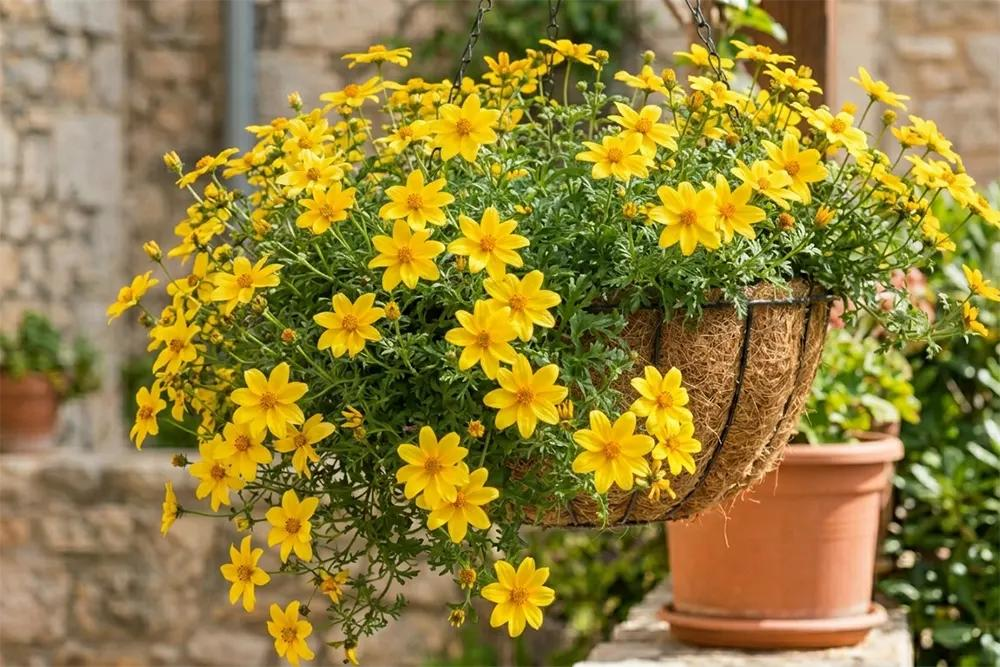
Bidens ferulifolia produces bright star-shaped flowers over fine fern-like green foliage. Its energetic habit fills empty space inside container borders quickly.
Flowering begins in late spring and continues into late autumn frosts without slowing down. Stems cascade naturally over container edges to build a full look.
Water regularly to keep root systems active, but ensure drainage holes flow freely. Feed every two weeks using standard flowering plant food solutions.
Position baskets in clear full sun locations to prevent central stems from thinning. Trim back aggressive trailing tips mid-season if they begin crowding out neighbor plants.
- Mature Size: 8 to 12 inches tall, trailing 18 to 30 inches
- Flower Colors: Bright yellow, orange, copper, white-yellow bi-color
- Best Companions: Calibrachoa, Verbena, Scaevola
Bacopa
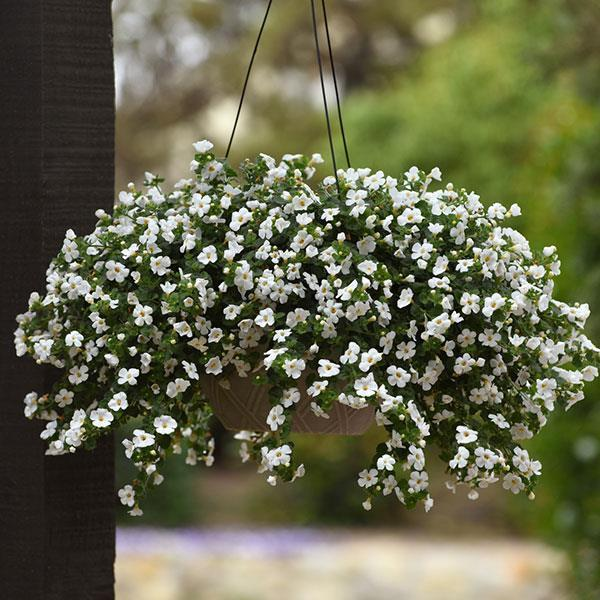
Sutera cordata produces small five-petaled flowers over textured trailing foliage. It forms a dense green mat that spills downward over basket edges.
The heavy flowering phase runs from spring through autumn, with brief pauses during extreme summer heat spikes. Blooms restart quickly as evening temperatures cool down.
Maintain consistent soil moisture at all times. If soil dries out completely, the plant drops its current flower buds and takes two weeks to recover. Feed with balanced fertilizer every two weeks.
Hang in spots receiving strong morning light and light mid-afternoon shade. Avoid hot brick walls that retain high night temperatures.
- Mature Size: 4 to 8 inches tall, trailing 18 to 24 inches
- Flower Colors: Crisp white, lavender blue, soft pink
- Best Companions: Petunia, Calibrachoa, Geranium
Sweet Potato Vine
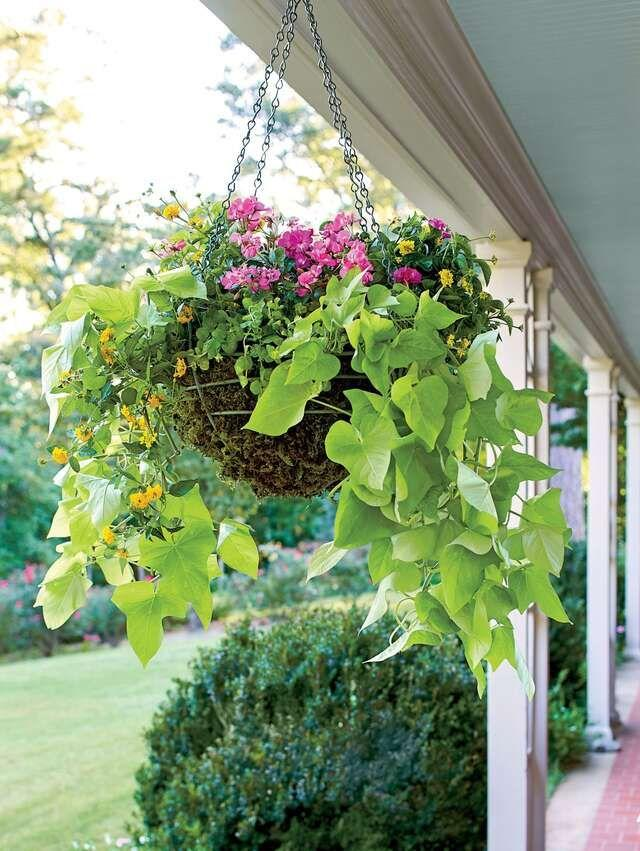
Ipomoea batatas is grown for its fast-growing, colorful foliage. The trailing vines fill out combinations quickly, cascading down several feet.
The foliage display remains strong from spring installation until autumn frost. Its broad leaves shelter the container top, keeping root zones cool under summer heat.
Water frequently to support its large leaf canopy. Leaves will wilt when dry, but recover rapidly after thorough watering. Apply balanced liquid fertilizer monthly to fuel growth.
Mount in locations receiving direct sunlight to maintain rich foliage color. Deep shade turns dark purple leaves back to plain green.
- Mature Size: 6 to 12 inches tall, trailing 3 to 6 feet
- Flower Colors: Grown for leaves: Chartreuse green, deep purple, bronze, variegated
- Best Companions: Petunia, Lantana, Verbena
Nasturtium
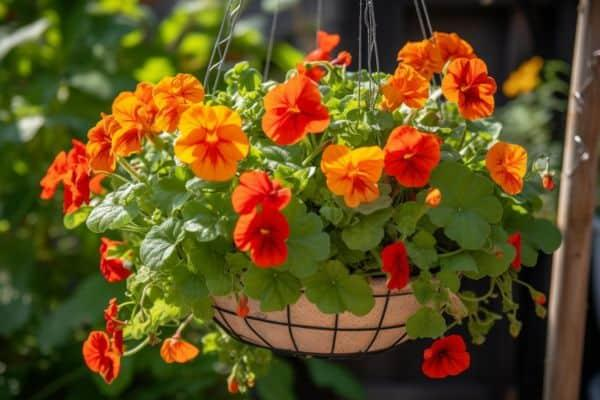
Tropaeolum majus features round shield-like foliage topped by vibrant edible flowers. Its soft trailing vines weave easily through basket structures.
Blooms open continuously from early summer through mid-autumn. Both leaves and blooms carry a light pepper flavor often used in summer salads.
Water moderately when top soil feels dry. Avoid high-nitrogen fertilizers, which trigger thick leaf growth while stopping flower formation altogether.
Place in full sun locations receiving bright light throughout the day. Inspect leaf undersides regularly for early signs of aphid activity.
- Mature Size: 8 to 12 inches tall, trailing 2 to 3 feet
- Flower Colors: Bright orange, yellow, deep red, cream, terracotta
- Best Companions: Verbena, Portulaca, Lavender
Mandevilla
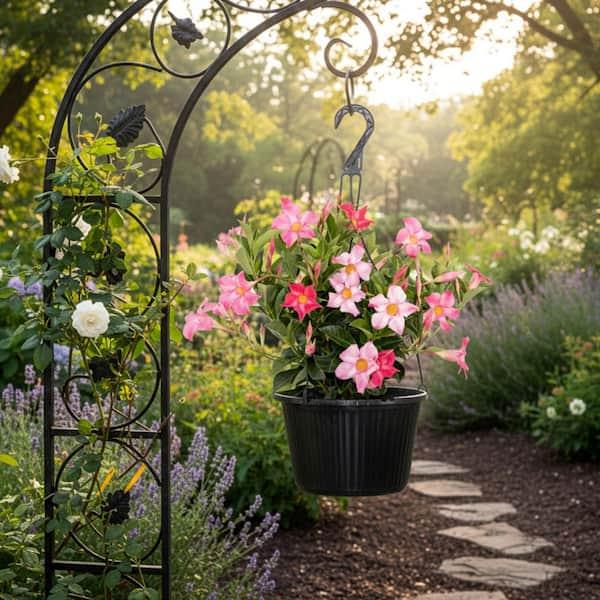
Mandevilla brings a tropical look with its thick woody vines and large trumpet-shaped flowers. It holds up well against harsh summer conditions.
Flowers open non-stop from late spring through late autumn frost. Thick, glossy leaves prevent excessive water loss during dry, sunny days.
Water thoroughly when the top inch of potting soil dries out. Feed every two weeks with high-phosphorus plant food to keep flowers forming continuously.
Hang baskets in warm, bright locations exposed to intense daily sunlight. Provide a central trellis or let vines trail freely over the sides.
- Mature Size: 12 to 24 inches basket height, trailing/climbing 3 to 5 feet
- Flower Colors: Deep red, hot pink, soft rose, bright white
- Best Companions: Sweet Potato Vine, Scaevola, Lantana
Ivy Geranium
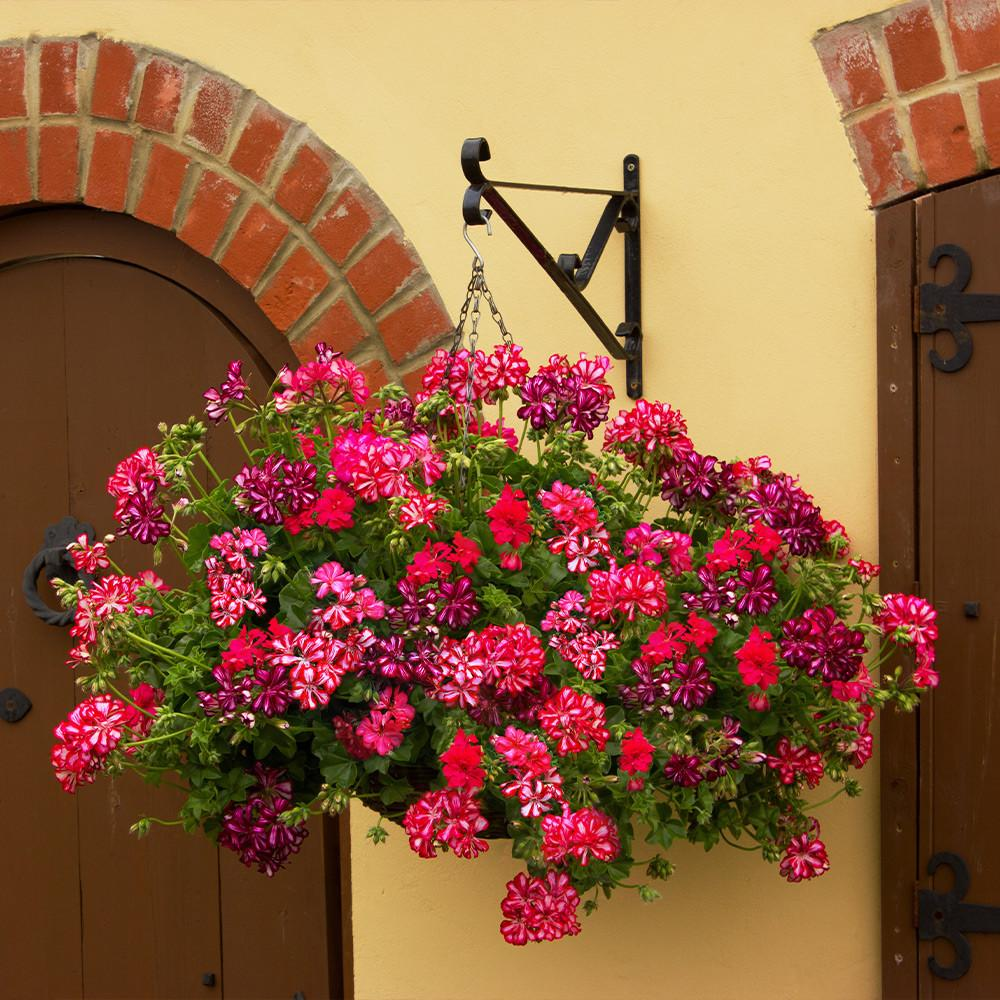
Pelargonium peltatum sports glossy, thick leaves that resemble ivy. Its cascading stems hold rounded heads of vivid flowers.
The main flowering period extends from spring through late autumn. Its glossy foliage retains internal water better than standard zonal geranium varieties.
Allow root zones to dry out slightly between waterings to prevent root issues. Feed with balanced liquid plant food every two weeks throughout summer.
Position in locations receiving strong morning light with protection from extreme late afternoon heat. Prune long stems occasionally to encourage central growth.
- Mature Size: 8 to 12 inches tall, trailing 18 to 36 inches
- Flower Colors: Deep red, lavender, hot pink, bi-color white pink
- Best Companions: Bacopa, Lobelia, Calibrachoa
Purslane
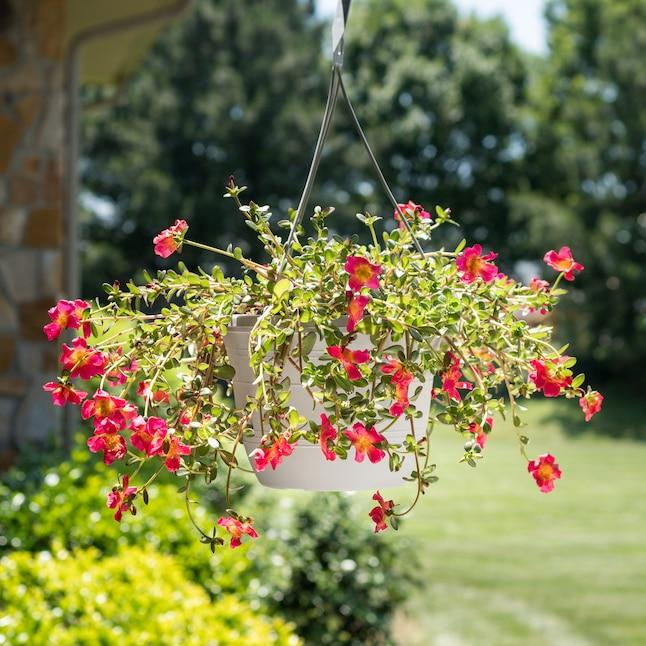
Portulaca oleracea features thick, succulent stems and broad fleshy leaves. It handles extreme heat and intense sunlight without wilting.
Blooms open under full morning light and stay active from early summer through autumn. Stems spread wide across the container, creating a dense, blooming carpet.
Water only after the potting soil dries out significantly. Overwatering causes quick stem softening and root loss. Apply diluted fertilizer once per month.
Hang in open full sun positions exposed to hot conditions. Plants close their blooms on cloudy days and after dusk.
- Mature Size: 4 to 8 inches tall, trailing 16 to 24 inches
- Flower Colors: Yellow, deep magenta, bright orange, white, red
- Best Companions: Portulaca, Lantana, Scaevola
Trailing Verbena
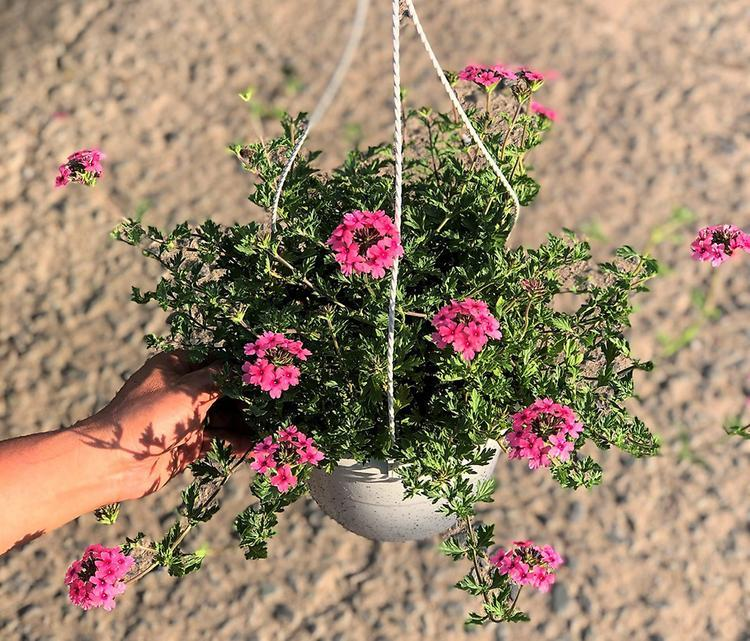
Verbena canadensis forms a sprawling, low mat of fine foliage with dense bloom clusters. It shows higher cold and heat tolerance than standard bedding verbenas.
Flowering spans late spring to early winter in warm climate zones. Trailing stems root along container edges, filling out empty basket spots naturally.
Water deeply when soil surface feels dry, keeping water off leaf foliage. Feed with a low-nitrogen, high-potassium fertilizer every two weeks.
Mount baskets in high heat zones exposed to full light all day long. Shear back by half mid-season if top growth appears thin.
- Mature Size: 6 to 10 inches tall, trailing 2 to 3 feet
- Flower Colors: Deep violet, magenta, rose pink, bright white
- Best Companions: Bidens, Petunia, Sweet Potato Vine
Plants That Bloom the Longest in Full Sun
Continuous flower production under summer heat requires species with low sensitivity to day length changes. These plants maintain active bud development through seasonal temperature shifts.
Maintaining continuous flowers requires feeding plants high-potassium nutrients every two weeks. High-nitrogen products force rapid leaf growth instead of fresh flower buds.
The Best Low-Maintenance Choices
For gardeners who cannot water twice daily or spend hours trimming dead blooms, specific resilient plants provide consistent performance with minimal maintenance.
- Portulaca and Purslane: Fleshy succulent leaves store water internally, protecting the plant if a watering day is missed.
- Lantana: Naturally drops spent bloom heads and handles high heat without wilting.
- Scaevola: Self-cleaning fan flowers drop off cleanly, leaving trailing stems free of dead brown petals.
Trailing Plants That Create Fuller Hanging Baskets
Creating a dense, overflowing basket requires trailing species that fill spatial layers naturally. Mix filler plants that grow upward with spillers that cascade down.
Pairing fast-growing leaf plants alongside heavy flowering varieties protects root soil from direct sun exposure while building maximum container volume.
Plant Combinations That Work Well Together
Successful multi-species arrangements combine plants with matching light, water, and soil requirements.
Combination 1: High Contrast Sun Trio
- Petunia (Spiller/Filler – Deep Purple)
- Sweet Potato Vine (Spiller – Lime Chartreuse)
- Verbena (Filler – Pure White)
Why it works: Chartreuse sweet potato vine leaves create strong contrast against purple petunias. All three species thrive under identical full sun exposures and daily watering routines.
Combination 2: Jewel-Tone Heat Tolerant Basket
- Calibrachoa (Filler – Terracotta Orange)
- Bacopa (Spiller – White)
- Scaevola (Spiller – Blue-Violet)
Why it works: Bacopa forms a cool base layer that allows bright orange Calibrachoa and fan-shaped Scaevola flowers to stand out clearly.
Combination 3: Ultra Heat & Drought Resilient Group
- Lantana (Upright Filler – Yellow Red)
- Bidens (Spiller – Golden Yellow)
- Portulaca (Edge Spiller – Fuchsia Pink)
Why it works: These three species maintain high flower production through extreme heat spikes and handle lower soil moisture levels without dropping foliage.
Common Reasons Full Sun Hanging Baskets Struggle
- Rapid Moisture Loss: Suspended baskets experience wind airflow on all sides, drying out soil fast. Check moisture levels twice daily during summer heat spikes.
- Low Quality Potting Media: Cheap soil mixes compact quickly, blocking drainage and starving roots of oxygen. Use professional potting media containing peat moss, perlite, and pine bark.
- Severe Plant Overcrowding: Packing too many stems into small pots leads to root overcrowding and nutrient competition. Limit 10 to 12 inch baskets to 3 or 4 plants total.
- Salt Fertilizer Accumulation: Repeated liquid feeding leaves mineral salts behind that burn tender root tips. Flush baskets thoroughly with plain fresh water once per month.
- High Soil Heat: Dark plastic pots absorb extreme heat, scorching outer feeder roots. Use light basket materials or coco fiber liners to reduce root thermal stress.
Keeping Hanging Baskets Blooming Through Summer
Continuous summer flower output requires steady care adjusted for shifting seasonal temperatures.
Watering Routines
Apply water until liquid drains freely from bottom holes. During mid-season heatwaves, water early in the morning before sun reaches foliage, and recheck soil moisture by mid-afternoon.
Nutrient Applications
Nutrients wash out quickly under frequent daily waterings. Apply half-strength liquid flowering fertilizer weekly instead of full doses once per month to keep nutrition stable.
Mid-Season Pruning
By mid-July, trailing stems like Petunia and Verbena can grow leggy and thin at the base. Trim back trailing branches by 3 to 6 inches to force fresh interior growth and new flower buds.
Conclusion
Creating vibrant full sun hanging baskets depends on selecting plants adapted to hot, fast-drying environments. Match plant habits to your local climate conditions, available time for watering, and visual goals. Pairing high-performing trailing species with proper potting soil and consistent nutrients ensures lush, colorful baskets from spring into autumn.
Frequently Asked Questions
What is the best flowering plant for a full sun hanging basket?
Petunia and Calibrachoa rank highest for overall flower production, color variety, and long blooming seasons under direct daily sun.
How often should full sun hanging baskets be watered?
Water daily during spring and early summer. When peak summer heat arrives, check baskets twice daily and water whenever top soil feels dry.
Which hanging basket plants need the least maintenance?
Portulaca, Purslane, and Lantana require minimal care due to their low water needs and self-cleaning flowers.
Can hanging baskets stay outside all summer?
Yes, provided species selected feature strong heat tolerance and receive consistent daily watering along with regular fertilizer support.
What plants bloom continuously in full sun?
Lantana, Scaevola, Calibrachoa, and Bidens flower continuously from late spring until autumn frosts arrive.
How many plants should go into one hanging basket?
A standard 10-inch basket comfortably holds 3 to 4 plants. A larger 14-inch basket accommodates 4 to 6 individual plants without overcrowding root zones.