
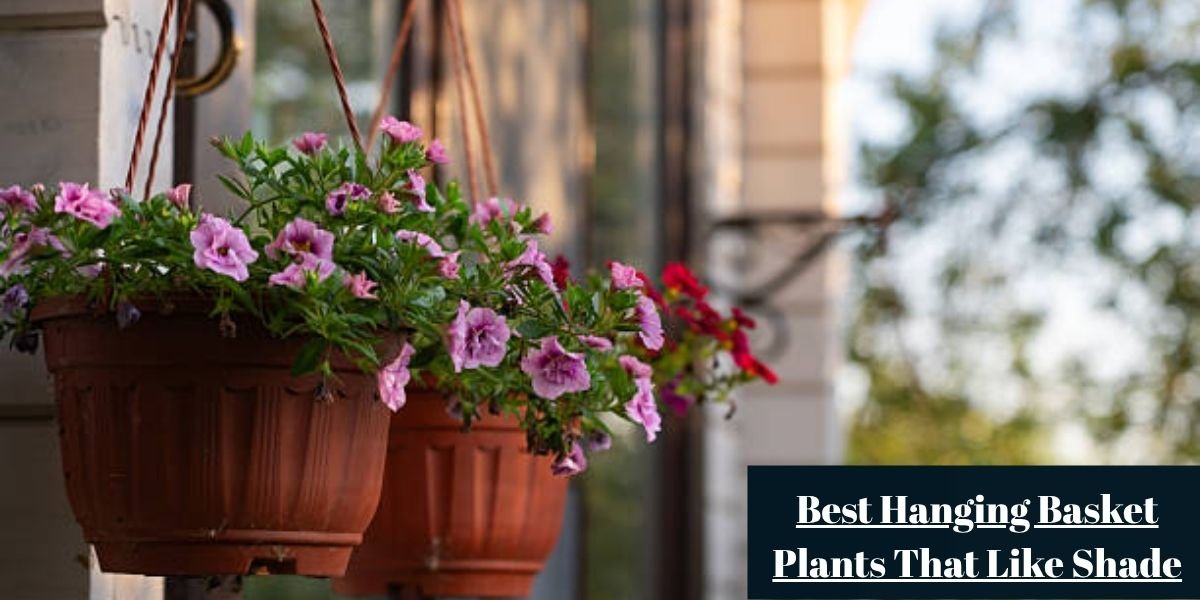
A shaded porch or a covered outdoor corner is one of the easiest places to keep a hanging basket looking good from spring until frost. Direct sun pushes sun-loving annuals through fast bloom cycles, but it also cooks foliage and dries out potting mix within hours on a hot afternoon. Low light does the opposite. It shields leaves from heat stress and slows evaporation, which means fewer scorched petals and longer stretches between waterings. You do not have to give up color to garden in the shade.
The trick is knowing the difference between a plant that merely tolerates shade and one that genuinely thrives in it. A tolerant plant hangs on with thin stems and a handful of flowers. A true shade-lover plant keeps opening bloom after bloom under soft, indirect light. Match the plant to the light you actually have and the basket looks after itself through the hottest part of summer.
Not Every Shade Is the Same
Light shifts fast around walls, roof overhangs, and tree canopies. A spot that reads as shady at noon may catch two hours of hard sun at 8 a.m. Before buying a single plant, watch the space across a full day and sort it into one of three categories.
Full shade means fewer than three hours of direct sun, the kind of light you find under a broad tree canopy, a deep porch roof, or a covered entryway. Partial shade runs roughly three to six hours of direct light, and plants do best when that light lands in the cooler morning rather than the afternoon. Filtered light through thin branches counts here too. Bright shade gets no direct sun at all but plenty of strong reflected daylight bouncing off pale walls or open sky.
Hang a shade lover in full afternoon sun and its petals scorch within hours. Push a light-hungry annual into a genuinely dark corner and it stops setting flower buds altogether. Getting this one call right does more for a basket than any fertilizer ever will.
Best Flowering Hanging Basket Plants That Like Shade
These annuals were bred for color in low light and hold it from late spring into autumn. Every one of them performs better with protection from harsh afternoon sun.
Fuchsia
Fuchsia x hybrida is still the plant most people picture in a shaded basket, and for good reason. The pendulous, two-tone blooms hang straight down like small lanterns, which is exactly the angle you want when the basket sits above eye level.
The flared sepals and inner petals contrast in magenta, purple, pink, coral, and white, and a healthy plant flowers steadily from late spring until the first hard frost. Trailing stems spill 18 to 24 inches over the rim. Fuchsias want bright shade or gentle morning light and evenly moist soil. The elevated position of a basket helps keep their roots cool, which is what they care about most.
Begonia
Tuberous and trailing begonias (Begonia x tuberhybrida and Begonia boliviensis) are the workhorses of the shade basket. They carry showy, camellia-like blooms above thick leaves that shrug off heat waves capable of flattening more delicate annuals.
Flowers come in yellow, orange, deep red, soft rose, and white, and the display runs from June well into October on a mounding center with arching side stems that reach 12 to 18 inches. Bolivian types such as Bonfire pour over the edge, while tuberous kinds mound higher. Begonias prefer partial to deep shade, and along a north-facing wall they are hard to beat. Let the top of the mix dry slightly between waterings, because sitting wet is the fastest way to rot the tubers.
Impatiens
Common impatiens (Impatiens walleriana) form tight cushions smothered in flat, five-petaled flowers, and nothing else lights up a dark porch corner quite the same way. Blooms run from early summer to frost in crimson, violet, salmon, pink, white, and bicolors on plants 10 to 16 inches tall and wide. They are self-cleaning, dropping spent flowers on their own, so you skip deadheading entirely.
There is one detail every buyer should know before reaching for a flat of them. A downy mildew caused by the water mold Plasmopara swept North American landscapes in 2011 and stripped ordinary seed impatiens bare, and the spores can overwinter in soil and reinfect for years. The fix arrived in 2020 with two highly resistant series, Beacon from PanAmerican Seed and Imara XDR from Syngenta. Buy one of those and you get the classic impatiens look without the collapse. Whichever type you choose, impatiens still demand steady moisture.
Torenia (Wishbone Flower)
Torenia fournieri, the wishbone flower, earns its name from the tiny paired stamens tucked inside each trumpet-shaped bloom, which meet like a wishbone. The velvety flowers open in deep indigo, cobalt, rose, burgundy, and soft lavender, usually marked with a bright yellow throat, from early summer into autumn.
For baskets, reach for the trailing Summer Wave or Moon series, which spill 12 to 30 inches and keep flowering straight through heat and humidity that stall older annuals. Torenia takes partial to bright shade and asks only for evenly moist soil and the occasional pinch to stay full.
Lobelia
Trailing lobelia (Lobelia erinus) buries a basket under a haze of tiny flowers in a blue so electric it is almost impossible to find anywhere else in the shade palette. The fan-shaped blooms cover sky blue, royal blue, violet, and magenta from spring through early summer, then often rebloom when cool autumn weather returns. Fine stems trail 12 to 18 inches below the rim.
Lobelia is the one plant on this list that resents deep shade. Give it morning sun with afternoon shade and never let the fine roots dry out. Prolonged summer heat is its weak point, so a shaded, breezy spot suits it best.
Bacopa
Bacopa (Sutera cordata, filed botanically as Chaenostoma cordatum) is the quiet trailing accent that softens every hard container edge, its stems studded with hundreds of small white, lavender, or pale blue star flowers. Those stems run 24 inches or more and, unlike most bedding plants, never need deadheading.
One honest caveat that plant tags tend to skip: bacopa flowers most freely in bright light and only tolerates partial shade, so hand it the brightest shaded spot you have. It also sulks in peak summer heat and may pause blooming until temperatures ease, though newer heat-bred series recover faster. Keep the mix damp at all times, because a single dry spell makes bacopa drop its buds and it is slow to forgive.
Browallia
Browallia speciosa, sometimes sold as bush violet, opens star-shaped flowers in sapphire blue, violet, and white that seem to glow against its dark green leaves in low light. It blooms without a break from late spring through autumn and forms a tidy mound 12 to 15 inches high and wide. Full or partial shade suits it, and it cleans up after itself, dropping old flowers so nearby beams and siding stay tidy.
New Guinea Impatiens
New Guinea impatiens (Impatiens hawkeri) bring a bolder texture than their common cousins, with iridescent flowers up to 3 inches across over pointed, often bronze or variegated foliage. Color runs coral, magenta, red, orange, and white from early summer to the first hard freeze on sturdy mounds 12 to 18 inches high.
Their real advantage in the shade is genetic. New Guinea types are highly resistant to the downy mildew that once wiped out ordinary impatiens, which is why growers leaned on them through the worst of the outbreak. Give them partial shade or bright filtered light. They accept a little more sun than walleriana and hold their shape well against a gusty afternoon.
Nemesia
Nemesia hybrids are cool-season charmers that carry intense color in spring and again in autumn, paired with a soft, honey-like scent that reads best at basket height. The small orchid-like flowers come in yellow, red, pink, white, and plum, then rest through the hottest weeks of summer before rallying when nights cool. Plants spread 10 to 14 inches wide.
Place nemesia in bright shade or gentle morning sun, and shear the stems back lightly in midsummer. That single trim is what triggers the heavy flush of autumn bloom.
Trailing Viola
Trailing violas fill the gap at either end of the season, flowering through cool spring and autumn weather when summer annuals have faded or not yet started. The cheerful, face-patterned blooms come in violet, yellow, cream, and deep maroon bicolors on creeping stems that spill 8 to 12 inches over the sides. Violas take dappled light, partial shade, or a bright north-facing wall, and their small flowers bounce back within a day of an unexpected cold snap.
Shade-Loving Foliage Plants That Keep Baskets Attractive All Season
Flowers come and go on their own schedule, but foliage holds the basket together from the first week to the last. Colorful leaves carry the display through every gap between bloom cycles, and in deep shade they often outperform flowers entirely.
A handful of reliable choices covers most situations:
- English ivy (Hedera helix): classic lobed leaves, often silver-variegated, trailing past 3 feet and bringing strong vertical lines alongside real cold hardiness.
- Spider plant (Chlorophytum comosum): arching green-and-white striped blades that send down runners tipped with miniature plantlets.
- Creeping Jenny (Lysimachia nummularia Aurea): round, chartreuse leaves on stems that trail 2 feet and light up dark corners instantly.
- Tradescantia (Tradescantia zebrina): pointed leaves striped silver above and rich purple beneath, adding jewel tones in bright indirect light.
- Ferns: Boston (Nephrolepis exaltata) and maidenhair (Adiantum) fronds bring soft woodland volume to full shade.
- Coleus (Coleus scutellarioides): leaves in crimson, lime, pink, and velvet purple. Trailing types do best in warm, sheltered shade, though deep shade can leave them leggy and hot afternoon sun can wilt older kinds.
- Caladium (Caladium bicolor): large heart-shaped leaves splashed red, pink, and white, creating a dramatic centerpiece for warm shade.
- Pothos (Epipremnum aureum): broad heart-shaped green or gold leaves on long, forgiving tendrils through the warm months.
The Best Trailing Plants for Shade Hanging Baskets
Trailing plants, the spillers, give a basket depth. They break up a hard rim, hide the wire frame, and turn a stiff container into something that flows naturally. Sorting them by how they cascade helps when planning a design.
The deep trailers, like English ivy and pothos, drop 24 to 36 inches in long vertical lines that make a covered porch feel taller.
The dense blanket trailers, such as bacopa, creeping Jenny, and trailing lobelia, fall a more modest 12 to 18 inches while weaving across the soil surface to cover bare patches.
The arching spillers, including fuchsia and tradescantia, throw stems outward before bowing under their own weight, widening the whole footprint of the display.
Plants That Flower the Longest in Shady Hanging Baskets
If the goal is color from planting day to the first frost, a few species simply outlast the rest by pairing stamina with low maintenance.
Begonias run five to six months without a single deadheading session, since spent flowers drop cleanly on their own. Impatiens bloom nonstop from early summer to the first freeze as long as you feed them a diluted liquid fertilizer every couple of weeks. Torenia holds full flower clusters through humid mid-summer stretches where other plants simply stop, and bacopa keeps its starry display from spring into autumn whenever soil moisture stays even.
Choosing Plants for Different Outdoor Spaces
The small climate right around your house, the wind, reflected heat, and exact light quality, decides what actually works. Four common setups cover most porches and patios.
A covered front porch offers deep shade with almost no air movement, making it ideal for Boston ferns, begonias, and English ivy that ask nothing of direct light.
A north-facing patio gets bright indirect light all day, which is enough to push strong flowering from fuchsias, impatiens, torenia, and coleus.
A balcony with bright shade combines high ambient light with real wind exposure, so lean on sturdy-stemmed New Guinea impatiens, spider plants, and creeping Jenny.
Under mature trees you get dappled, shifting light and naturally cool air, the exact conditions fuchsias, lobelias, bacopa, and ferns evolved for. Watch the watering in this last spot, because tree roots pull moisture from surrounding soil surprisingly fast.
How to Build a Balanced Shade Hanging Basket
A good mixed basket follows the classic nursery rule of thriller, filler, spiller, which balances height, mass, and cascade effortlessly.
Set one upright plant in the center as the focal point, ring it with two or three lower mounding plants to fill the surface, and finish with two or three trailers at the rim to pour over the edge. Three combinations that reliably work in shade:
- Classic floral cascade: upright begonia (thriller), white bacopa (filler), trailing fuchsia (spiller).
- Lush foliage contrast: red caladium (thriller), bright coleus (filler), chartreuse creeping Jenny (spiller).
- Jewel-toned shade display: New Guinea impatiens (thriller), dark blue torenia (filler), silver English ivy (spiller).
One expert habit worth building in from the start: group plants that share the same water appetite in a single basket, or the thirstiest one will drown the rest.
Watering Shade Hanging Baskets Correctly
Shade slows evaporation, but a suspended basket is exposed to moving air on every side, which dries the mix faster than any bed in the ground. Wind, not sun, is usually what empties a shade basket.
Check moisture by pushing a finger about 1 inch into the mix once a day, and water only when that top layer feels dry. Water early in the morning so splashed leaves dry before evening, and pour slowly until liquid runs from the drainage holes so the whole root ball wets through. Never leave a basket standing in a saucer of runoff. Yellowing leaves with soft stems point to overwatering, while crisp brown leaf edges and dropped buds mean the plant went too dry.
Fertilizing Without Reducing Flower Production
Shade plants run at a gentler pace than sun annuals, so feeding requires precision rather than volume. Too much nitrogen is the classic mistake, driving leafy growth at the direct expense of flowers.
Mix a balanced slow-release granule into the potting soil at planting for a steady base that lasts 8 to 12 weeks. Through the peak of summer, add a liquid feed slightly higher in phosphorus every two weeks to support bud set, diluting it to half the labeled strength to protect roots. Ease off by early autumn so plants wind down naturally as light shifts.
Common Reasons Shade Hanging Baskets Fail
Most failed baskets come down to a handful of avoidable mistakes rather than bad luck.
Hanging a sun-hungry annual like a petunia in shade produces long, leggy stems and almost no flower buds. Mixing a drought-tolerant plant with a moisture-loving fern in the same basket guarantees one of them either rots or shrivels, so keep plants of matching water needs together. Reaching for dense garden soil suffocates roots and blocks drainage, whereas a light, peat-based or bark-based potting mix allows them to breathe. Cramming too many plants into a small 10-inch basket leads straight to root binding by midsummer. Finally, a spot with almost no light at all—a truly dark corner—shuts photosynthesis down no matter how shade-tolerant the plant claims to be.
Quick Comparison Table
| Plant Name | Shade Level | Display Type | Growth Habit | Water Needs | Peak Season |
| Fuchsia | Bright / Partial | Flowers | Trailing / Arching | High | Late Spring to Autumn |
| Begonia | Full / Partial | Flowers & Foliage | Mounding / Cascading | Moderate | Summer to Frost |
| Impatiens | Full / Bright | Flowers | Mounding | High | Summer to Frost |
| Torenia | Bright / Partial | Flowers | Semi-Trailing | Moderate | Summer to Autumn |
| Lobelia | Partial Shade | Flowers | Trailing | High | Spring to Early Summer |
| Bacopa | Bright / Partial | Flowers | Trailing | High | Spring to Autumn |
| English Ivy | Full / Partial | Foliage | Deep Trailing | Moderate | Year-Round |
| Creeping Jenny | Partial / Bright | Foliage | Trailing | High | Spring to Autumn |
| Coleus | Bright / Partial | Foliage | Upright / Mounding | Moderate | Summer to Autumn |
| Boston Fern | Full / Bright | Foliage | Arching / Feathery | High | Spring to Autumn |
Frequently Asked Questions
What flowers grow best in full shade hanging baskets?
Begonias, impatiens, fuchsias, and browallia are the strongest performers in full shade. They flower on soft, indirect daylight alone, with no direct sun needed, as long as the spot is not genuinely dark.
Can petunias grow in shade?
Not well. Petunias are sun plants, and in low light they stretch, stop setting buds, and pick up leaf and stem rot quickly. For a similar pop of color in shade, use impatiens or torenia instead.
Which hanging basket plants bloom all summer in shade?
Begonias, impatiens, torenia, and New Guinea impatiens carry flowers right through summer in shade. Keep moisture steady and give a light liquid feed every two weeks.
How often should shade hanging baskets be watered?
Water whenever the top inch of mix feels dry, which usually falls every two to three days in mild weather and closer to daily during hot summer spells. A daily finger check beats any fixed schedule.
Are hanging baskets easier to maintain in shade than full sun?
Generally, yes. Cooler, softer light keeps the mix moist longer and spares roots the heat stress that plagues sun baskets, so you water less often and lose fewer plants to scorch.
Final Thoughts
A great shade basket is decided the day you read your light, not the day you plant. Deep shade under a heavy roof overhang calls for high-impact foliage, like Boston ferns, English ivy, and caladiums that never needed sun in the first place. A porch with bright morning light or clean indirect daylight can carry heavy bloomers like fuchsias, begonias, and torenia. Build any of them on the thriller, filler, spiller pattern in a light potting mix, keep the water even and the feed gentle, and the basket will look full from spring right through to frost.