
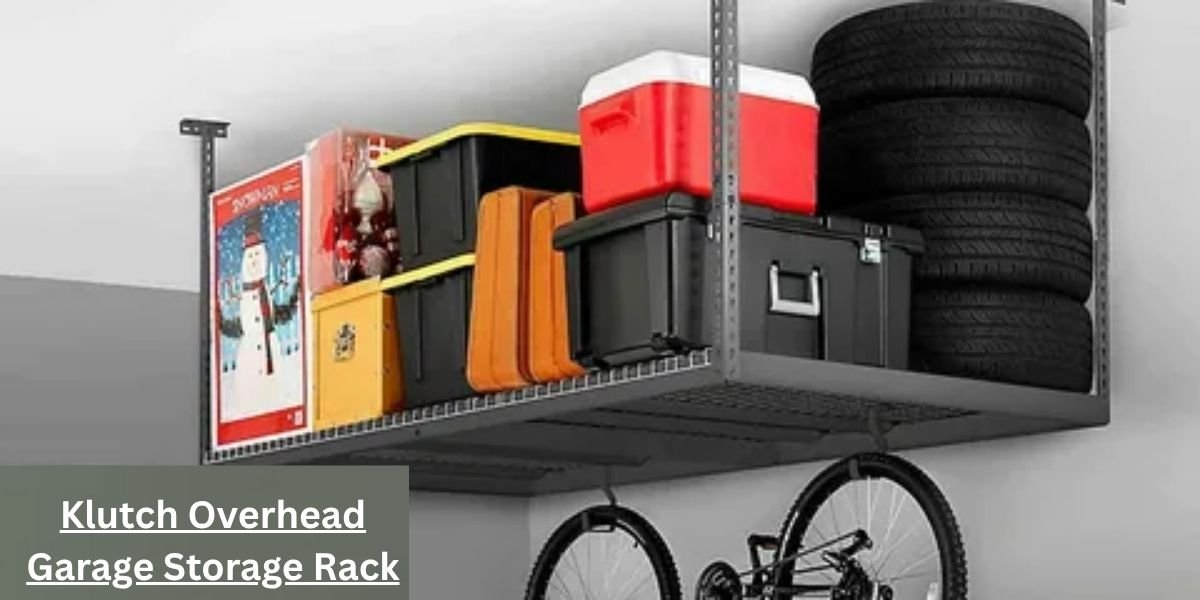
Garages naturally become the default holding place for an entire household overflow. Within a single season, floor space quickly disappears beneath tools, automotive fluids, holiday decorations, camping gear, ladders, spare parts, and plastic storage bins. Yet while the perimeter and floor fill up completely, the vertical airspace above head height typically remains entirely untouched.
Overhead garage storage is the logical answer to this spatial crunch, but it comes with an immediate practical reality. Suspending hundreds of pounds of gear directly above people and vehicles is not simply a matter of buying a large metal shelf and bolting it to the ceiling. It requires precise structural alignment, careful planning around moving garage doors, and a rigorous installation process.
Klutch overhead garage storage racks are designed to turn this unused ceiling space into a dedicated, high-capacity platform for items that do not need to stay within arm reach. The product line spans smaller 48 by 24-inch and 48 by 48-inch racks alongside a high-capacity 96 by 48-inch model, giving homeowners different ways to approach overhead storage depending on the layout and structure of their garage.
This guide examines the Klutch overhead storage lineup from the perspective of an owner. We will cover what you encounter when opening the boxes, how to evaluate your garage before buying, the realities of assembly and installation, and how to live with an overhead storage deck safely over the long term.
What Are Klutch Overhead Garage Storage Racks?
Klutch manufactures a modular range of heavy-duty overhead ceiling racks built from industrial steel and wire-mesh decking. Rather than relying on a single, one-size-fits-all footprint, the product line is scaled into three primary configurations designed to handle varying spatial constraints and weight loads.
| Klutch Model | Nominal Rack Size | Rated Weight Capacity | Adjustable Height Range | Best Suited To |
| 48 by 24 | 48 by 24 in. | 350 lbs. | 23 to 37 in. | Compact spaces, tight wall clearances, or localized storage. |
| 48 by 48 | 48 by 48 in. | 350 lbs. | 23 to 37 in. | Standard garage bays and moderate seasonal storage. |
| 96 by 48 | 96 by 48 in. | 750 lbs. | 23 to 37 in. | High-volume storage, large households, and long-span configurations. |
Note: Verify exact current specifications, model numbers, and load ratings directly against applicable product listings prior to purchasing.
Physically, each rack consists of a structural steel framework containing heavy-duty ceiling attachment brackets, vertical support uprights, twin-upright members, horizontal main support beams designated as A and B beams, interlocking cross braces, drop-in wire-mesh storage decking panels, and high-strength connecting hardware, bolts, washers, and locking safety pins.
When planning your storage layout, it is critical to distinguish between nominal size and useful interior storage space. A label such as 96 by 48 inches describes the general design footprint rather than every millimeter of usable edge-to-edge flat surface. For the 96 by 48 model, the true interior dimensions measure approximately 47.3 by 95.3 inches. Accounting for this slight variance prevents frustration when mapping out specific storage tote dimensions or modular container footprints.
Klutch Overhead Garage Storage Rack Parts You’ll See When You Open the Box
Unpacking a heavy-duty steel rack reveals a collection of components that can look intimidating when spread across a garage floor. For the larger 96 by 48 model, the manufacturer parts list breaks the unit down into numerous structural pieces rather than treating it as a single pre-assembled shelf.
When you open the packaging, you will encounter heavy-gauge steel ceiling mounts engineered to anchor directly into overhead structural framing, along with vertical columns and twin-upright members that suspend the lower support frame at the chosen drop height. The perimeter is held together by horizontal A and B support beams, which are paired with interlocking metal cross braces to prevent frame twist. Galvanized or powder-coated wire-mesh steel panels drop into the frame to create the floor surface, all tied together by a complete fastener kit containing hex bolts, nuts, washers, wood screws for joist attachment, and safety locking pins.
Spread across a garage floor, this collection of steel members can easily confuse if components are not identified before starting. Rushing into assembly without sorting parts leads to incorrect fastener placement and wasted time.
Pro Tip: Clear a large workspace on the floor, open all hardware bags, lay out every steel member, and match them directly against the component checklist in the manual before turning a single wrench.
What to Check Before Buying a Klutch Overhead Storage Rack
An overhead storage rack is only as good as its integration into your specific garage environment. Before placing an order, run through this structural and spatial pre-check.
- Measure the Garage, Not Just the Rack: Evaluate the total vertical space from the concrete floor to the ceiling, keeping in mind how much clearance is required beneath the rack to clear human heads, open vehicle tailgates, and garage fixtures.
- Account for Vehicle Height: The rack must coexist with your vehicles. Park your tallest vehicle, such as an SUV, lifted truck, or a car equipped with a roof box or kayak rack in its intended spot, open all doors and hatches, and measure the remaining vertical ceiling envelope.
- Check Garage-Door Travel and Clearance: This is one of the most common points of failure in do-it-yourself overhead installations. Map out the exact operating path of door panels in both open and transition states, overhead tracks, curves, side clearances, torsion springs, drums, center bearing plates, and automatic garage door openers with their hanging support arms. An overhead rack can easily fit onto an open patch of ceiling yet completely block the travel path of modular garage doors or strike the opener arm when activated.
- Verify Joist Location and Spacing: Overhead racks derive their entire safety rating from the framing members they anchor to. The rack must be mounted directly into ceiling joists. For the 96 by 48 model, Klutch specifies that the rack must attach to structural framing, and the manufacturer explicitly states that the 18-inch ceiling brackets are not recommended for 24-inch-on-center joist layouts. Always confirm your garage framing center-to-center distance, typically 16 inches or 24 inches, before selecting a rack size.
- Assess Intended Load: Understand what the weight capacities actually mean. The 350-pound and 750-pound ratings assume an evenly distributed load. Piling 400 pounds onto one corner of a rack creates severe structural stress regardless of the total rated capacity.
- Measure Storage-Bin Dimensions: Measure the specific plastic totes, storage boxes, or large gear items you plan to store. A generous advertised footprint can still prove awkward if your preferred storage containers do not sit flush across the wire-mesh grid.
- Evaluate Access Frequency: If you need to retrieve items every single weekend, hoisting them several feet above your head via a step stool or ladder is inefficient. Overhead storage is best reserved for items accessed a few times a year.
- Inspect Ceiling Utilities and Obstructions: Scan the entire ceiling zone for hazards including overhead lighting fixtures, electrical conduit, attic access hatches, pull-down stairs, fire sprinkler heads, water supply lines, HVAC ductwork, ventilation runs, and gas lines.
How to Assemble the Klutch Overhead Garage Storage Rack
Assembly and ceiling installation are two entirely distinct jobs. Assembling the framework on the ground allows you to verify that all structural members square up correctly before they go airborne.
- Organize and Stage Parts: Group identical beams, brackets, and mesh panels together in your workspace.
- Determine Hanging Height: Choose the desired drop distance within the rack-specified 23- to 37-inch adjustment range based on your headroom clearance calculations.
- Build the Vertical Support Framework: Assemble the ceiling brackets and upper vertical uprights according to the model-specific manual instructions.
- Connect Main Perimeter Beams: Bolt the horizontal A and B beams to the vertical uprights, leaving bolts hand-tight initially to allow for final squaring.
- Install Cross Braces: Secure all structural cross braces to tie the frame together and eliminate lateral play.
- Square the Frame: Measure diagonally from corner to corner of the assembled frame. When the diagonal measurements are equal, the frame is square. Tighten all structural bolts securely.
- Drop in the Storage Deck: Place the wire-mesh storage panels into the integrated frame ledges and secure them with the supplied fasteners or locking mechanisms.
Note: The manufacturer explicitly mandates a minimum of two people for both final positioning and ceiling installation.
How to Install a Klutch Overhead Garage Storage Rack
With the frame assembled on the floor, follow this sequence to mount the structure safely overhead.
- Mark the Installation Area: Use chalk lines or painter tape on the ceiling to map out the exact perimeter of the rack, ensuring it avoids the garage door path and vehicle swing zones.
- Locate and Map Ceiling Joists: Use an electronic stud finder combined with visual confirmation through exploratory probing to map the exact centerlines of the ceiling joists. Mark them clearly.
- Position the Ceiling Brackets: Align the ceiling brackets with your mapped joist locations, ensuring they match the manufacturer-required span and orientation while paying strict attention to joist spacing constraints.
- Drill Pilot Holes: Drill correctly sized pilot holes into the center of the ceiling joists to prevent wood splitting and ensure maximum lag bolt holding power.
- Secure Support Brackets: Fasten the ceiling brackets using the supplied structural wood screws or heavy-duty lag bolts, driving them straight and deep into the framing members.
- Hoist and Connect the Frame: With at least two people lifting, raise the pre-assembled rack frame up to the hanging brackets, align the vertical drop heights, and insert all connecting bolts and locking safety pins.
- Final Safety and Level Inspection: Use a bubble level to check the frame in both directions. Inspect every single bolt, nut, locking pin, and joist anchor. Verify absolute clearance from the garage door, spring mechanisms, and parked vehicles.
Crucial Safety Rule: Never compensate for unsuitable ceiling framing or incorrect joist spacing by improvising a mounting method, cantilevering off unsupported drywall, or using non-approved hardware just to make a rack fit.
Using the Rack Safely After Installation
Owning an overhead rack requires ongoing attention to weight distribution and physical safety.
- Distribute Weight Evenly: Spread heavier storage bins across the center of the deck rather than concentrating mass on the outer edges.
- Keep Heavy Objects Controlled: Avoid storing dense or heavy individual items such as loose car engines, cast-iron machinery, or massive tool chests overhead. Reserve the platform for lighter, bulky items.
- Secure Loose Items: Ensure lids are snapped tightly onto storage totes so that contents cannot shift or spill out when bins are lifted or slid.
- Avoid Unstable Piles: Do not stack bins higher than the surrounding garage ceiling clearance allows.
- Perform Periodic Inspections: Twice a year, climb up on a secure ladder and inspect all fasteners, locking pins, bracket anchors, and frame alignment. Check for any signs of wood splitting at the joists or metal fatigue.
- Strictly Obey Weight Limits: Never exceed the manufacturer-stated capacity of 350 pounds for smaller models or 750 pounds for the 96 by 48 model.
What Is the Klutch Rack Actually Good for?
Overhead storage is designed for items you want out of the way, not necessarily items you want within easy reach, while garage cabinets and storage solutions are better suited to items you need to access regularly.
Excellent Candidates for Overhead Storage:
- Holiday decorations, artificial trees, and seasonal displays
- Camping gear, sleeping bags, and tents
- Lightweight luggage, duffels, and travel cases
- Bulky sports equipment including life jackets, pool floats, sleds, and pads
- Seldom-used automotive accessories, roof boxes, and crossbars
- Plastic storage totes filled with out-of-season clothing or household overflow
Poor Candidates for Overhead Storage:
- Extremely heavy individual machinery or commercial-grade tools
- Hazardous materials, fuel cans, or liquid chemicals which present severe fire and spill risks overhead
- Unstable, awkward, or non-containable objects that could slide through wire mesh
- Frequently used tools or gear needed every week
- Anything too heavy or awkward to lift safely down a ladder
Klutch Overhead Garage Storage Rack: What the Specifications Mean in Practice
Numbers on a spec sheet can feel abstract until translated into real-world garage operations.
- Footprint Choices: The 96 by 48 model provides double the surface area of square units, making it ideal for large-scale storage arrays over the hood of a car. However, spanning 8 feet requires tying into multiple ceiling joists simultaneously and managing a heavier dead load overhead.
- Weight Capacities: The 750-pound rating on the large model is a structural ceiling rating rather than an invitation to abuse the framing. Combined with the weight of the steel rack itself, which often exceeds 100 pounds for large units, your ceiling joists must safely support nearly 900 pounds of total dead and live load in that specific zone.
- Height Adjustment Range: This vertical drop range of 23 to 37 inches allows you to clear low-hanging garage door tracks, overhead lights, or ductwork while still keeping stored bins accessible from the top of a standard stepladder.
What I Would Pay Attention to Before Choosing Klutch
Every storage system involves trade-offs. Here is a realistic assessment of when Klutch is the right choice and when it might not be.
Strongest Reasons to Consider Klutch:
- Multiple modular size options to match exact garage bays
- Generous overhead footprint that recaptures dead ceiling space
- Adjustable hanging height to fine-tune vehicle clearance
- Substantial published weight capacities for heavy-duty storage
- Robust industrial steel construction combined with wire-mesh decking
- Straightforward modular design that simplifies ground-level assembly
Potential Dealbreakers:
- Ceiling Compatibility: If your garage features open-web trusses running parallel to your desired rack orientation or non-standard framing, installation becomes significantly more complex.
- Joist Spacing Restrictions: Strict manufacturer limits on 24-inch-on-center joist layouts require careful pre-planning.
- Physical Installation Effort: Hanging a heavy steel rack overhead is tiring, physically demanding work requiring two able-bodied adults.
- Access Friction: Retrieving items requires climbing a ladder, making frequent access tedious.
Klutch vs. Other Overhead Garage Storage Options
| Storage Option | Best Fit When… | Primary Consideration |
| Klutch | You want a reliable, heavy-duty conventional overhead storage platform available in multiple practical size configurations. | Requires direct alignment with standard ceiling joist spacing. |
| SafeRacks or Overhead Systems | You want a heavily engineered overhead storage ecosystem with extensive accessory attachments and ceiling hardware kits. | Often comes at a higher price point for brand-name hardware bundles. |
| Wall Shelving or Track Systems | You need frequent, easy access to stored items without hauling out a ladder. | Takes up valuable wall space that could be used for hanging bikes or tool boards. |
| Freestanding Heavy Steel Racking | Your garage ceiling structure is unsuitable, vaulted, finished with drywall without accessible joists, or made of concrete. | Consumes valuable floor space in the garage footprint. |
Where to Buy the Klutch Rack
Finding and purchasing a Klutch overhead garage storage rack involves looking primarily at specialized industrial and tool supply networks, as Klutch is a proprietary house brand engineered specifically for heavy-duty equipment distributors.
The primary authorized flagship retailer for the entire Klutch storage lineup is Northern Tool + Equipment. You can buy directly through their physical retail storefronts where available, via their comprehensive paper and digital mail-order catalogs, or through their primary e-commerce website. Northern Tool regularly stocks all three core configurations including the compact 48 by 24-inch, the mid-size 48 by 48-inch, and the massive 96 by 48-inch high-capacity variant, often pairing them with online-exclusive discounts or promotional freight offers.
Beyond direct retail channels through Northern Tool, secondary online marketplaces and major liquidators like eBay frequently feature brand-new-in-box Klutch storage racks shipped directly from authorized distribution hubs. However, buyers utilizing secondary platforms should always verify seller ratings, shipping freight policies, and component checklist guarantees before completing a transaction.
Before committing your funds to any purchase platform, always download and review the specific model owner manual PDF from the manufacturer portal to cross-reference included hardware and structural clearance requirements against your garage space.
Is the Klutch Overhead Garage Storage Rack Worth Buying?
Klutch overhead garage storage racks make complete sense for homeowners who have sound ceiling framing, adequate vertical clearance, and a genuine need to clear floor space of seasonal or infrequently accessed gear. The variety of footprints makes it easy to match a rack to your garage dimensions, while the larger 96 by 48 model provides massive storage volume.
However, it is not a universal solution. If your garage joist layout does not align with manufacturer requirements, your garage door travel leaves insufficient clearance, or your household requires constant weekly access to the stored items, wall-mounted garage shelving or freestanding storage units remain a safer and more practical choice.
FAQs
How much weight can a Klutch overhead garage storage rack hold?
Depending on the specific model, Klutch overhead racks are rated for either 350 pounds for the smaller models or 750 pounds for the 96 by 48 model when weight is evenly distributed across the structure.
What sizes of Klutch overhead garage storage racks are available?
The core lineup includes three primary sizes: 48 by 24 inches, 48 by 48 inches, and a large-format 96 by 48-inch model.
How far does a Klutch rack hang below the ceiling?
The racks feature an adjustable drop height ranging from 23 to 37 inches, allowing you to customize the suspension distance to clear garage doors and obstructions.
Does a Klutch overhead rack need to be mounted to ceiling joists?
Yes. To achieve its rated weight capacity safely, the ceiling brackets must be bolted directly into structural ceiling joists in accordance with the manufacturer’s manual.
Can the 96 by 48 Klutch rack be installed with 24-inch-on-center joists?
No. Klutch specifically states that the 18-inch ceiling brackets supplied with certain models are not recommended for 24-inch-on-center joist layouts. Always verify your framing spacing before purchasing.
How many people are needed to install a Klutch overhead garage storage rack?
The manufacturer mandates a minimum of at least two people to safely lift, position, and anchor the rack framework during ceiling installation.
What can you store on a Klutch overhead garage rack?
They are ideal for bulky, lightweight, or seasonal items such as holiday decorations, camping equipment, luggage, spare bins, and out-of-season sports gear.
Can Klutch overhead racks be stacked?
No. Klutch overhead storage racks are designed for independent ceiling suspension and are not engineered or rated to be stacked vertically on top of one another.