
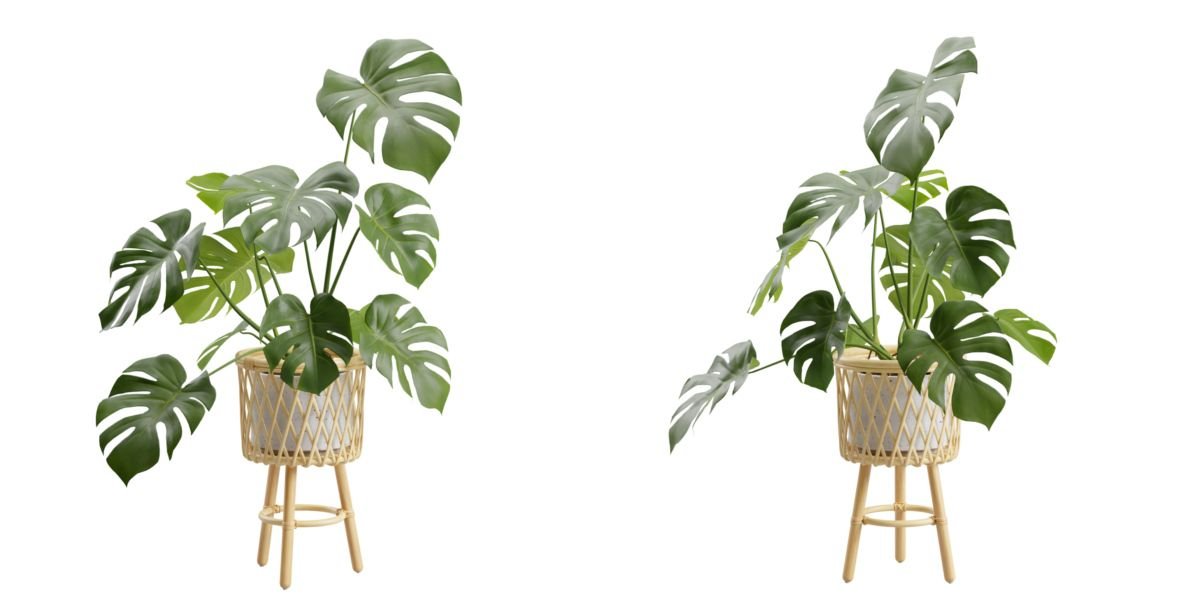
Learning how to care for monstera deliciosa starts with understanding its tropical origin. Native to the rainforests of Central America, this climbing evergreen vine uses trees to pull itself toward the canopy. Its popularity as a houseplant comes down to its bold architectural look, featuring massive, glossy leaves that naturally form distinct splits and holes as they mature.
In its natural habitat or ideal outdoor setting, a mature vine can produce secondary adventitious roots, cream-colored spathe flowers, and edible fruit that tastes like a hybrid of banana and pineapple. Indoors, fruit development is exceptionally rare due to ambient atmospheric limits. Your main goal in managing this species is replicating its native understory environment using manageable household methods.
Where Monstera Deliciosa Grows Best Indoors
Placement dictates your plant’s growth rate and structural integrity. Monstera deliciosa thrives best in bright, indirect light, mimicking the filtered sunlight of high canopy trees.
An eastern exposure window is often ideal, supplying gentle morning rays without intense heat. A western or southern window works well too, provided you set the pot back 3 to 5 feet from the glass or layer the window with sheer curtains.
- Direct, unshaded afternoon sun will scorch the foliage, leaving permanent bleach marks or crisp brown burn spots.
- Deep shade causes spindly stem growth, long leggy petioles, and reduced leaf size.
- Plants stuck in dim corners gradually lose their rich green color and stop producing dramatic leaf splits.
Light exposure directly impacts leaf fenestration. Without sufficient light energy, a young plant will produce solid, heart-shaped leaves indefinitely. Variegated cultivars like Monstera deliciosa ‘Albo Borsigiana’ demand even higher light levels than all-green forms because their white patches lack chlorophyll. However, their delicate cream-colored tissues burn far more easily under direct rays.
Watering Without Keeping the Roots Wet
Irrigation should be driven by soil moisture levels rather than a rigid weekly calendar. Monstera roots require high oxygen levels alongside moisture, meaning constant saturation leads to root decay.
Check the potting substrate before pouring water. Insert your finger 2 to 3 inches into the soil or use a wooden dowel. If the top half of the pot feels completely dry and comes out free of dirt, it is time to hydrate.
When watering, drench the soil evenly until liquid drains freely from the bottom exit holes. Empty the catch saucer after 15 to 20 minutes so the base never sits in pooled runoff.
During warm spring and summer months, active transpiration accelerates water absorption. In late autumn and winter, shorter days slow down metabolism, requiring you to stretch the interval between waterings significantly.
Persistent overwatering strips oxygen from the soil, causing yellowing lower foliage and foul-smelling root rot. Consistently wet soil can also attract fungus gnats, making proper moisture control important.Underwatering causes total tissue wilt, dry crisp leaf tips, and light, pale green leaves. Consistent moisture balance keeps petioles stiff and upright.
Choosing Soil and a Pot for Monstera Deliciosa
Standard commercial indoor soil retains too much moisture for tropical climbers. To build a healthy root structure, mix an airy, coarse substrate that drains water immediately while holding slight residual moisture.
A proven DIY potting mix consists of equal parts:
- Premium peat-based or coco coir potting soil
- Coarse orchid bark chips
- Perlite or pumice for structural aeration
- Horticultural charcoal to absorb impurities
Ensure your pot features at least one wide drainage hole at the base. Terracotta containers allow moisture to evaporate through porous clay walls, which helps prevent overwatering. Plastic or ceramic pots hold moisture longer, requiring more cautious watering habits.
Select a container that leaves 2 to 3 inches of room around the current root ball. Placing a modest root system into an oversized pot leaves large pockets of wet soil that do not dry out, encouraging fungal rot.
Warmth, Humidity, and the Indoor Climate
Monstera deliciosa thrives in ambient temperatures between 65°F and 85°F (18°C to 29°C). Stagnant cold air damages cellular walls rapidly, so keep foliage away from temperatures dropping below 55°F (13°C).
- Protect leaves from sudden cold drafts near exterior doors and air conditioning vents.
- Avoid placing the plant directly beside radiant space heaters or forced-air furnace registers.
- Maintain ambient household humidity around 50% to 60% for optimal leaf expansion.
While standard indoor humidity levels around 30% to 40% are usually tolerated, low air moisture often results in brown leaf margins and sticking leaf sheath edges during new leaf unfurling.
Using a dedicated cool-mist room humidifier near the plant maintains air moisture without wetting the leaves. Misting with a spray bottle provides only temporary humidity for a few minutes and increases the risk of fungal leaf spot diseases if water collects in leaf folds.
Feeding Monstera Deliciosa for Steady Growth
Nutrient supplementation supports massive leaf production during peak growing periods. Apply a balanced liquid houseplant fertilizer with an N-P-K ratio like 10-10-10 or 20-20-20 from early spring through early autumn.
Dilute the fertilizer solution to half the strength recommended on the product label. Apply it once every 3 to 4 weeks directly after a regular watering to prevent concentrated chemical salts from burning tender root hairs.
Stop fertilizing altogether during late autumn and winter when reduced light stops active stem elongation. Excess salts from unused fertilizer build up in the substrate, showing up as crusty white surface deposits and burnt, crispy leaf tips.
Give Monstera Deliciosa Something to Climb
In nature, this plant uses strong adventitious aerial roots to attach itself to tree trunks, climbing toward forest light. Without vertical support indoors, mature stems bend under their own weight and sprawl horizontally across floors.
Providing a moss pole, coir pole, or wooden trellis maintains an upright posture and encourages leaves to grow larger with deeper fenestrations.
Position the support pole behind the main stem during repotting, driving it deep into the base of the container. Fasten the central stem to the support using soft plant ties or green hook-and-loop tape, taking care not to bind the flexible leaf petioles.
Aerial roots emerging from nodes can be guided gently back into the soil substrate to absorb extra water and minerals. Alternatively, wrap them securely around the moss pole. Do not trim aerial roots unless they block access walkways, as removing them deprives the plant of structural support and supplementary hydration.
When to Repot Your Monstera
Monsteras grow fast and usually need a container upgrade every 18 to 24 months. Rather than following a set timetable, let physical indicators guide your repotting schedule.
Watch for roots growing out of the bottom drainage holes, roots circling tightly around the inner soil surface, or water running straight through the pot without soaking in. Top-heavy plants that tip over easily also need a wider base.
Shift your plant to a container 2 inches larger in diameter than its current pot.
Gently slide the root ball out, loosen packed exterior roots with your fingers, and center the plant in fresh, coarse substrate. Do not bury the main stem deeper than its original soil mark, as buried petioles rot easily.
Pruning and Training an Overgrown Plant
Pruning keeps large Monstera plants manageable while maintaining an attractive shape indoors.
Use sharp bypass pruners sterilized with 70% isopropyl alcohol to make clean cuts. Cut damaged or yellowed leaves off near the base where the petiole meets the central stem.
To reduce overall height or spread, trim main stems just above a leaf node. This prompts dormant lateral buds to sprout new foliage lower on the stem, creating a bushier appearance.
Save healthy stem cuttings with attached nodes to root new plants instead of throwing them away.
Why Some Leaves Have Holes and Others Don’t
The signature leaf splits and holes in mature Monstera foliage are scientifically known as fenestrations. These openings allow wind to pass through giant leaves without tearing them and help light filter down to lower foliage in dense canopies.
Young Monstera plants produce solid, small, heart-shaped leaves without any fenestrations. As the root system matures and the plant climbs vertically, newly emerging leaves develop edge splits and inner midrib holes.
Light intensity plays a key role in leaf division. A mature plant kept in dim light will stop forming splits and produce solid leaves again. High light levels, physical climb supports, and root maturity are essential for developing large, split leaves.
When the Leaves Start to Look Wrong
Foliage changes are early indicators of root zone or atmospheric issues.
Yellow Leaves
Yellowing foliage on lower, older leaves is usually caused by overwatering and saturated soil. If yellowing strikes new leaves, check for nutrient deficiencies or underwatering. Natural leaf senescence also causes the oldest bottom leaves to turn yellow and drop off occasionally.
Brown or Crispy Edges
Crispy brown margins on leaf tips usually point to low relative humidity, dry soil, or salt build-up from hard tap water and synthetic fertilizers. Direct afternoon sunlight also bleaches tissue, leaving dry brown burn patches.
Drooping Leaves
Wilt occurs when leaf stems lose internal water pressure. Check the soil immediately. If the substrate is dry, the plant needs water. If the soil is dripping wet and leaves droop anyway, root rot has destroyed the plant’s ability to absorb moisture.
Black or Soft Areas
Dark brown to soft black spots with yellow rings point to advanced root rot or bacterial infection caused by overwatering and poor drainage. Unpot the plant immediately, trim off black mushy roots, and repot in fresh, dry substrate.
Pests on the Leaves and Stems
Check the undersides of leaves and stem joints regularly for common indoor pests.
- Spider mites leave fine silk webbing and yellow speckling on leaf surfaces.
- Mealybugs show up as white, cotton-like clumps in petiole grooves.
- Scale insects look like raised brown bumps along main vine stems.
Wipe down infested leaves using a damp cloth soaked in an insecticidal soap solution or 1% neem oil mix every 7 days until the pests are gone.
Propagating Monstera From a Cutting
Monstera deliciosa propagates easily through stem cuttings rooted in water or directly in soil.
A single leaf cut without a stem node cannot generate new stem tissue or grow into a complete plant. Always choose a healthy stem segment that includes at least one prominent node and an aerial root bump.
Make a clean cut 1 inch below the node using sterile shears.
Place the cutting in a glass jar of clean water, ensuring the node stays fully submerged while keeping the leaf blade dry. Position the jar in a warm spot with bright indirect light, changing the water every 4 to 6 days to keep it clear and oxygenated.
Roots will sprout from the node within 3 to 5 weeks. Once secondary root branches reach 2 to 3 inches long, plant the cutting into a small pot filled with airy substrate.
Keep It Away From Pets and Children
All parts of Monstera deliciosa contain microscopic insoluble calcium oxalate crystals.
If chewed or swallowed, these sharp needle-like crystals penetrate delicate mucous membranes, causing immediate oral irritation, burning of the lips and tongue, excessive drooling, difficulty swallowing, and vomiting.
Keep pots on raised stands or use plant ties to secure trailing stems away from cats, dogs, and curious toddlers. Seek prompt veterinary or medical assistance if plant tissue is eaten.
The Care Routine Your Monstera Actually Needs
Maintaining a healthy Monstera comes down to consistent, attentive care rather than complex daily steps.
Focus on clear visual indicators: feel the soil moisture, check leaf color, and watch stem posture.
- Check the top 3 inches of soil for dryness before watering.
- Set the plant in a bright location out of direct afternoon sun.
- Wipe dust off leaves monthly with a damp cloth so the plant can process light efficiently.
- Feed diluted fertilizer monthly during active growth in spring and summer.
- Tie stems to a sturdy support pole as the plant grows taller.
- Inspect leaf undersides regularly for early signs of pests.
Giving your Monstera deliciosa strong vertical support, well-aerated soil, and bright indirect light will keep it growing happily indoors for years.