

A clean window is the most overlooked factor in a home’s energy efficiency and aesthetic value. Most people settle for a smudged view because they believe window cleaning is an exhausting, all-day battle against streaks.
However, glass is a porous material. If you allow grit, salt, and acidic rain to sit on the surface for too long, they will physically etch the pane. This creates permanent cloudiness that no amount of scrubbing can fix, eventually requiring an expensive replacement of the entire window unit.
Professional clarity is a matter of chemistry and mechanical precision, not just hard work. This guide moves past the spray and wipe myths that simply move dirt around the glass. Instead, we provide the exact blueprint used by field experts to protect glass from mineral damage and ensure your home remains flooded with natural light.
From mixing the perfect acidic solution to mastering high-reach safety, you are about to learn how to achieve a crystal-clear finish that lasts for months.
Types of Window Cleaning
Residential Window Cleaning

Home glass care is primarily a battle against the indoor-outdoor bridge. Inside your home, you are managing a thin film of skin oils, pet dander, and household dust that acts like a magnet for moisture.
Outside, your windows face environmental stressors like bird droppings, tree sap, and wind-blown grit. These substances don’t just sit on the glass; they bake into it under the afternoon sun, making them increasingly difficult to remove without specialized tools.
Maintaining your home’s glass requires a seasonal mindset. I always recommend tackling the hardest windows first, because they are usually facing the street or the backyard garden, as they accumulate the most grit. By the time you reach the smaller, protected panes, you have already conquered the most labor-intensive part of the project.
Consistency here is the only way to prevent hard water spots from becoming a permanent fixture of your home’s exterior.
Commercial Window Cleaning (Offices & Shops)
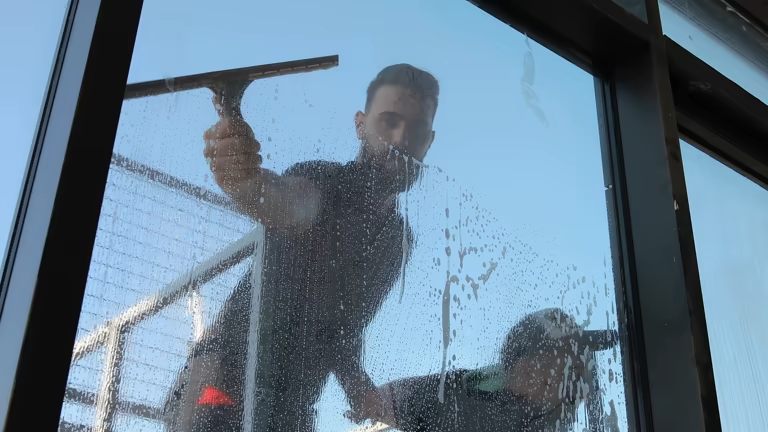
In the business world, your windows are your silent salesperson. A storefront covered in street exhaust and fingerprints creates a negative first impression before a customer ever walks through the door.
Office glass faces extreme levels of urban pollution, including oily exhaust fumes and road salt, which create a dark, sticky film. This grime doesn’t just block the view; it blocks the natural light that is essential for employee productivity and mood.
Most commercial spaces benefit from a high-frequency schedule, often weekly or bi-weekly. Because these panes are often larger than residential windows, they require heavy-duty squeegees like the Ettore Brass Channel to ensure a uniform, streak-free finish across the entire entrance.
Regular maintenance at the commercial level is also a cost-saving measure, as it prevents the city smog from permanently pitting the glass surface.
High-Rise Window Cleaning

High-rise work is a specialized engineering feat that requires technicians to work at incredible heights using rope access, cradles, or Bosun’s chairs. This is a zero-mistake environment where wind speeds and weather changes are monitored by the minute.
Every tool, from the squeegee to the bucket, is tethered to the technician’s harness to prevent deadly accidents on the streets below.
This sector is strictly regulated by OSHA safety standards to ensure worker protection. High-rise teams must be experts in both rope physics and glass chemistry, as high-altitude glass often features specialized coatings that react poorly to standard cleaners.
Interior vs Exterior Window Cleaning
Interior cleaning is a process of surgical precision. You must use a low-moisture technique to avoid damaging your drywall, flooring, or expensive window treatments. I suggest using a spray bottle with a fine mist and focusing on detailing the edges with dry Huck towels to ensure no water seeps into the wooden sills or frames, which can lead to mold over time.
Exterior cleaning, however, is a high-volume water task. You need to flood the glass with soapy water to float away abrasive grit before you ever touch it with a squeegee. If you try to scrub a dry, dusty exterior window, you are essentially sandpapering the glass.
Experts always recommend cleaning the exterior twice as often as the interior to combat the constant barrage of environmental pollutants.
Read more: Room Cleaning Tips: My Go-To Routine That Actually Keeps My Room Clean
Essential Window Cleaning Tools & Equipment
Basic Tools (DIY)
You can achieve professional results with a very small investment, provided you ditch the paper towels. Paper towels are expensive, inefficient, and leave behind a lint fog of tiny fibers.
For a proper DIY kit, you need 100% cotton Huck towels for detailing the edges and a microfiber scrub pad to break up stubborn debris without scratching the glass surface.
A dedicated window bucket is also essential. Unlike a round household bucket, a rectangular window bucket allows you to soak your entire T-bar applicator evenly.
If you have hard tap water, I strongly suggest using distilled water for your solution; it eliminates the mineral spotting that frustrates most DIYers.
Professional Tools
Pros rely on the Three-Piece kit designed for speed and physical leverage. The industry standard includes a brass or stainless steel squeegee handle from brands like Unger or Ettore. The rubber blade is the most important part of the tool; it must be sharp and replaced frequently to prevent skipping.
For high-reach areas, a telescopic extension pole like the Unger TelePlus is a lifesaver. It allows you to clean second-story windows while keeping your feet safely on the ground.
Additionally, a professional scraper with a 4-inch surgical steel blade is used to remove paint or stickers, but it should only ever be used on glass that is soaking wet.
See also: The Complete Guide to Home Cleaning: Deep Cleaning, Smart Hacks, and Practical House Cleaning Tips
Best Window Cleaning Solutions
DIY Window Cleaning Solutions
The best way to wash windows is with a simple, acidic solution that breaks down the alkaline film left by rain. Vinegar is a natural solvent that is both cheap and highly effective for residential use. A standard ratio of 1 part white vinegar to 10 parts warm water works for most jobs.
To give your solution more slip, add a single drop of Dawn Ultra dish soap. The soap acts as a lubricant, allowing your squeegee to glide across the glass without the rubber grabbing or jumping. This glide is the secret to a professional, streak-free finish that DIYers often miss.
Important Note: Avoid using scented vinegars or soaps with heavy moisturizers. These additives leave an oily residue that will cause rainbow-colored streaks as soon as the sun hits the glass.
Store-Bought Window Cleaners
If you prefer a commercial spray, avoid anything containing ammonia. Ammonia is harsh on the respiratory system and can strip the tinting or UV coatings off modern window films. I recommend aerosol foams like Invisible Glass because they cling to the pane and don’t run down your walls as fast as liquid sprays.
Step-by-Step Window Cleaning Process
Step 1: Preparation
Preparation is the foundation of a fast, safe job. Clear your sills of all decorations and pull back your curtains or blinds. If you are working outside, check for wasp nests or spider webs in the corners of the frames. Removing these before you apply water prevents them from becoming a muddy mess on your clean glass.
Step 2: Clean Frames & Tracks
This is the most neglected step in window cleaning. If you clean the glass but leave the tracks dirty, the next rain will wash that grime right back onto your clean pane. Tracks act as a gutter for your windows, catching bugs, dust, and moisture that can eventually lead to wood rot or mold.
- Vacuuming: Use a crevice tool to remove loose debris first.
- The Deep Scrub: Use a damp microfiber cloth to wipe the entire frame. For tight corners, a cotton swab or an old toothbrush works perfectly.
- Drying: Always wipe the tracks completely dry. Moisture left against the window seals is the primary cause of seal failure and mold growth.
Step 3: Clean Glass Properly
Soak your T-bar applicator in your bucket and scrub the glass in a circular motion. This agitates the dirt and pulls it away from the pores of the glass. Once the pane is fully soaped, use your squeegee in a smooth, continuous S-motion or straight horizontal pull, overlapping each stroke slightly.
Tip: Wipe your squeegee blade with a dry cloth after every single pass. If the rubber is wet when it touches the glass for the next stroke, it will leave a visible ghost line.
Step 4: Exterior Window Cleaning
Give the outside of your home a heavy pre-rinse with a garden hose. This knocks off the heavy grit that could scratch your windows during the scrubbing phase. For stubborn bird droppings or tree sap, let the soapy water sit for a minute to soften the debris before you attempt to scrub it off.
Step 5: Screens, Blinds & Shades
Never put a dirty screen back onto a clean window. Take your screens to the driveway and scrub them with a soft brush and soapy water. For your blinds, a simple wipe-down with a damp microfiber cloth is usually enough. Ensure everything is 100% dry before reinstalling to prevent dust from sticking to your fresh glass.
How to Clean Windows Without Streaks
The primary cause of streaks is the sun. Never clean windows in direct sunlight because the heat dries your solution faster than you can squeegee it off. A cloudy, cool day is the professional’s best friend.
Furthermore, ensure your squeegee rubber is “sharp.” If the edge is rounded or nicked, it will skip and leave water behind every time.
Common Window Cleaning Mistakes
Even with the best intentions, many homeowners fall into traps that make their windows look worse than before they started. Most of these errors stem from using outdated myths or trying to rush the process without understanding the physics of glass.
Avoiding these common blunders will save you time, money, and the frustration of seeing streaks as soon as the sun comes out.
- Over-soaping: Using too much soap creates a thick, sticky film that remains on the glass even after squeegeeing. This film acts like a magnet, attracting dust and pollen faster than a clean window would.
- Scraping Dry Glass: Using a razor blade to remove paint or tape on dry glass is a guaranteed way to cause permanent scratches. The glass must be soaking wet with soapy water to act as a lubricant for the blade.
- Using Newspaper: This is an outdated myth from an era when ink was different. Modern inks often smear, leaving black residue on your hands and window frames, creating more of a mess than they solve.
Advanced Window Cleaning Problems & Solutions
Hard Water Stains
If you see white, cloudy spots that won’t wash off, you have calcium buildup. This usually happens near lawn sprinklers.
- The Solution: Use a 50/50 mix of vinegar and water and let it sit on the glass for 5 minutes.
- The “Pro” Secret: If vinegar fails, use a fine grade (#0000) steel wool. It must be quadruple zero—anything coarser will scratch the glass.
Grease & Kitchen Windows
Kitchen windows are a nightmare because of “Aerosolized Grease.” In residential kitchens, this comes from frying. In commercial kitchens, the exhaust fans are running 24/7, pulling grease through the air.
- For Home: Use a citrus-based degreaser before your regular window cleaner.
- For Commercial: You may need a professional-grade solvent. These windows often require a “double-wash” where the first pass removes the oil and the second pass cleans the glass.
Mold & Dirt Build-Up
If you see black spots on your window seals, it is likely mold from trapped condensation.
- The Solution: Use a 10% bleach-to-water solution and scrub with an old toothbrush.
- Safety Note: Bleach will ruin your curtains and carpets instantly. Always place a thick towel on the floor to catch any drips.
Rain Spots & Pollution
Rain carries city dust and industrial pollutants that “bond” to the glass. A regular squeegee scrub is the only way to physically remove this layer of urban pollution. Regular rinsing with a hose helps, but it won’t remove the sticky film left by vehicle exhaust.
Window Cleaning for Offices & Shops
In an office or retail environment, clear glass is essential for a professional atmosphere. Street-level shop windows catch a massive amount of fingerprints and road salt, which creates a dull, gray film. This grime doesn’t just block the light; it can eventually lead to the glass “pitting” or becoming permanently cloudy due to urban acids.
Professional-grade squeegees are a necessity for these larger panes. Because storefronts represent the face of a business, they should be cleaned weekly. This consistent care ensures the entrance remains bright and welcoming, which is a key factor in attracting foot traffic.
DIY vs Professional Window Cleaning
DIY cleaning is an excellent way to save money on ground-floor windows and interior glass. It gives you full control over the chemicals used in your living space. However, it can be a slow and physically demanding process for an entire house.
Professionals bring specialized gear like water-fed poles and high-reach ladders that a homeowner usually won’t own. They also carry liability insurance, which is critical for high-risk exterior work. A pro can often finish in two hours what might take a homeowner an entire weekend.
When Should You Hire a Professional Window Cleaning Service?
You should hire a professional if your home is more than two stories tall. Attempting to balance on a high ladder with a bucket and squeegee is a leading cause of home accidents. You should also call a pro if you see “fogging” between the panes of double-glazed windows, as this indicates a failed seal that no amount of cleaning will fix.
Best Window Cleaning Services in the USA
National leaders like Fish Window Cleaning and Window Genie are reliable options for standardized pricing. For local expertise, sites like Angi can connect you with vetted professionals. Always ask for a written estimate and proof of insurance before allowing any technician onto your roof or ladders.
How Often Should You Clean Windows?
Standard homes should have a full, deep cleaning twice a year—typically in the Spring and Fall. However, if you live near the ocean or a major highway, you may need an exterior rinse every 30 days. Salt and soot are highly abrasive and will damage your window seals if left unchecked for too long.
Window Cleaning Safety Tips
Ladder falls are a primary cause of emergency room visits during home maintenance. Your safety must always come before a clean window.
- The 4-to-1 Rule: For every four feet of height, the base of the ladder must be one foot away from the wall.
- Three Points of Contact: Keep two feet and at least one hand on the ladder at all times.
- Chemical Safety: Never mix ammonia and bleach. This combination creates toxic chloramine gas, which can be fatal in enclosed spaces.
- Ladder Check: Always inspect the rubber feet of your ladder. If they are worn down to the metal, the ladder can slide out from under you on concrete.
Safety Note: If a window is painted shut, do not try to force it open while standing on a ladder. The sudden release of pressure can throw you backward.
Final Thoughts
Consistent window cleaning is a fundamental part of home preservation. When you ignore the grime, you are allowing the elements to slowly degrade the clarity and value of your property. Properly use the right tools like a sharp squeegee and huck towels to make the job safer, faster, and much more effective than the old spray and wipe method.
By following a seasonal schedule and prioritizing the cleaning of tracks and frames, you ensure that your home remains flooded with natural light. Keep your center of gravity safe, stay off the ladders during high winds, and enjoy the professional-grade results of a job well done.
Frequently Asked Questions (FAQs)
How to clean windows without streaks?
The secret is cleaning on a cloudy day and using a squeegee. Wipe the blade dry after every single pass to ensure no water is redeposited on the glass.
How to make a homemade window cleaning solution?
Mix one part white vinegar with ten parts warm water. Add one drop of dish soap to help the squeegee slide smoothly.
Can I use vinegar to clean windows?
Yes. Vinegar is the best natural tool for breaking down mineral deposits and the alkaline film left by rain.
How to clean windows using a squeegee properly?
Soap the glass, then pull the squeegee in a smooth, overlapping motion. Always detail the edges with a dry cotton cloth afterward.
How to clean very dirty or greasy windows?
Use a citrus-based degreaser first to break the oil. Wash the window twice to ensure all residue is gone before the final squeegee pass.
How to remove hard water stains from windows?
Use a paste of baking soda and water, or a specialized mineral remover like Bio-Clean. For very tough cases, #0000 steel wool can be used on wet glass.
Are paper towels good for cleaning windows?
No. They leave behind lint and are inefficient. Use microfiber or huck towels for a professional finish.
How to clean outside windows without a ladder?
Use an extension pole with a squeegee attachment or a water-fed pole system that reaches high windows from the ground.
How to clean window tracks and frames?
Vacuum the loose dirt first, then scrub with a damp cloth and an old toothbrush. Always dry the tracks to prevent mold.
How much does professional window cleaning cost in the USA?
Standard residential services typically cost between $150 and $450, depending on the number of panes and the height of the home.