
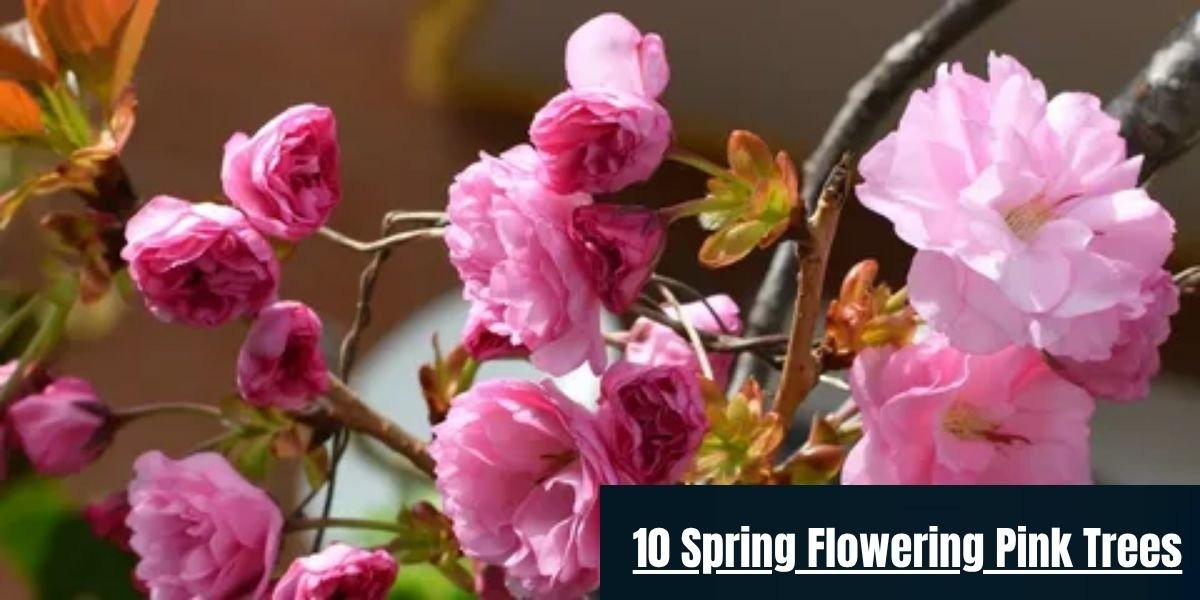
Spring blooms transform a landscape faster than almost any other garden feature. I’ve spent close to two decades walking clients through nursery rows in March, watching them fall for the same trick every year. A single flowering tree, still completely leafless everywhere else, stops them mid-sentence. Planting a tree with pink flowers simply has that power. It gives a yard an immediate visual anchor, announcing the end of winter dormancy in a way that lawn green-up or bulb foliage cannot match.
The appeal isn’t strictly visual either. Early-blooming ornamentals like redbuds and cherries open when almost nothing else is in bloom, making them a genuine lifeline for queen bumblebees and solitary mason bees coming out of hibernation. Mature specimens also perform measurable work for air quality. Appraisers I’ve worked with routinely note that a well-placed pink tree at the front of a property adds real value to curb appeal at resale. It stands out as one of the few landscape investments that pays for itself in under a decade.
The catch is that not every pink flower tree belongs in every yard. I’ve been called out to diagnose heaved sidewalks caused by an eager Yoshino Cherry planted eight feet from a porch more than once. Growth rate, canopy spread, root aggressiveness, and cold tolerance vary enormously across this group. A species that thrives in Georgia clay may struggle or outright die in a Minnesota winter. Late frosts are the other silent threat. A tree that breaks bud too early can lose an entire season’s bloom display to a single 28°F night in April.
Below is a practical reference built from field observations, current USDA hardiness data, and the actual maintenance issues that surface after year one, far beyond the brief description printed on a nursery tag.
Spring Flowering Pink Trees at a Glance
| Tree Species | Bloom Time | Mature Height | USDA Zones | Sun Requirements | Best For |
| Eastern Redbud | Early Spring | 20 to 30 feet | 4 to 9 | Full Sun to Part Shade | Naturalized borders, small lawns |
| Saucer Magnolia | Early Spring | 20 to 25 feet | 4 to 9 | Full Sun to Part Shade | Lawn specimen, front yards |
| Japanese Flowering Cherry | Mid Spring | 20 to 30 feet | 5 to 8 | Full Sun | Focal points, street trees |
| Kwanzan Cherry | Mid to Late Spring | 15 to 25 feet | 5 to 9 | Full Sun | Urban courtyards, accent beds |
| Yoshino Cherry | Early to Mid Spring | 30 to 40 feet | 5 to 8 | Full Sun | Open lawns, driveway lining |
| Weeping Cherry | Early Spring | 15 to 25 feet | 5 to 8 | Full Sun | Foundation corners, water features |
| Flowering Crabapple | Mid Spring | 15 to 25 feet | 4 to 8 | Full Sun | Wildlife gardens, cottage borders |
| Pink Dogwood | Mid Spring | 15 to 30 feet | 5 to 9 | Partial Shade | Understory settings, shaded yards |
| Flowering Peach | Early to Mid Spring | 15 to 20 feet | 5 to 9 | Full Sun | Small gardens, sunny borders |
| Cherry Plum | Early Spring | 15 to 25 feet | 4 to 9 | Full Sun | Contrast planting, privacy screen |
1. Eastern Redbud (Cercis canadensis)
Redbud is one of the few North American natives on this list. Its defining feature is cauliflory, a unique trait where clusters of magenta-pink pea-shaped flowers erupt directly from bare trunk and limb wood before a single leaf unfurls. It is a botanical oddity most homeowners have never heard named, yet they recognize it instantly once pointed out. The bloom window runs two to three weeks in early spring, after which heart-shaped foliage takes over and turns a clean butter-yellow by October.
Mature trees reach 20 to 30 feet with a wide 25 to 35 foot canopy. The species is exceptionally resilient, holding hardy from USDA Zone 4 through 9 while tolerating winter lows down to -20°F without dieback. It handles sandy, loamy, or clay soils across a pH range of 6.0 to 8.0 as long as drainage is dependable. It takes full sun or dappled shade equally well, which explains why it appears so often along woodland edges and within mixed native plantings.
The main takeaway I emphasize to clients is that redbuds develop a deep taproot early. A container-grown redbud transplants poorly once established. Pick its permanent home the first time around. Watch drainage closely as well. Standing water around the root flare is the fastest route to verticillium wilt, which shows up as sudden branch dieback mid-canopy and offers no cure once established.
Cultivars worth knowing include Forest Pansy, which brings deep burgundy summer foliage instead of standard green, and Ruby Falls, which offers a compact weeping form tailored for smaller lots.
2. Saucer Magnolia (Magnolia × soulangeana)
First bred in France in the 1820s by Étienne Soulange-Bodin, this hybrid still hasn’t been surpassed for sheer flower size. Goblet-shaped blooms open up to 10 inches across, with thick purplish-pink petal bases fading toward creamy white tips. The display looks striking against bare grey branches.
Expect a mature height of 20 to 25 feet with a comparable spread, usually developing a low-branching, multi-stemmed silhouette rather than a single tall trunk. It is hardy across USDA Zones 4 through 9 and performs best in full sun to partial shade within rich, moist, acidic soil holding a pH between 5.0 and 6.5.
The real risk with saucer magnolia isn’t winter hardiness, but timing. Because it flowers so early, a late freeze can turn a canopy of pristine open blooms brown overnight. I’ve witnessed this happen in a single evening after a warm March week tricked buds into opening early. Planting on a north-facing slope or in the partial shade of a nearby structure slightly delays bud break, helping dodge severe frost windows. Popular cultivars like Alexandrina and Lennei are widely available and remain reliably floriferous even on slightly compromised sites.
3. Japanese Flowering Cherry (Prunus serrulata)
This is the exact species most people picture when they think of classic cherry blossoms. It serves as the backbone of the mid-spring display that coats parks and boulevards in soft pink color. Clusters of single or double blooms open in mid-spring. As petals drift down over a week or two, bronze-tinged new leaves emerge and darken to deep green throughout summer.
Mature specimens reach 20 to 30 feet tall and wide with a well-balanced rounded crown. They are best suited to USDA Zones 5 through 8. They do not handle severe Zone 3 or 4 winter cold well, and they tend to struggle in the humid heat of Zone 9.
Full sun exposure is non-negotiable for a dense flower set. Provide well-draining loamy soil with a neutral to slightly acidic pH and it establishes quickly. It stands out as a natural choice for lining driveways or acting as a formal focal specimen near an entryway.
Realistically, ornamental cherries are not long-lived trees. A lifespan of 30 to 50 years is typical, which is considerably shorter than an oak or maple. Budget for annual scouting for Japanese beetles, which skeletonize foliage in July, as well as leaf spot fungus, which appears as small purple-black lesions during wet springs and triggers early defoliation if left unchecked.
4. Kwanzan Cherry (Prunus serrulata ‘Kwanzan’)
Kwanzan is the showiest cultivar in the cherry world. Its double blossoms feature up to 30 petals each, packed so densely they resemble miniature roses. Opening in mid-to-late spring, they hang heavily enough to obscure the branches beneath them.
Its tidy, vase-shaped form tops out at 15 to 25 feet, making it far more manageable than a straight-species Japanese cherry. It remains reliable across USDA Zones 5 through 9. It needs at least 6 hours of direct sun daily and tolerates moderate clay, though it will not sit happily in standing water.
Because Kwanzan is sterile and sets no fruit, patios and walkways underneath stay clean without staining or slipping hazards. This is precisely why it has become a staple for urban courtyards and tight accent beds. The tradeoff is a shallow, fibrous root system. Keep plantings at least 5 feet away from concrete paths, as Kwanzan roots are notorious for heaving pavement within a decade when positioned too close.
5. Yoshino Cherry (Prunus × yedoensis)
Yoshino is the landmark tree behind Washington D.C.’s Tidal Basin display and major cherry blossom festivals worldwide. Soft pink buds open into faintly almond-scented, near-white blooms in early spring, blanketing the branches before leaves appear.
It ranks as the largest tree on this list by a wide margin, reaching 30 to 40 feet tall and wide at maturity with an expansive, spreading canopy. Hardy in USDA Zones 5 through 8, it genuinely needs ample room to spread. This is not a specimen for a narrow side yard or anywhere within 15 feet of a building foundation.
Provide full sun and acidic soil in the 5.5 to 6.5 pH range. It grows fast for an ornamental tree, often adding 12 to 24 inches per year. That rapid development means mature size calculations catch people off guard if they fail to plan for it from day one.
Yoshino is notably drought-sensitive once summer heat sets in. Maintaining a consistent 3-inch mulch ring over the root zone does more for this species than almost any other maintenance step, helping buffer soil temperature swings and hold moisture through dry spells.
6. Weeping Cherry (Prunus subhirtella ‘Pendula’)
Few trees create visual drama like a weeping cherry. Long, slender branches cascade toward the lawn, and in early spring every inch of that draping wood is covered in pale pink blossoms before foliage fills in.
Mature height reaches 15 to 25 feet with a matching spread, performing reliably across USDA Zones 5 through 8. Full sun is essential here more than almost any species on this list. Interior and lower branches die back rapidly in shaded conditions, destroying the graceful fountain effect that makes growing it worthwhile. Standard loamy soil with average fertility satisfies its needs. Site these near ponds, at the top of retaining walls where branches can drape over the edge, or as standalone lawn specimens.
Pruning demands a careful hand. Weeping cherries are typically grafted, and suckers will sprout below the graft union on the main trunk. Remove those immediately, or they will eventually overtake the ornamental top growth. Trim drooping branch tips so they hover just above the ground rather than pooling on the lawn, which keeps the silhouette clean while preventing fungal issues caused by wet foliage resting on turf.
7. Flowering Crabapple (Malus spp.)
Modern disease-resistant cultivars like Prairie Fire and Robinson have completely transformed the crabapple’s reputation. Mid-spring brings vivid deep-pink to magenta blossoms. By autumn, the tree is loaded with persistent dark red fruit that holds firm through winter.
Mature size runs 15 to 25 feet tall and wide. This is one of the toughest species here, reliably cold-hardy across USDA Zones 4 through 8, with select cultivars pushing into Zone 3. Full sun keeps flowering dense and foliage clean. Crabapples adapt to nearly any well-drained soil, which is why they appear so frequently in cottage gardens and informal wildlife plantings.
The persistent fruit is the primary draw for a wildlife-focused yard. Robins and cedar waxwings rely on it late in the season when other food sources thin out. I’ve watched songbird flocks strip a mature crabapple in a single January afternoon. My one strict rule with this species is to stick with modern scab-resistant cultivars. Older varieties act as magnets for apple scab and cedar-apple rust, both of which defoliate canopies by midsummer and leave trees looking sparse.
8. Pink Dogwood (Cornus florida var. rubra)
What reads as a single pink flower on a dogwood is actually four large, showy bracts surrounding a tiny, central cluster of true flowers. That botanical detail explains why dogwood blooms last so much longer than a cherry’s. Tiered, horizontal branching gives the tree strong architectural interest out of bloom, while deep red fall foliage rounds out a strong three-season performance.
It reaches 15 to 30 feet tall with a similar spread and is hardy from USDA Zones 5 through 9. Unlike nearly everything else on this list, pink dogwood actually prefers partial shade. It thrives with protection from harsh afternoon sun, which scorches leaf margins and stresses the tree in hot climates. Supply rich, organic, consistently moist, acidic soil, and it settles naturally into a woodland understory or a shaded backyard border where a sun-loving cherry would struggle.
Drought and compacted soil represent its primary vulnerabilities. Keep roots cool and moist with organic mulch, but pull it back from direct trunk contact. Piling mulch against bark invites rot and shelters borers, which remain a leading cause of premature dogwood decline.
9. Flowering Peach (Prunus persica)
Bred purely for ornamental performance rather than fruit production, double-flowering peach cultivars yield tightly ruffled blossoms packed along dark winter wood. They open in early to mid-spring in shades ranging from soft pink to near-red depending on the cultivar.
This is a compact tree, staying 15 to 20 feet tall and wide, making it well suited to USDA Zones 5 through 9. Give it full sun, solid air circulation, and deep, well-draining loamy soil. Cramped, humid sites invite fungal troubles like leaf curl.
Be realistic about lifespan, as 15 to 20 years is typical. That shorter lifespan is worth factoring into long-term landscape plans. Prune hard right after flowers finish, since flowering peach blooms on the previous year’s wood. That hard post-bloom prune stimulates vigorous new shoots that carry next spring’s flower buds.
10. Cherry Plum (Prunus cerasifera)
Cultivars like Thundercloud open with soft pale pink blossoms in very early spring, then shift their focus to foliage. Dark purple leaves hold their color from spring straight through summer, giving this tree strong multi-season presence long after blooms finish.
Mature size runs 15 to 25 feet tall with a slightly narrower 15 to 20 foot spread. It is hardy across a broad range from USDA Zone 4 through 9. Full sun is essential for deep purple leaf color to develop properly. Planted in shade, the foliage reverts to a duller, washed-out green. It tolerates a wide range of soils, including moderate clay, making it a flexible choice for contrast plantings or fast privacy screens.
One practical note I offer every client considering this species is that the small edible plums that follow bloom will drop. They stain patios, driveways, and light-colored stonework when planted too close to hardscapes. Site it over lawn grass or a mulched bed instead, and it remains a low-hassle addition.
How to Choose the Right Pink Flowering Tree
Choose Based on Mature Size
Nursery tag height at purchase tells you almost nothing useful. A Yoshino Cherry sold in a 15-gallon container can still top 40 feet wide at maturity, making it a poor fit for a tight side yard no matter how manageable it looks on day one. Always plan around mature height and spread rather than what is directly in front of you at the garden center. Keep branches clear of rooflines, overhead utility lines, and structural foundations from the start.
Match Bloom Time to Your Landscape
Sequencing bloom windows is how you stretch spring color across two full months instead of two brief weeks. Pair early bloomers like Eastern Redbud or Saucer Magnolia with mid-to-late spring performers like Kwanzan Cherry or Pink Dogwood. A well-planned yard can carry continuous flower interest from March into May.
Consider Your Climate
Hardiness zones tell you what a tree can survive over winter, but they don’t protect open flowers against late spring frosts, which often poses the greater practical risk. Gardeners in colder regions do best choosing genuinely cold-hardy species like Flowering Crabapple, or siting early bloomers in sheltered pockets of the yard out of prevailing north or west winds where frost pockets gather.
Think Beyond the Flowers
The bloom lasts two to three weeks, but the tree remains for decades. Cherry Plum earns its keep with deep purple summer foliage long after flowering ends. Eastern Redbud offers heart-shaped leaves through summer alongside clean yellow fall color, while Flowering Crabapple holds ornamental fruit into winter that supports wildlife long after leaves have dropped.
The Best Spring Flowering Pink Trees for Different Landscapes
Small Front Yards
Compact growers with non-invasive roots fit small lots best.
- Kwanzan Cherry
- Flowering Peach
- Cherry Plum
Large Landscapes
Broad crowns fill open spaces and create striking natural vistas.
- Yoshino Cherry
- Eastern Redbud
- Saucer Magnolia
Near Patios
Non-fruiting trees prevent sticky residue on outdoor seating areas.
- Kwanzan Cherry
- Weeping Cherry
- Eastern Redbud
Cottage Gardens
Soft flower forms blend effortlessly into informal herbaceous borders.
- Flowering Crabapple
- Pink Dogwood
- Eastern Redbud
Pollinator Gardens
Nectar-rich single blossoms attract native bees and early butterflies.
- Eastern Redbud
- Yoshino Cherry
- Single Flowering Crabapple
Low-Maintenance Landscapes
Resilient native and adapted species require minimal chemical intervention.
- Eastern Redbud
- Disease-Resistant Crabapple
- Cherry Plum
Specimen Trees
Unique branching structures create compelling focal points in lawns.
- Weeping Cherry
- Saucer Magnolia
- Pink Dogwood
Planting Tips That Lead to Better Spring Blooms
Sunlight Exposure
Flowering trees need adequate light to properly set next year’s flower buds, not just this year’s. Position sun-loving species where they receive at least 6 hours of direct light daily. Shade-tolerant species like Pink Dogwood do best with gentle morning sun and afternoon protection.
Soil Drainage Test
Waterlogged soil suffocates the fine feeder roots that drive flower production. Dig a hole 12 inches deep, fill it with water, and time how long it takes to drain. If water is still standing after 12 hours, either build a raised planting mound or amend heavily with organic matter before planting. Do not skip this step and hope for the best.
Watering During Establishment
The first two growing seasons determine whether a tree thrives or limps along for a decade. Apply 1 to 2 gallons of water per inch of trunk diameter twice a week during dry stretches. Water deeply around the outer root zone rather than right against the trunk, encouraging roots to spread outward instead of remaining shallow.
Mulching Technique
A 2 to 3 inch layer of shredded bark holds soil moisture and moderates temperature swings across the root zone. Leave a 3 inch gap between the mulch ring and the trunk. Piled mulch resting against bark stands as a leading cause of trunk rot and pest entry.
Fertilizing for Flowers
Heavy nitrogen fertilizer pushes excessive leaf growth at the direct expense of flower buds, a common mistake among well-meaning homeowners. Use a balanced slow-release formula or a phosphorus-leaning organic fertilizer applied in early spring before root activity ramps up.
Pruning at the Correct Time
Timing matters more than technique with spring bloomers. Pruning in late winter removes flower buds that set during the previous summer. Always prune immediately after flowering finishes. That gives the tree the entire remaining growing season to push new wood and set next year’s buds.
Common Mistakes That Reduce Spring Flowering
Planting in Too Much Shade
Trees stretch toward available light in low-sun conditions, producing thin, weak growth and noticeably fewer flower buds season over season.
Over-Pruning After Buds Form
Cutting branches in fall or winter removes mature flower buds that formed the previous summer. By the time you notice the mistake, that year’s bloom is already gone.
Choosing the Wrong Hardiness Zone
Species pushed outside their tolerance range suffer winter kill of flower buds at minimum, and complete trunk dieback in severe winters.
Poor Soil Drainage
Roots sitting in standing water rot before they can absorb the nutrients needed to support healthy bud development the following spring.
Overfertilizing with Nitrogen
High-nitrogen applications trigger excessive leaf growth at the expense of flower production, leaving you with more green foliage and fewer blooms.
Crowding Trees Too Closely
Planting too near buildings or other trees cuts off light and restricts air circulation. This raises the risk of fungal diseases that thrive in still, humid microclimates.
Frequently Asked Questions
Which pink flowering tree blooms first in spring?
The Eastern Redbud and Saucer Magnolia are typically the earliest to open, flowering in late winter to early spring before any green leaves appear.
What is the longest-blooming pink flowering tree?
Flowering Crabapples offer one of the longest displays, holding bloom for up to three weeks before transitioning into colorful ornamental fruit that persists through autumn into winter.
Which pink flowering tree is best for a small yard?
The Kwanzan Cherry and Flowering Peach both stay under 20 feet tall with manageable spreads, making them well suited to compact suburban lots.
Do pink flowering trees attract bees and butterflies?
Yes. Early-blooming single-flower species like the native Eastern Redbud provide essential nectar for queen bumblebees, mason bees, and the first butterflies emerging from winter dormancy when few other nectar sources exist.
Which pink flowering trees grow fastest?
The Yoshino Cherry is the fastest grower on this list, often adding 12 to 24 inches of height annually under good soil moisture and full sun conditions.