Before spending a dollar on a single cabinet, walk out to the garage with a notepad and catalog everything on the floor. After organizing close to two hundred garages over the past decade as a home organization consultant, the single most common mistake observed is homeowners buying storage based on a sale price or a social media photo, then discovering three weeks later that a 40 lb pneumatic compressor or a stack of 27-quart totes will not fit on shelving rated for 30 lbs. Inventory dictates engineering. It determines shelf depth, frame gauge, anchor type, and vertical clearance.
The physics in a garage environment are unforgiving. A shelf rated at 30 lbs will bow and eventually crack under the weight of a car battery or a case of motor oil, regardless of how attractive the resin finish looks in a showroom. Light consumer goods like holiday totes, sports gear, and paper products can safely live on standard resin or wire shelving. However, automotive fluids, pneumatic tools, cast iron equipment, and anything with a battery inside require 18 to 22 gauge steel, properly anchored to studs or masonry. Taking inventory first makes the difference between a system that lasts fifteen years and one that bows by the second summer.
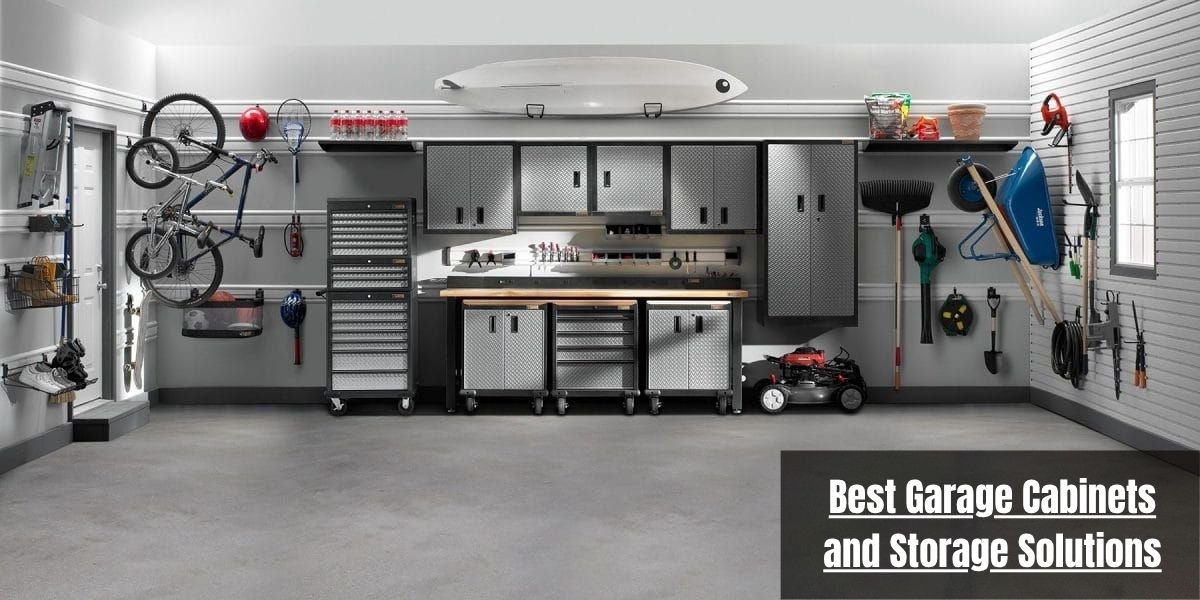
Best Garage Cabinets and Storage Solutions
Evaluating storage systems comes down to four criteria that matter in daily use: steel gauge or material density, documented weight ratings, hardware quality like hinges, casters, and slides, and real-world assembly and anchoring requirements. Several of these options, particularly the NewAge Pro Series and the Gladiator Premier line, handle extreme humidity swings and unheated concrete slabs exceptionally well without deteriorating.
NewAge Products Pro Series 8 Piece Set
NewAge Products builds the Pro 3.0 Series with fully welded 18 gauge steel frames and 19 gauge double wall doors, offering a significantly heavier gauge than the big box store average. The eight-piece configuration arrives largely pre-assembled and spans a full 156 inches of wall space, including a 1.25-inch-thick bamboo worktop.
- Best for: Overall heavy-duty garage organization
- Key features: 18-gauge welded steel frame, 1,000 lb capacity on lockers and floor cabinets, wall cabinets rated separately at 200 lbs, soft-close hinges, integrated key locks, and 2-inch adjustable leveling legs
- Pros: Commercial-grade welds rather than bolted panels, minimal assembly work, strong long-term durability
- Cons: Freight delivery is required given the total set weight, premium pricing strategy
Gladiator Premier Welded Steel Tall GearBox
Gladiator GarageWorks built its reputation on a hammered granite powder coat finish and tread plate doors. Online listings are often inconsistent regarding specs: the Tall GearBox itself is rated for 300 lbs total, distributed at 50 lbs per shelf, which differs from the four-figure capacity quoted for the brand’s separate Modular GearBox drawer unit that carries a 1,400 lb rating on its single full extension shelf.
- Best for: Heavy-duty standalone storage with mobility
- Key features: 300 lb total cabinet capacity, 50 lbs per shelf, magnetic door latches, front fixed and rear swivel casters, lifetime limited warranty
- Pros: Hammered powder coat resists scratches and chemical spills exceptionally well; casters make repositioning easy without unloading contents
- Cons: Fixed interior width limits oversized items, requires double-checking specific model weight ratings before purchase
NewAge Products Bold Series 7 Piece System
The Bold Series serves as NewAge’s mid-tier line, built on 24 gauge steel rather than the Pro Series’ 18 gauge frames. This structural difference in rigidity brings a lower price point and is tailored for standard two-car garages where full vehicle door clearance remains essential.
- Best for: Versatile modular configuration on a moderate budget
- Key features: 24 gauge steel construction, 800 lb rating per locker, 18-inch cabinet depth, optional bamboo or steel worktop
- Pros: Shallower depth preserves door swing clearance in tight spaces, modular layout expands incrementally over time
- Cons: Less rigid under concentrated heavy loads compared to 18 gauge alternatives
Craftsman 28 Inch 2 Door Wall Cabinet
Craftsman offers straightforward steel storage designed for utility. This specific wall cabinet mounts directly into wall studs, keeping total stored weight off a sloped or damp concrete slab.
- Best for: Wall-mounted overhead storage
- Key features: 200 lb total capacity, welded steel frame, zero floor footprint
- Pros: Frees up floor space entirely, simple installation process using a standard stud finder
- Cons: Shallow interior depth cannot accommodate large totes or wide power tool cases
Kobalt 36 Inch Freestanding Steel Cabinet
Kobalt’s freestanding unit remains a widely recommended entry point into steel storage. It delivers solid mid-tier load capacity at an accessible price point for most homeowners.
- Best for: Freestanding floor placement on a budget
- Key features: 600 lb total capacity, adjustable shelves rated at 150 lbs each, recessed double door handles
- Pros: Excellent capacity-to-price ratio, interior shelves adjust quickly as storage needs change
- Cons: Assembly requires patience; significantly easier when seating the top panel with two people
Seville Classics UltraHD Rolling Storage Cabinet
Seville Classics engineered the UltraHD line around workspace mobility, using commercial-grade 5-inch locking casters built to roll across rough or uneven concrete without binding.
- Best for: Mobile storage next to a workbench or vehicle detailing station
- Key features: 300 lb total capacity, 5-inch locking casters, lockable stainless finish doors
- Pros: Rolls smoothly over uneven slabs, wheel locks hold position securely during active use
- Cons: Requires clear floor space for door swing radius and mobility
Suncast Commercial Heavy Duty Resin Cabinet
Suncast’s commercial line utilizes double-wall resin panels rather than thin single-wall plastic. This design distinction is crucial if a garage experiences seasonal moisture, groundwater, or high humidity.
- Best for: Small garages and damp or unconditioned spaces
- Key features: 200 lbs per shelf capacity, multi-wall resin construction, fully rust-proof body
- Pros: Completely immune to rust and chemical stains, lighter to maneuver during initial setup than steel
- Cons: Door panels flex under sideways interior pressure where steel remains rigid
Rubbermaid 2 Door Resin Storage Cabinet
Rubbermaid has produced variations of this snap-together resin cabinet for years. It remains a reliable default recommendation for buyers seeking lockable storage without a large financial investment.
- Best for: Budget-conscious buyers
- Key features: Snap-together assembly, high-density resin panels, lockable handles
- Pros: Highly affordable, will never rust, dent, or corrode over time
- Cons: Shelves can visibly bow under concentrated heavy items like stacked paint cans
Ulti-MATE Storage Heavy Duty Cabinet System
Ulti-MATE targets the premium end of the market using thermal fused laminate panels and European soft close hinges, bringing a refined aesthetic to garage storage setups.
- Best for: High-end aesthetic finish
- Key features: 3/4 inch cabinet-grade construction, soft-close European hinges, brushed metal hardware
- Pros: Showroom quality surface finish, hinge action operates smoothly under daily use
- Cons: Higher initial investment, laminate materials require protection from standing water
Husky 6 Foot Heavy Duty Workbench with Cabinet
Husky pairs a solid wood work surface with full extension, ball bearing drawer slides. This hardware design borrows directly from professional tool chest engineering rather than standard storage cabinets.
- Best for: Cabinets requiring an integrated, permanent workbench
- Key features: 3,000 lb total static weight capacity across the frame, solid wood work surface, full extension ball bearing drawer slides
- Pros: Heavy work surface tolerates hammering, clamping, and engine parts; drawers slide smoothly when fully loaded
- Cons: Represents a permanent floor fixture that requires clear planning before final placement
Husky 36 Inch Steel Tall Storage Cabinet
This tall format cabinet maximizes vertical wall real estate, standing 72 inches high to capture dead space above floor level where garage clutter usually accumulates.
- Best for: Vertical storage of tall or long items
- Key features: 72-inch height, 150 lbs per shelf rating, magnetic catches combined with a key lock
- Pros: Efficiently fits pressure washer wands, brooms, and stacked cases, keeps long items locked away safely
- Cons: High center of gravity makes mounting directly to wall studs essential for safety
Yizosh Reinforced Lockable Steel Cabinet
Yizosh features a 3-point locking mechanism, providing enhanced security features typically found in gun safes and commercial file storage rather than residential garage units.
- Best for: High-security lockable protection
- Key features: 3-point locking system, reinforced steel doors, 180 lbs per shelf rating
- Pros: Highly tamper-resistant compared to single-latch doors, rigid structural steel frame
- Cons: Utilitarian industrial look without decorative finish options
Which Storage Solution Fits Your Garage?
No single storage category solves every layout challenge. The most functional garages combine several storage types, matching each medium directly to the items being stored.
- Cabinets: Protect valuable tools, chemicals, and small hardware from dust, moisture, and unauthorized access. Closed doors keep visual clutter hidden and keep children safe.
- Shelving: Fits bulky, frequently accessed items like plastic totes and coolers where door clearance is not available.
- Pegboards: Keep lightweight hand tools visible and accessible during active projects, offering great value for workspace organization.
- Slatwall Panels: Support heavy hanging gear like ladders, lawn trimmers, and hoses across wide wall spans far better than isolated hooks.
- Ceiling Racks: Provide the ideal location for seasonal items accessed once or twice a year, such as holiday decorations and camping gear.
- Storage Bins: Keep small hardware, plumbing fittings, and spare parts neatly sorted inside larger cabinet shelves.
- Tool Chests: Feature shallow, ball-bearing drawers engineered specifically for high-density hand tool and socket set storage.
Choosing the Right Cabinet Size
Selecting accurate dimensions prevents expensive layout mistakes that are difficult to correct after assembly.
Always measure available wall space between all structural obstructions, including electrical panels, water heaters, and access doors, before selecting a cabinet system width. National building standards generally require a clear working area in front of an electrical panel measuring at least 30 inches wide by 36 inches deep. Blocking this space creates a significant safety hazard.
Height measurements require checking overhead garage door track clearance and lighting fixtures. Tall storage lockers typically range from 72 to 85 inches high, so confirm adequate overhead room exists to tilt and assemble the units upright.
Depth is often overlooked during initial planning. Standard garage cabinets come in 18-inch and 24-inch depths. An 18-inch depth works best in narrower garages to preserve vehicle door swing clearance. A 24-inch depth holds larger totes and tool cases but consumes more floor footprint. Outlining the proposed footprint on the floor with painter’s tape while the vehicle is parked offers a clear visual check before ordering.
Planning for future storage needs is equally important. Most households fill new storage setups within six to nine months. Selecting a modular line with consistent depth and height dimensions allows seamless additions as storage demands grow.
Steel, Wood, or Resin?
Choosing the ideal cabinet material depends on local environmental climate conditions and the total weight of stored items.
| Material | Durability | Moisture Resistance | Weight Capacity | Maintenance | Relative Cost |
| Heavy-Gauge Steel | High impact resistance | High with powder coat | 100–200 lbs per shelf | Low | Moderate to High |
| Engineered Wood / MDF | Low impact resistance | Poor in high humidity | 30–70 lbs per shelf | Medium | Low to Moderate |
| Multi-Wall Resin | Moderate impact resistance | 100% Waterproof | 50–150 lbs per shelf | Very Low | Low to Moderate |
Steel provides maximum structural strength and will not sag under dense engine parts or iron equipment. Quality powder-coated finishes protect against corrosion, though any deep scratch exposing raw metal should be touched up to prevent rust in damp spaces.
Engineered wood and MDF offer a clean appearance at a reasonable price point. However, unconditioned garage humidity causes particle board to swell, delaminate, and lose structural integrity over time. Wood options work best in climate-controlled spaces.
Resin cabinets excel in high moisture or coastal areas. Modern multi-wall polymer construction resists water entirely, though resin panels retain slightly more flex than steel when loaded with heavy equipment.
Modular Systems or Individual Cabinets?
Deciding between modular systems and individual cabinets comes down to budget, timing, and desired visual design.
Modular systems interlock into a unified structure, combining tall lockers, wall units, drawers, and worktops anchored as one system. This connected frame increases overall rigidity, while uniform manufacturer dimensions make expanding the system straightforward.
Individual standalone cabinets offer greater flexibility and lower initial costs. Purchasing a single tall locker now and adding a separate rolling chest later fits incremental budgets and irregular wall spaces. The tradeoff lies in visual consistency, as mixing brands often results in mismatched heights, depths, and finish colors.
Storage Ideas for Small Garages
Maximizing footprint in compact single-car or tight two-car garages relies heavily on vertical space utilization.
- Elevate cabinets at least 24 inches off the floor so vehicle bumpers can park underneath the storage line.
- Install overhead ceiling racks directly above garage door tracks to utilize unused overhead space.
- Integrate corner cabinet units to connect adjacent walls without blocking main walkways.
- Mount a fold-down workbench that drops flat against the wall when projects are finished.
- Install full-height slatwall behind lower cabinets to store long-handled tools and ladders vertically.
- Choose shallow 12 to 15 inch deep shelving to preserve central walking paths between parked vehicles.
Features Worth Paying For
Focusing on functional hardware features yields the best long-term performance and daily convenience.
Adjustable shelves maximize vertical space utilization. Look for strong steel support clips with tight adjustment increments to accommodate items of varying heights efficiently.
Locking doors provide important protection when storing garden chemicals, sharp tools, or valuable equipment, offering essential safety in homes with children.
Per-shelf weight ratings dictate true usability rather than advertised overall cabinet totals. Always verify individual shelf limits to ensure support for heavy items like batteries or machinery.
Commercial powder coating offers superior resistance to chemical spills, degreasers, and scuffs compared to standard paint finishes.
Soft-close hinges and full extension ball bearing drawer slides improve daily operation, preventing binding or slamming under heavy tool loads while extending cabinet lifespan.
Adjustable leveling feet compensate for concrete floor slopes designed for drainage, ensuring cabinet doors align properly without binding.
Garage Storage Mistakes to Avoid
Buying cabinets that are too deep for the garage space is a frequent planning oversight. Marking the floor footprint with painter’s tape before ordering confirms car doors can open fully without striking the cabinets.
Ignoring wall stud locations creates severe installation hazards. Standard hollow wall anchors cannot support heavily loaded steel cabinets. Always secure storage units into solid wall studs or masonry using properly sized lag bolts.
Blocking utility access compromises safety and home maintenance. Maintain clear access around electrical panels, water shutoff valves, gas meters, and water heaters to comply with local building codes.
Overloading upper shelves creates top-heavy stability risks and shelf bowing. Place heavy items like automotive jacks, batteries, and bulk liquids on bottom shelves or floor level to maintain a low center of gravity.
Storing hazardous flammables improperly creates severe fire safety risks. Keep fuels, solvents, and chemicals in approved, tightly sealed containers away from heat sources, preferably inside dedicated metal safety storage.
Leaving no room for future items guarantees clutter will return. Design storage layouts with roughly 20 percent open capacity to handle new tools, seasonal purchases, and changing household needs.
A Garage Layout That Works
Dividing the garage into dedicated activity zones maintains organization over time and speeds up tool retrieval.
Zone 1: Household Overflow and Daily Access
Position this zone near the home interior entrance door. Store paper goods, pet supplies, and recycling containers where family members can reach them easily without navigating around parked vehicles.
Zone 2: Lawn and Garden Equipment
Keep mowers, line trimmers, shovels, and fertilizers near the main garage door. Easy access to the driveway simplifies yard maintenance and prevents outdoor dirt from tracking inside.
Zone 3: Tool Storage and Main Workbench
Locate primary workbenches and tool storage cabinets along walls with accessible electrical outlets and bright task lighting. Arrange hand tools within easy reach above the main work surface.
Zone 4: Automotive Supplies
Dedicate a closed, lockable cabinet for motor oil, fluids, filters, and detailing supplies. Containing liquids reduces spill risks and keeps fumes contained.
Zone 5: Sports Gear and Recreation
Utilize open shelving, wall hooks, or sports bins for gear. Easy access allows sports equipment to be grabbed and returned quickly without opening cabinet doors.
Zone 6: Seasonal and Overhead Storage
Reserve overhead ceiling racks and top cabinet shelves for items used infrequently, such as holiday decorations, patio cushions, and seasonal gear.
Keeping Garage Storage Organized
Maintaining an organized garage relies on simple, consistent upkeep habits rather than complete overhauls.
Schedule a quarterly review to audit stored items. Donate unneeded items, dispose of expired household chemicals at municipal hazardous waste events, and return misplaced tools to their proper zones.
Use a durable label maker to identify cabinet contents and drawers clearly. Clear labels eliminate guesswork for household members and ensure items are returned to their correct locations.
Wipe down shelf surfaces periodically and apply lubricant to drawer slides annually. This quick maintenance routine preserves hardware function and extends the working life of the storage system.
Frequently Asked Questions
Are garage cabinets worth the cost?
Yes. Quality steel or resin cabinets protect tools from atmospheric moisture, eliminate floor hazards, improve home safety, and offer strong functional organization that appeals to future homebuyers.
What garage cabinet material lasts the longest?
Heavy-gauge powder-coated steel, typically 18 to 22 gauge, delivers the longest service life in unconditioned garages. It resists structural impacts, heavy loads, and environmental wear far better than particle board or thin plastic.
Should cabinets be attached directly to the wall?
Yes. Tall or heavy cabinets must be anchored securely to wall studs or masonry with lag bolts. Wall anchoring prevents accidental tipping, protecting household members and pets.
How much weight can typical garage cabinets hold?
Weight capacity depends on construction quality. Heavy-duty welded steel cabinets carry total loads between 300 and 1,000 lbs, with individual shelves supporting 50 to 200 lbs. Budget resin or wood shelves generally hold 30 to 70 lbs each.
Are modular cabinet systems a good investment?
Yes. Modular configurations allow easy expansion and repositioning over time. Because manufacturers maintain standardized dimensions across product lines, adding matching units later is simple.
How much storage space does a standard two-car garage need?
A standard two-car garage performs best with 12 to 18 linear feet of combined wall storage, incorporating tall lockers, wall units, and workbenches while preserving adequate room to park two vehicles comfortably.