
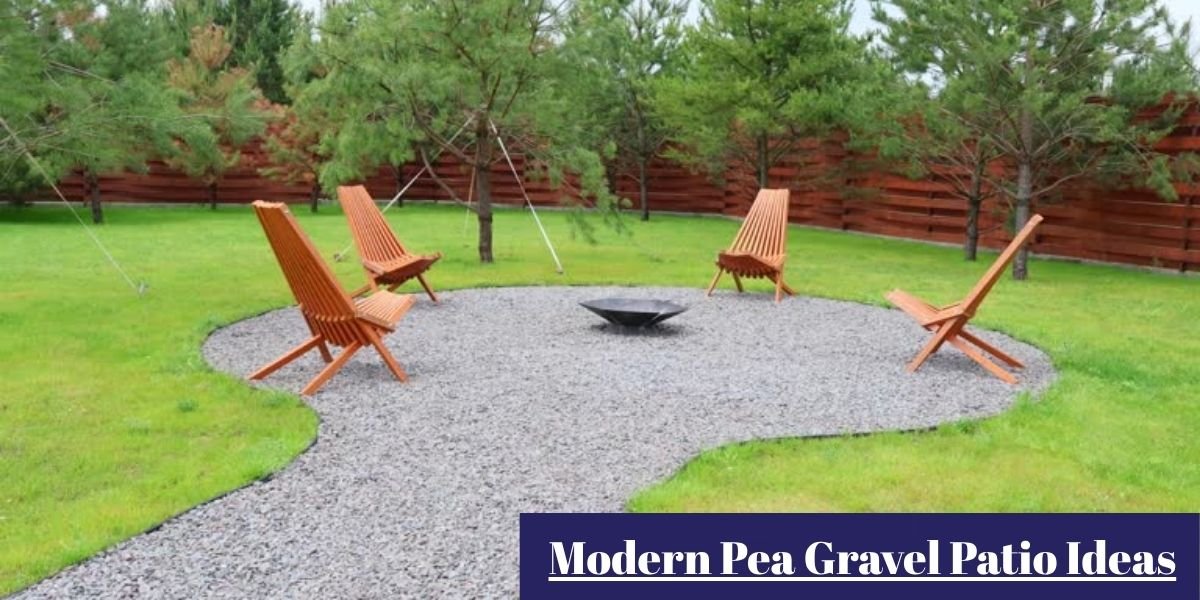
Pea gravel earns its place in contemporary outdoor design because it does something poured concrete cannot. It brings organic texture, a soft crunch underfoot, and a fluid, loose surface that reads as relaxed rather than rigid, and it does all of that at a fraction of the cost of a paved patio. In 2026, a professionally installed pea gravel patio runs roughly two to five dollars per square foot, so a typical 200-square-foot space usually lands between $400 and $1,000. Poured concrete costs about eight to fifteen dollars per square foot installed, and concrete pavers ten to twenty-five dollars, which is why designers keep returning to gravel when the budget has to stretch across a larger footprint.
The catch, and the thing that separates a designed patio from a pile of dumped stone, is that loose gravel only looks intentional when it is contained and engineered. Modern landscape design treats pea gravel as a dynamic ground plane, not a shortcut. The gravel supplies the tactile background while architectural elements do the structural work: large-format pavers for stable footing, crisp steel edging for definition, streamlined furniture for function, structural plantings for softness, and overhead structures for shade. Backyard installations across the country that actually hold up over time share one habit. Nobody spreads stone over bare dirt. They build a compacted aggregate subbase, lay a separation geotextile, and lock the perimeter with a permanent edge before a single pebble goes down.
The ideas that follow are drawn from that discipline, and each one works whether you are reclaiming a narrow side yard, organizing a sprawling suburban lawn, or carving an outdoor room out of an urban courtyard.
1. Oversized Concrete Pavers Set Into Pea Gravel
Setting large-format concrete pavers into a field of rounded gravel creates a deliberate tension between two textures, one smooth and architectural, the other loose and organic.
Proportion carries this look. Pavers in the 24-by-24-inch or 30-by-30-inch range keep the surface calm, where smaller units would chop it into a busy grid. Leave a two to three-inch reveal of gravel in the joints so the two materials read as one plane, and the pavers give you a firm walking route that removes the ankle-rolling feeling of stepping across deep loose stone.
For the details to hold, each paver should sit on its own compacted bedding layer set flush with the finished gravel, not floated on top of the pebbles, so it never sinks independently. Place your dining set squarely over a cluster of these slabs, and the chair legs stay level while the surrounding gravel keeps the casual mood.
2. A Pergola-Covered Dining Patio
A cedar or powder-coated aluminum pergola turns an open stretch of gravel into a defined outdoor dining room by adding vertical scale that the flat stone plane lacks on its own.
Chair clearance is the measurement people get wrong. The gravel bed should extend at least three feet past every edge of the table so guests can slide chairs back without dropping a leg off the stone into the lawn. If the pergola is freestanding, set its posts on concrete footings poured below the local frost line rather than resting them on the gravel, which keeps the whole structure from heaving or shifting through freeze-thaw cycles.
Recessing exterior-rated linear LED strips into the underside of the beams and edging the perimeter with low-water ornamental grasses gives the zone a clear threshold, so the eye reads a distinct transition from house to garden.
3. A Fire Pit With a Hardscape Center
A fire feature placed straight onto loose pea gravel will always fight you, with stones shifting under the bowl, ash working into the pebbles, and seating that never quite sits level. The fix used on well-built installations is a solid core surrounded by gravel.
Pour a flush concrete circle or lay a tight paver pad six to eight feet across in the center to give a gas or wood-burning fire bowl a stable, non-combustible foundation. Keep any fire feature at least ten feet from the house and other combustibles, and if you are running a gas bowl, plan the line before the base goes in.
Ring that solid core with a band of pea gravel roughly four feet wide. That loose apron doubles as a circulation path and an ember-tolerant buffer for built-in benches or modular seating, holding the safety clearance while keeping the whole arrangement informal.
4. A Small Side-Yard Gravel Patio
Side yards usually collapse into a strip of mud, hose bibs, and forgotten pots, but a restrained gravel layout can convert that dead linear space into a genuine retreat.
Clean geometry and a pale gray gravel bounce daylight down into the shaded canyon between two houses, where darker materials would only deepen the gloom. Compact furnishings such as a bistro set or a built-in floating bench keep the floor open and the proportions honest.
The rule that makes or breaks a side yard is circulation. Hold at least 36 inches of clear, unobstructed path down the length of the space so it functions as a comfortable walkway rather than an obstacle course you have to sidestep through.
5. A Curved Patio That Works Around Existing Landscaping
Rectangles fight mature trees, angled property lines, and rolling grade. A curved pea gravel patio lets the hardscape bend around those fixed features instead of bulldozing them.
Thin weathering steel edging, in the 1/8-inch range, is flexible enough to sweep long, smooth arcs into the design while still holding the stone in a crisp line. Cor-Ten and similar weathering steels develop a warm rust-brown patina over their first season, which reads as intentional and modern against the gravel rather than looking like a raw metal band.
Follow those curves with low-profile lounge chairs arranged along the arc, and the layout feels drawn rather than improvised.
6. Pea Gravel Framed by Native and Drought-Tolerant Planting
Strong modern landscaping never treats planting as a border tacked on at the end. Layered, drought-tolerant vegetation pushed directly into the gravel plane dissolves the line between hardscape and softscape.
Structural plants carry this best. Blue fescue, hardy in USDA zones four to eight; feather reed grass, boxwood spheres, zones five to nine; and agave in warmer regions roughly zones eight to 11) break up wide sheets of stone with form and movement. Match the palette to your climate zone rather than copying a photo from a different one, since a plant that thrives in Phoenix will sulk in Minneapolis.
To integrate them cleanly, cut planting pockets through the underlying geotextile, set the root balls into amended native soil, and mulch around each crown with the same pea gravel. The result is a low-water garden that looks continuous instead of compartmentalized.
7. Black, Wood and Natural Gravel
A tight, three-note material palette turns an ordinary gravel patio into something that looks designed, and it does so without importing expensive specialty stone.
Warm honey tones from ipe or cedar, whether in fencing, a screen, or a bench, play against matte black architectural planters and sleek dark furniture to build high-contrast depth. Ipe in particular is a dense tropical hardwood that weathers slowly and holds its structure outdoors for decades.
Set a pale tan or gray pea gravel against that dark framework, and the stone becomes a neutral canvas that reflects daylight and stays cooler than dark surfacing, a real comfort advantage across hot U.S. summers when a paved surface would radiate heat.
8. A Compact Bistro Patio Outside the Kitchen
A small gravel pad just outside the back kitchen door tends to become the most-used square footage in the entire yard, because it catches the daily traffic that a distant patio never does.
A footprint of roughly eight by ten feet holds a two-person metal bistro set comfortably, which is all a morning-coffee or wind-down-evening spot needs.
Because this transition zone takes constant foot traffic, extend the compacted subbase a little past the visible edge and lock the steel edging in hard. That keeps the gravel from creeping onto the back steps or scattering into the adjacent turf, which is exactly where a high-traffic gravel patio fails first.
9. One Gravel Patio With Separate Dining and Lounge Areas
A large backyard needs zoning, or the furniture ends up drifting across an undifferentiated sea of stone with no sense of place. A single expansive gravel patio can carry both a dining area and a lounge through layout alone.
Face a modular outdoor sectional toward a low concrete coffee table to establish the conversation zone, then set a dining table nearby on its own cluster of large-format pavers so the chairs stay stable through a long meal.
Shifts in lighting temperature, a run of low planters, and a change in furniture finish do the work of dividing the space, organizing an open plan without a single wall or permanent divider.
10. A Gravel Courtyard With an Architectural Backdrop
Small urban courtyards live or die on their vertical surfaces, which supply the privacy and visual weight that a modest floor plan cannot. A pea gravel floor set against a strong backdrop such as board-formed concrete, painted brick, or a slatted horizontal cedar screen reads as a fully realized outdoor room.
Hold the palette to two or three primary textures. Restraint is what keeps a tight courtyard feeling open, letting the daily play of light and shadow across the stone become the main event.
11. A Patio Built Around a Mature Tree
An established shade tree is worth designing around rather than removing, and a good redesign treats it as the sculptural anchor of the yard.
The whole challenge is protecting the tree while you build. Roots need air and water, and heavy compaction or added fill over the root zone can slowly suffocate a mature specimen. Rather than digging deep footings inside the critical root zone, lay a shallow subbase over a thin layer of coarse sand set at existing grade, keep the trunk flare completely exposed, and avoid raising the soil level against the bark. Pea gravel helps here because it is permeable, so rain still reaches the roots.
A clean circular steel ring around the base protects the bark from foot traffic and defines a cool, shaded seating sanctuary beneath the canopy.
12. A Sunken Pea Gravel Patio With Defined Edges
Dropping a patio 12 to 18 inches below the surrounding lawn creates a sheltered conversation pit that feels anchored into the landscape rather than perched on top of it.
Structural retaining walls in poured concrete, dry-stacked natural stone, or weathering steel give the surrounding soil crisp vertical containment. Whatever the material, the wall has to be built to hold the slope, not just to look the part.
Drainage is the non-negotiable detail. A sunken patio naturally collects runoff, so a hidden French drain or a subsurface gravel sump has to go in during excavation, pitched to daylight or a dry well. Skip it and the conversation pit becomes a seasonal pond after the first heavy storm.
13. A Minimalist Gravel Patio With Very Little Furniture
Minimalism works through restraint, not addition. A minimalist gravel patio leans on flawless geometry, premium metal edging, and an immaculate stone surface instead of decorative clutter.
Set a single sculptural lounge chair or a low daybed against a backdrop of architectural bamboo or ornamental grasses, and the surrounding negative space becomes the design rather than empty filler.
Holding the whole layout to one or two high-quality pieces puts the emphasis where it belongs, on proportion, craftsmanship, and the clean sound of stone underfoot.
14. A Private Gravel Lounge Screened With Plants
Carving privacy out of a dense suburban lot means building up the vertical layers around the patio perimeter, since the fence line alone rarely does it.
Columnar evergreens like Italian cypress, hardy in warmer zones seven to 10, or emerald green arborvitae, hardy in cooler zones three to eight, paired with multi-stem grasses and slatted wood screens enclose the lounge without boxing it in. Matching the evergreen to your hardiness zone matters, because the wrong choice browns out in its first hard winter or first dry summer.
That green wall does double duty, softening ambient street and neighbor noise while framing the seating, so an exposed yard becomes a secluded room.
15. A French-Inspired Gravel Courtyard
The classic European gravel garden runs on warm, pale limestone or golden self-binding gravel, timeworn terra cotta pots, wrought-iron seating, and aromatic herbs such as lavender, zones five to nine, and rosemary.
The look prizes relaxed elegance over rigid symmetry. Let creeping thyme, zones four to nine, seed itself along the gravel edges to blur the seam between stone and planting, and the courtyard settles into the kind of unforced, weathered sophistication that a brand-new install usually cannot fake.
16. A Budget Patio Built Around One Standout Feature
With a limited renovation budget, spreading the money thin across several modest upgrades almost always disappoints. Concentrating it on one strong focal point does the opposite.
Put the budget into a single substantial piece, an oversized monolithic dining table, a custom steel pergola, or a striking architectural fire bowl, and that object sets the tone for the entire yard.
Then surround it with straightforward, professionally spread pea gravel and simple metal edging. Because the gravel and edge are inexpensive per square foot, most of the visible impact comes from the one feature you actually invested in.
17. A Simple Rectangular Patio With Excellent Proportions
The most reliable layout is usually the plainest one. A clean rectangular gravel patio beats a wandering, over-articulated shape almost every time, provided its dimensions are right.
Working to classic proportions, roughly a 3-to-4 or 2-to-3 ratio of width to length, gives the space a natural sense of balance that no amount of decoration can rescue if the footprint is off.
Crisp steel edging, an even layer of uniform 3/8-inch stone, and four matching chairs around a central table are enough. Getting those fundamentals precise consistently outperforms elaborate geometry.
The Edge That Keeps Pea Gravel Looking Like a Patio
Pea gravel is made of naturally tumbled, rounded stones, and rounded stones want to travel under foot traffic, mower wheels, and heavy rain. Without a rigid perimeter, a sharp gravel patio degrades into pebbles scattered across the lawn and beds within a season, which is why the edge is not a finishing touch but part of the structure.
Steel edging is the modern default, a razor-thin line, usually 1/8 inch or heavier, in aluminum or weathering steel, that all but disappears and bends easily for curves. Stone or brick borders bring visual weight and a traditional contrast, and their mass holds a deep gravel bed firmly in place. Poured concrete curbs are the permanent option for high-traffic residential courtyards or commercial settings, where nothing else will stay put. Landscape timbers suit rustic or raised borders, though wood eventually rots and needs replacing in a way steel and stone do not.
Whatever you choose, the edge has to stand proud enough to contain a two to three-inch depth of gravel, and steel should be staked roughly every three feet so it holds its line. Deciding the perimeter before you order bulk stone is what keeps the gravel where it belongs and the architectural lines clean year-round.
What Goes Under Pea Gravel
Spreading gravel straight onto bare dirt guarantees weeds, muddy sinkholes, and furniture that shifts within a single season. A patio that lasts is built on a proper subbase, not on soil.
The sequence is straightforward. Excavate the topsoil to a depth of four to six inches, depending on your native soil and the loads the patio will carry, then compact the exposed subgrade with a mechanical plate compactor until it is firm and level. Roll a woven separation geotextile over that subgrade so the base cannot pump down into the soil and weeds cannot push up through it. Next, lay two to four inches of dense-graded crushed aggregate, the material sold regionally as Item 4 in the Northeast, Crusher Run in the Southeast, or road base and Class 5 elsewhere, and compact it in thin lifts rather than all at once. Pitch the whole assembly at a gentle one to two percent slope, about a quarter inch per foot, away from the house so water drains instead of pooling. Only then does the two to three-inch finished layer of pea gravel go on top.
One professional upgrade is worth knowing about. A geocell confinement grid, a honeycomb panel laid before the gravel and filled with stone, locks the pebbles into cells so the surface stays firm and furniture stays level. It costs more up front but solves the single most common complaint about gravel patios, and it is what many installers now reach for under dining zones.
Pea Gravel or Crushed Stone?
The choice between rounded river gravel and angular crushed rock decides how the patio feels underfoot and how well furniture behaves on it.
Pea gravel has smooth, rounded faces, nominally around 3/8 inch, that feel gentle underfoot and read as soft and casual. Because the stones are round, they never truly interlock, so they shift and roll slightly under heavy traffic and narrow furniture legs. Crushed stone, and its close relative decomposed granite, have sharp angular faces that key together when compacted, producing a firm surface that resists movement and handles wheelchairs and carts far better. The trade-off is that crushed stone loses the smooth, tactile appeal that draws people to pea gravel in the first place.
In practice, homeowners who prioritize barefoot comfort and a relaxed look choose pea gravel, while those who need maximum stability under furniture or wheels lean toward angular stone.
Making Furniture Work on Loose Gravel
The frustration the glossy magazine photos never show is how furniture actually behaves on loose stone. Thin bistro-chair legs and narrow table feet sink, tilt, and rock as rounded gravel gives way beneath them.
The straightforward fix is to choose furniture built for the surface, with wide sled bases, flat mounting plates, or broad wooden feet that spread the load across many stones instead of pressing between them. Where that is not enough, embed flat paver or brick pads flush into the gravel field beneath dining tables and lounge groupings, which gives you the warmth of stone across the patio and a genuinely stable footing exactly where the furniture stands. A geocell grid under the seating zone accomplishes the same thing invisibly.
How Deep Should Pea Gravel Be?
Surface depth is what makes a gravel patio comfortable to walk on. Too thin and the geotextile shows through in patchy, uneven spots. Too deep and every step sinks, so crossing the patio feels like slogging across a beach.
The working standard for a finished pea gravel surface is two to three inches of stone over a properly compacted base. That depth fully hides the fabric while still letting shoes settle against the firm subbase underneath, which is what gives you smooth, sure-footed circulation rather than a shifting slog.
Where Pea Gravel Makes Sense and Where It Doesn’t
Matching the material to the job is what prevents an expensive regret, because pea gravel is excellent in some settings and genuinely wrong in others.
It shines in casual dining and conversation spaces, enclosed courtyards and garden rooms, low-to-moderate traffic areas, and budget-driven backyard transformations where every square foot has to stay affordable. It also performs well as a permeable surface, letting stormwater soak in rather than sheet off, which some municipalities count in favor of runoff requirements.
It struggles anywhere stability is essential. Accessible routes that need to carry wheelchairs, walkers, or strollers call for solid pavers or poured concrete instead. Zones with constant wheeled traffic from wheelbarrows and heavy carts scatter the stone, steep slopes wash it out in hard storms, and anyone who simply dislikes the feel of shifting stone underfoot will not learn to love it. Recognizing those limits before you order material is the difference between a patio you enjoy and one you rebuild.
Keeping a Pea Gravel Patio Looking Good
Pea gravel is genuinely low-maintenance, but calling it zero-maintenance sets people up to be disappointed. Keeping the clean, modern look takes a light seasonal routine, not a heavy one.
Every few weeks, run a stiff tine rake to pull stray pebbles back off the lawn and beds and level any traffic-worn hollows. Clear fallen leaves and twigs with a leaf blower on a low setting or a fine mesh net, since organic debris left to break down is what eventually feeds surface weeds even over a good fabric. Pull the occasional wind-sown weed by hand, or apply a targeted organic pre-emergent before seeds germinate. Every two to three years, top off the surface with a thin layer of fresh stone to replace what has settled or migrated. That short list is all it takes to keep the patio looking as designed rather than neglected.
Is A Modern Pea Gravel Patio Right for Your Backyard?
A modern pea gravel patio works when the stone is treated as one part of a designed system rather than the whole foundation. Pavers supply stable footing, crisp steel edging supplies definition, streamlined furniture creates usable zones, structural plantings soften the hard boundaries, and an overhead structure delivers the shade a flat gravel plane cannot.
Built on a compacted crushed-stone subbase with a proper separation geotextile and a permanent edge, pea gravel gives you an affordable, tactile, and genuinely beautiful surface for a small fraction of what pavers or concrete would cost. Engineered that way, it earns its place in an American backyard. Dumped on bare dirt, it never will.
FAQ
Is pea gravel good for a modern patio?
Yes. Pea gravel brings organic texture and strong budget efficiency to contemporary spaces, especially when it is paired with clean edging, large-format pavers, and structured planting. At roughly two to five dollars per square foot installed, it also frees up budget for the architectural elements that make the design work.
How deep should pea gravel be for a patio?
The finished walking surface should be two to three inches of stone over a properly compacted crushed-stone subbase. That depth covers the fabric completely while keeping the surface firm enough to walk on comfortably.
Does pea gravel need a base?
Yes. Laid over bare soil, pea gravel produces weeds, mud, and unstable furniture within a season. A durable patio needs an excavated and compacted subgrade, a compacted layer of dense-graded aggregate such as Crusher Run or Item 4, and a separation geotextile before the gravel goes down.
How do you keep pea gravel from spreading?
Contain it with a rigid perimeter. Thin 1/8-inch steel edging, poured concrete curbs, or substantial stone and brick borders all stop the rounded stones from migrating into lawns and beds, provided the edge stands proud enough to hold the full gravel depth.
Can you put patio furniture on pea gravel?
Yes, though narrow legs tend to sink or wobble. Choose furniture with wide sled bases or flat feet, embed flush paver pads beneath dining sets and lounge groupings, or install a geocell confinement grid under the seating zone to keep everything level.
Is pea gravel better than crushed stone?
Neither is universally better. Pea gravel is smoother, more comfortable underfoot, and softer looking, while angular crushed stone locks together for a firmer, more stable surface that handles furniture and wheeled traffic better. The right pick depends on whether you prioritize comfort or stability.
Can you use pea gravel around a fire pit?
Yes, as long as the fire feature sits on a solid hardscape center such as a poured concrete pad or a tight stone circle set into the gravel. Keep the pit at least ten feet from the house and other combustibles, and use the surrounding gravel band as a safe, level circulation apron.
How do you keep weeds out of pea gravel?
Lay a heavy-duty woven geotextile beneath the base during construction to block most germination from below. Because leaves and dust still build a thin layer of organic debris on the surface over time, follow up with routine hand-pulling or an organic pre-emergent to catch what tries to root on top.
Is pea gravel suitable for an accessible patio?
No. The loose, shifting nature of rounded stone makes it hard to cross with a wheelchair, walker, or stroller. Accessible surfaces need solid unit pavers or poured concrete, or at minimum a tightly compacted angular material like decomposed granite rather than pea gravel.