A cold, flat room warms up fast once you understand how light, height, and material behave together. Very little of that depends on the budget. Almost all of it comes down to putting the right candle shapes in the right places, at a scale that suits the furniture around them. Small rooms want one clear focal point. Large rooms want clusters, because a single flame simply dissolves across that much open surface.
Candles are more common in American homes than most people assume. According to the National Candle Association, they are used in roughly 7 out of 10 U.S. households, and 9 out of 10 candle users light them specifically to make a room feel comfortable. The same research tracks where those candles end up: the living room leads at 42%, followed by the kitchen at 18% and the bedroom at 13%. If you have been decorating mainly around the sofa, then you are in good company, but three other rooms are sitting untouched.
Start With Format, Not Quantity
Choosing the right candle type for each surface is what separates an arrangement that looks planned from one that looks accumulated.
- Pillar candles carry enough visual weight to anchor large surfaces like fireplace hearths, coffee tables, and wide console tops.
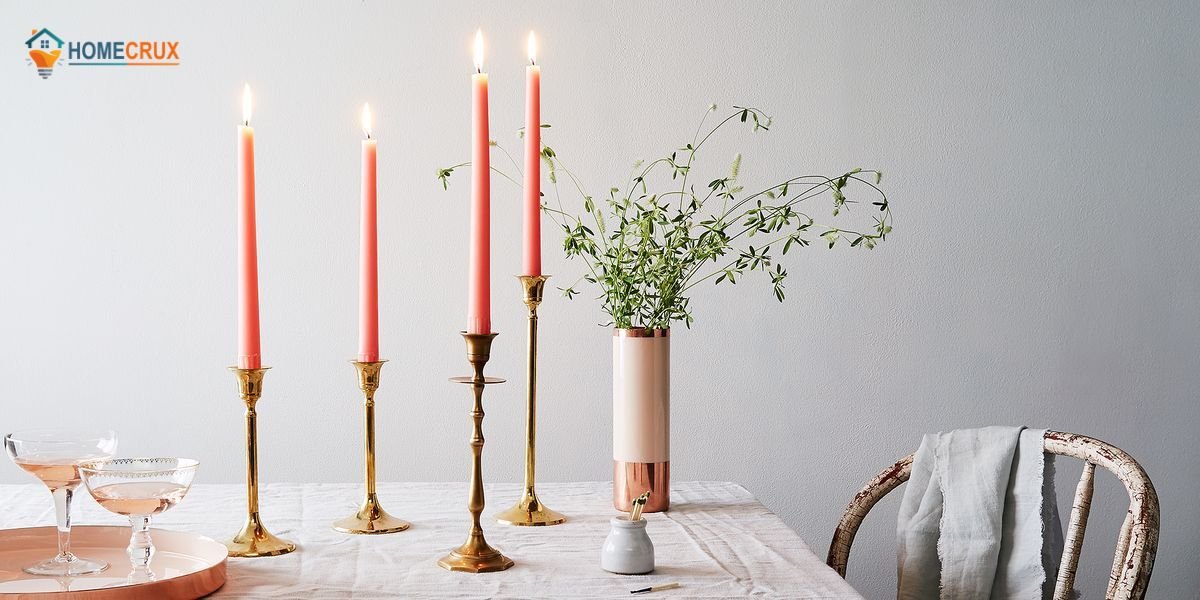
- Taper candles add height and formality to dining tables and sideboards without walling off the view across the room.
- Votive candles slip into shelf cutouts, bathroom counters, and clustered tray setups. Most run 8 to 10 hours.
- Tea lights belong in glass hurricanes, floating water arrangements, and small accent holders. Built for roughly 4 hours, they suit a single evening rather than a long one, which explains why they remain the most frequently purchased candle type in the U.S., with votives and container candles close behind.
- Jar candles hold their own wax and throw the most scent, so they earn their place in busy spots like kitchens and desks. They also happen to be the format most people reach for when they want fragrance rather than a silhouette.
Worth knowing before you shop: fragrance drives the purchase for about three-quarters of candle buyers, ahead of color, cost, and shape. With more than 10,000 scents on the U.S. market and 1,000 to 2,000 varieties in a single major manufacturer line, narrowing by room is more useful than browsing by brand.
Scale, Color, and Scent
Room size sets the ceiling on how many candles a space can hold before it tips into clutter. A 2-inch votive disappears on an 8-foot dining table; three 6-inch pillars swallow a small nightstand whole. Scale matters more than count, every time.
Color should answer to what the room already contains. Matching wax to wall paint tends to erase the display altogether. Pull your tones from accent pillows, rugs, or artwork instead, so the candles connect to something. Cream, warm beige, and soft white carry across every season and every room, which is why decorators keep returning to them.
Fragrance deserves the same deliberate treatment. Scented candles belong in living rooms, entryways, and bathrooms. Dining tables want unscented wax, since a strong fragrance competes with the food in front of your guests. Scent zoning, assigning one fragrance family per room the way you would assign a paint color, keeps the transitions clean as people move through the house.
Height is the last variable, and the one most people skip. When every candle sits at the same level, the group reads as a row rather than a composition. Put a 4-inch, a 6-inch, and an 8-inch candle together and the eye climbs while the light spreads. One rule belongs in every cluster: the National Candle Association advises keeping candles at least 3 inches apart so their heat does not soften the neighbors. Conveniently, that gap also looks better than wax jammed shoulder to shoulder.
Living Room Candle Decoration Ideas
1. Build a Coffee Table Centerpiece on a Tray
Candles placed straight onto a coffee table almost always look scattered. A low tray in wood, marble, or metal gathers the pieces into a single unit, and gives you a handle, so the whole arrangement lifts away in one motion when the table is needed for something else.
Set two pillars of different heights on one side. Balance the other with a short stack of hardcover books or a shallow bowl. Leave the center open, or drop in one textured object like a ceramic link or a piece of driftwood.
2. Fill an Empty Fireplace With Pillars
An unused hearth reads as a dark hole for most of the year. Filling the firebox returns the focal point to the room without heating the house.
Arrange 7 to 10 pillars of mixed heights and diameters on a fire-safe stone or metal plate inside the opening. Push the tall ones toward the back and sides; keep the short ones along the front edge. Once lit, the flames overlap and reflect off the brick, which is what produces that layered depth. Hold the 3-inch spacing here as well, or the candles in the middle will slump into each other.
3. Layer Candles on Open Shelves
Open shelving has to function and look composed at the same time. Candles soften hardwood and metal framing without consuming storage.
Tuck a pair of votives beside a stack of upright books. On the shelf above, stand a taper in a slim brass holder next to a trailing pothos. The leaves interrupt the hard line of the metal, and the shelf reads balanced rather than staged.
4. Style the Entry Console
The entry console sets the tone for the whole house, so a display that works here pays off before anyone takes their coat off.
Center a tall mirror or framed piece above the console. Place a large glass hurricane on one side for height, then balance the other end with a shallow key tray and a vessel of fresh or dried greenery. At night, the mirror doubles the flame, and the light with it.
5. Break Up Built-In Bookcases
Packed shelves get heavy quickly. Candles open pockets of warm light inside dense cabinetry.
Clear one center segment and set three unscented pillars on a stone coaster. Leave at least 12 inches of clear air above the flames; that is the clearance both the NFPA (National Fire Protection Association) and the National Candle Association recommend between a flame and anything combustible. In a tight nook where you cannot achieve it, switch to quality LED flameless candles and lose nothing but the risk.
Dining Room Candle Decoration Ideas
6. Design a Centerpiece That Survives the Whole Year
A dining centerpiece has to work on an ordinary Tuesday and on Christmas Eve. Tall, heavy arrangements fail both, because guests end up leaning around them to talk.
Build long and low instead. Use a narrow wooden trough or a runner as the base, then space three glass votive holders or short jar candles about 6 inches apart along it. Weave preserved eucalyptus or a fabric garland around the bases to hide the edges and settle the whole thing onto the table.
7. Mix Your Holders Rather Than Matching Them
Perfectly matched holders make a table look like a catalog page. Mixed materials give it character.
Combine two vintage brass candlesticks with a black iron holder and a clear glass stem. The detail that keeps the mix from reading as accidental is uniform wax: the same shade of off-white taper in every one.
8. Use Tall Tapers for Formal Dinners
Tapers deliver drama without bulk. Their narrow profile lifts the flame above the plates without building a wall between guests.
Standard 10-inch and 12-inch tapers fit most sockets. Choose non-drip paraffin or beeswax so hot wax never reaches your linens. Beeswax costs more but burns slower and cleaner, which earns its keep over a long dinner. Space the holders evenly down the center line, leaving gaps for serving dishes.
9. Work the Sideboard or Buffet
The sideboard is the best display surface in a dining room, simply because plates and cutlery never land on it.
Mount a pair of matching sconces on the wall above, or set three staggered taper holders at one end of the top. Anchor the far end with a heavy ceramic pitcher or a tiered tray. That uneven layout reads more relaxed than a perfectly centered one.
Bedroom Candle Decoration Ideas
10. Keep Nightstands Uncrowded
Nightstands are small and already carrying a lamp, a phone, and a glass of water. Piling on decor only creates morning frustration.
Choose one small jar candle or a compact glass votive. Set it on a stack of two books beside a small dish for rings and earrings. The candle stays contained; the rest of the surface stays usable.
11. Add Soft Light to a Dresser
A wide dresser gives you room for a display that genuinely supports the evening wind-down.
Lay a wide, low tray on top. Group two scented candles in calm notes like lavender, sandalwood, or amber next to a small ceramic vase. Push the arrangement to one side so the center stays free for daily use.
12. Light a Reading Corner Properly
An armchair and a side table already make a decent reading nook. Candlelight finishes it.
Use a heavy-bottomed glass holder on the table beside the chair. A thick hurricane shields the flame from drafts thrown off by foot traffic or a nearby window, so the flame stays still rather than guttering. That matters beyond looks: a flame that flickers repeatedly is burning badly and should be put out, allowed to cool, and relit only after the wick is trimmed and the draft dealt with.
13. Go Flameless Around Fabric
Bedrooms are full of soft material like curtains, throws, upholstered headboards, and bed skirts. This is the room where fire safety stops being a footnote.
The data is blunt about it. NFPA figures show 2 of every 5 candle fire deaths occur in the bedroom, and 16% of home candle fires involve candles left unattended or abandoned. Falling asleep beside a lit candle is precisely how that unfolds.
Use quality LED candles with moving-wick effects and real wax shells on nightstands and windowsills. Set the built-in timers to run 3 or 4 hours each evening and shut off well before you sleep.
Bathroom Candle Decoration Ideas
14. Turn the Tub Into a Spa Corner
Warm light around a bathtub transforms a plain bathroom faster than almost any other change you can make in an afternoon.
Lay a wooden caddy across the tub ledges and set a small scented jar candle on it, alongside a natural sponge and a jar of bath salts. If your tub has a wide tiled ledge, line three short pillars along the corner wall, well clear of hanging towels.
15. Group Small Candles on Floating Shelves
Floating shelves above the toilet or vanity are the most valuable vertical space in a small bathroom.
Cluster two small votives in frosted glass cups at one end. Frosted glass diffuses the light instead of leaving a hard bright point, which reads far gentler in a tiled room. Pair them with a rolled hand towel or a small potted succulent.
16. Bring In Natural Materials
Bathrooms are dominated by cold, hard surfaces like porcelain, chrome, glass, and tile. Organic texture beside a flame takes the edge off all of it.
Set candles on slate, carved teak, or woven bamboo coasters. The contrast between rough natural grain and smooth glass or wax is what makes the room feel designed rather than assembled.
Kitchen Candle Decoration Ideas
17. Style the Island Around One Strong Piece
The island hosts prep, homework, and conversation in turn, so anything decorative on it has to move quickly.
Start with a round marble or concrete trivet. Put one wide three-wick candle in the center and ring it with a strand of wooden beads or a small stone bowl. A large three-wick reads as a single sculptural object rather than clutter, and the heavy base lets you slide the whole group aside in one push.
18. Warm Up Open Shelving
Open kitchen shelves hold everyday dishes, and a candle tucked among them adds warmth to an otherwise practical display.
Slot short, wide jar candles between stacks of white bowls or glass mugs. Favor clean scents like citrus, basil, or bergamot, which cut through the smell of last night’s cooking instead of layering on top of it.
19. Change the Breakfast Table With the Season
A small nook table needs only simple styling that shifts a few times a year.
Set a clear glass hurricane in the middle and ring the base seasonally: potted rosemary in spring, a bowl of apples in autumn, short pine branches in winter. Five minutes of work, and the table looks current again.
Outdoor Candle Decoration Ideas
Outdoor styling is more common than it sounds. Roughly 1 in 5 women report using candles to decorate a yard, patio, or other exterior space, according to the National Candle Association.
20. Lantern Groups for Patios and Balconies
Outdoor seating needs light that survives a breeze and still feels comfortable to sit under.
Metal and glass lanterns give a flame real wind protection. Group three oversized lanterns of different heights on the patio floor beside the seating. Use outdoor-rated flameless pillars inside them, since real wax softens and slumps in direct daytime sun.
21. Light an Outdoor Table From the Surface
Eating outside improves considerably with low, warm light right on the table.
Run a line of heavy-bottomed glass votive holders down the length of it. The thick bases hold steady in a gust, and the low profile keeps the light on the food rather than in everyone’s eyes.
22. Line Garden Paths With Lanterns
Lit pathways make a yard safer to cross and far more inviting to arrive at.
Place heavy glass or metal lanterns every 3 to 4 feet along stone paths or patio edges, staked or set on flat paving stones so they sit level. LED candles with twilight sensors are the practical choice here, since nobody wants to walk the length of a garden with a lighter.
Seasonal Candle Decoration Ideas
23. Rotate Colors and Natural Elements Through the Year
Swapping displays seasonally keeps a home feeling current without buying entire new decor sets. It is also how the market itself moves: about 35% of U.S. candle sales occur during the Christmas and holiday season, which is why seasonal shelves fill up so early.
- Spring calls for pale shades like soft green, blush pink, and light yellow, with fresh floral stems and clear glass holders.
- Summer suits plain white candles surrounded by coastal pieces like smooth river rocks, beach glass, and pale driftwood.
- Autumn belongs to amber, terracotta, and deep orange wax set among dried oak leaves, small gourds, and cinnamon sticks.
- Winter is the season for deep evergreen or crimson with pinecones, cedar sprigs, and polished brass.
Winter also carries the most risk. NFPA data shows candle fires peak in December, with January close behind, so winter displays deserve the strictest attention to clearance and supervision, particularly around trees, garlands, and paper decorations.
Details That Make a Display Look Professionally Styled
24. Pair Candles With Contrasting Objects
A single candle on a large surface looks stranded. Decorators solve this by grouping wax with materials that contrast against it rather than repeat it.
- Glass hurricanes reflect the flame and roughly double the light you get in a dark corner.
- Woven seagrass trays soften glass and ceramic with something organic.
- Marble slabs give a cool, polished base that makes a plain pillar look deliberate.
- Stacked books lift small candles to the height of the larger pieces around them.
- Small ceramic vases holding a single stem interrupt a line of identical wax shapes.
25. Vary Height, Shape, and Texture
Identical items in a row read as monotonous. Balance comes from contrast that pulls the eye across the group.
Work in the rule of three. Set a tall thin taper beside a medium wide pillar, then finish with a short round votive. That mix of scales forms a triangle, and the triangle is the shape the eye follows most naturally. Keep 3 inches between pieces so the group breathes and the wax stays intact.
Mistakes That Make Displays Look Cluttered
Small errors are usually what separate a styled surface from a busy one.
- Overcrowding: Too many candles on one table creates visual noise and raises the fire risk at the same time. Leave clear space around every base.
- Matching everything: Identical holders at identical heights in identical colors reads as a store shelf, not a home.
- Ignoring scale: Small votives on a huge dining table, or an oversized hurricane on a tiny nightstand, throws the entire room off.
- Blocking sightlines: Tall arrangements down the middle of a dining table force guests to lean around them.
- Clashing colors: Several contrasting wax tones in one small cluster pull attention away from the room itself.
- Skipping the first burn: This one stays invisible until it becomes permanent. A container candle should burn until the melted wax reaches the edge of the jar, roughly 1 hour for every inch of diameter. Cut it short, and the candle forms a memory ring, then tunnels down the middle for the rest of its life, leaving you with a display piece that has a sunken hole in it.
Placement Principles for a Balanced Home
Where you put candles determines which parts of a room people notice.
- Use them to mark genuine focal points like fireplace mantels, entry tables, and built-in shelf cutouts.
- Odd-numbered groups of 3 or 5 feel more relaxed than pairs.
- Symmetry suits formal surfaces like a mantel or a buffet where two matching holders flank a piece of art.
- Asymmetry suits casual ones like coffee tables, nightstands, and kitchen islands.
Then maintain them. Trim the wick to 1/4 inch before every burn and clear the wax pool of trimmings and matches, since debris feeds the flame more fuel than the candle was designed to handle. Beyond keeping the flame low and the glass clean, the National Candle Association notes that regular trimming can extend a candle’s life by up to 25%, so the pieces you style with last longer between replacements.
Candle Safety While Decorating
A display is only as good as it is safe. The NFPA reports that U.S. fire departments respond to an average of 7,610 home structure fires started by candles each year, causing roughly 81 deaths, 677 injuries, and $278 million in direct property damage. That works out to about 21 candle fires a day, and three out of five begin the same way: something combustible sitting too close to the flame.
- Keep open flames at least 12 inches from curtains, upholstery, paper, and hanging decorations.
- Keep at least 3 inches between candles in a group so they do not soften each other.
- Burn candles only on stable, heat-resistant surfaces like stone, metal, ceramic, or thick glass, and away from vents, fans, and open windows.
- Keep lit candles out of reach of children and pets, and off surfaces they can knock over.
- Never leave a flame burning in an empty room or while you sleep. Roughly three-quarters of candle users burn for 4 hours or less per sitting, which is also the maximum most manufacturers recommend; extinguish after 4 hours and let the candle cool for about 2 hours before relighting.
- Stop burning a pillar when about 2 inches of wax remain, or a container candle when about 1/2 inch remains, so the holder never overheats.
- Put out any candle that flickers repeatedly, smokes, or throws a flame taller than roughly 1 and 1/4 inches. Let it cool, trim the wick, check for drafts, then relight.
- Use a snuffer or wick dipper rather than blowing candles out; it avoids splattered wax, smoke, and an uneven burn, and never moves a candle while it is lit or the wax is still liquid.
- Look for ASTM F2417 on candle labels and ASTM F2058 on holders. Those are the U.S. fire safety and performance standards for each.
- Swap real candles for good LED versions in high-traffic zones, children’s bedrooms, and tight shelf spaces.
Style the room for the light. Then set it up so you never have to think about the risk again.