
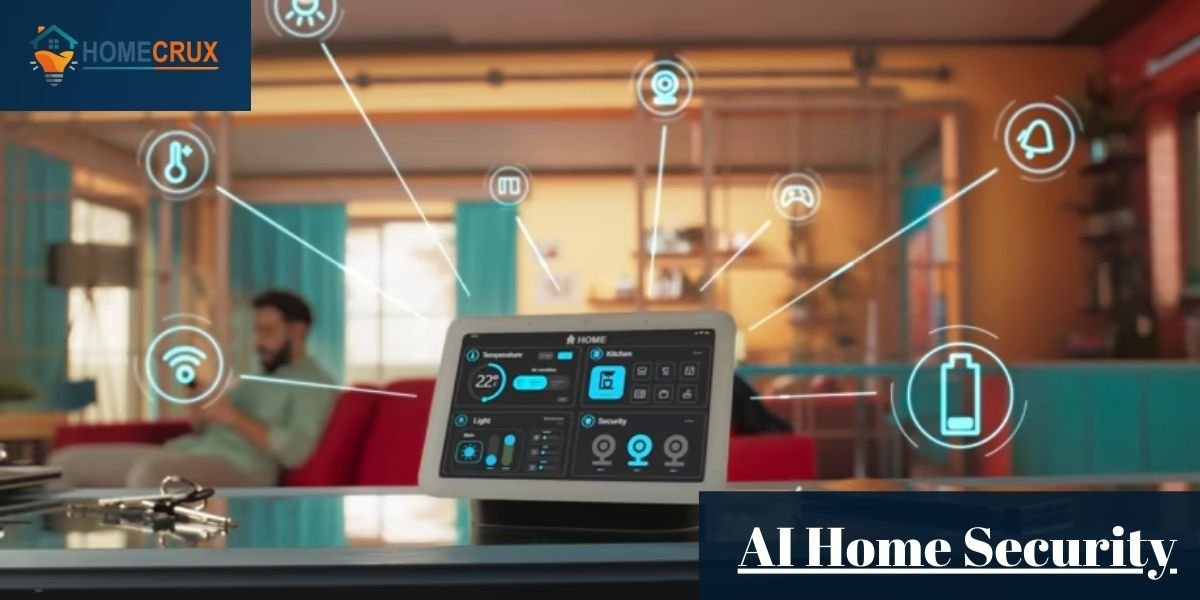
A successful home security strategy in 2026 is no longer about the number of cameras you install, but about the intelligence of the neural network managing them.
While traditional systems rely on simple motion triggers that lead to alert fatigue, modern AI home security utilizes predictive analytics to neutralize threats before they reach your front door. Advanced machine learning and computer vision allow the system to differentiate between a neighbor’s cat, a swaying tree branch, and a genuine physical threat.
According to 2026 industry trends, the global smart home security market has surged to over $46 billion, driven by a 90% reduction in false alarms compared to previous-generation hardware.
This guide provides a technical roadmap for the modern security ecosystem, incorporating the latest advancements in Edge AI and autonomous monitoring.
What Is AI Home Security?
An ai based security system is a network of hardware and software that analyzes environmental data in real-time to identify and mitigate risks. Unlike traditional systems that simply record footage to a hard drive, an AI system interprets what it sees. It classifies objects, recognizes familiar faces, and understands the context of a scene.
Based on the visual and sensory data these solutions collect, they can learn and adapt to the specific normal of your property.
For example: If a person enters your driveway at 3:00 PM, the system may log it as a routine event. However, if an unknown individual lingers near a window at 3:00 AM, the system triggers a high-priority alert.
This level of intelligence ensures that users are only notified of events that warrant immediate attention.
Traditional security was a witness, while AI security is a sentry. The goal is to move from forensic evidence (watching what happened) to real-time intervention (stopping it while it happens).
The Evolution of Home Security Technology
The transition to AI has been a decades-long progression from mechanical alarms to intelligent neural networks. Understanding this history is vital for recognizing the value of modern ai security cameras.
Traditional Home Security Systems
In the late 20th century, security relied on magnetic contact sensors and basic CCTV cameras. These systems were reactive; an alarm only sounded once a door was opened or a window was broken. Footage was recorded onto magnetic tapes (VCRs) or early digital recorders, requiring hours of manual review to find a specific event.
Smart Home Security
The early 2010s introduced Smart security, characterized by internet connectivity and mobile apps. While these systems allowed for remote viewing and cloud storage, they were plagued by false positives. Any change in pixels, such as a passing car headlight would trigger a notification, leading to the “alert fatigue” mentioned earlier.
AI-Powered Security Systems
Modern AI security system technology marks the third generation. By integrating deep learning, these systems have moved beyond pixel-change detection to object recognition. They can now identify the specific signature of a human or a vehicle, reducing false alarms by over 90% in most residential environments.
How Artificial Intelligence Works in Home Security
The brain of an ai camera system relies on three core pillars of computer science to function effectively.
Computer Vision
This is the ability of a camera to see and categorize elements within a video frame. The software breaks down the image into mathematical patterns to identify the edges, shapes, and movements that define an object.
Machine Learning
AI systems are trained on massive datasets containing millions of images of people, animals, and vehicles. Through this training, the system improves its detection accuracy over time, eventually learning to recognize the specific people who live in the home versus strangers.
Edge AI vs Cloud AI
The location of the processing is a critical technical distinction. Cloud AI sends video data to a remote server for analysis, which offers high processing power but can suffer from latency. Edge AI performs the analysis locally on the device’s internal processor. Edge AI is often preferred for privacy and speed, as it does not require a constant internet connection to identify a threat.
AI Home Security Devices (Not Just Cameras)
While many focus solely on the ai camera, a true security ecosystem involves several interconnected devices.
- AI Security Cameras: These use LPR (License Plate Recognition) to log every vehicle that enters your perimeter.
- AI Video Doorbells: These recognize frequent visitors and can even announce a delivery person by name. They are specifically tuned to detect package “drop-off” and “pick-up” events to prevent theft.
- AI Motion Sensors: These use radar or heat signatures to map the “intent” of movement. They can distinguish between a person walking a dog and someone “loitering” in a specific zone for too long.
- Smart Locks with Facial Recognition: These eliminate the need for keys or codes by using biometric data to unlock the door as the homeowner approaches.
- Security Robots: Devices like the Amazon Astro act as autonomous mobile sentries. They patrol the interior, using AI and SLAM (Simultaneous Localization and Mapping) to navigate obstacles and investigate unusual noises in rooms without fixed cameras.
Video Doorbells now feature Search Party logic. As Jamie Siminoff, the founder and Chief Inventor of Ring, recently noted, AI allows these devices to act as a neighborhood network to locate lost pets or identify suspicious vehicles across multiple properties.
Key Features of AI Home Security Systems
The primary advantage of an ai home security system lies in its specific analytical capabilities.
- Facial Recognition: Deduces if a person of interest or an unknown intruder has appeared on the scene.
- Object Detection: Accurately classifies vehicles, animals, and humans to eliminate irrelevant alerts.
- Behavior Analysis: Identifies unusual speeds or patterns, such as someone climbing a fence rather than using the gate.
- License Plate Recognition (LPR): Detects and logs the plates of vehicles entering the property, which is vital for forensic investigations.
- Smart Alerts: Consolidates multiple data points into a single, descriptive notification (e.g., Unknown vehicle detected in driveway).
Companies Leading the AI Home Security Industry
Selecting the right provider requires looking at the “software ecosystem” behind the hardware.
Google (Nest)
Google’s Nest ecosystem leverages the company’s vast AI research to provide some of the most accurate facial recognition on the market. Their cameras integrate deeply with Google Assistant for a seamless smart home experience.
Amazon (Ring)
Ring has evolved from a simple doorbell company into a comprehensive AI provider. Their “Pro” line features 3D Motion Detection and bird’s-eye view mapping, powered by Amazon’s cloud infrastructure.
Arlo Technologies
Arlo is recognized for its high-resolution AI security cameras and advanced “Arlo Secure” AI subscriptions, which offer robust object filtering and emergency response integrations.
Verkada
Typically a leader in the commercial space, Verkada’s cloud-based approach is setting the standard for residential estate security, combining high-end sensors with powerful enterprise-grade analytics.
Knightscope
Knightscope is at the forefront of the autonomous security movement, building robots that provide 24/7 monitoring in large-scale residential complexes and smart cities.
Real-World Uses of AI Home Security
The practical application of an ai security camera extends beyond simple surveillance.
- Intrusion Detection: Real-time tracking of an intruder allows homeowners to alert authorities before a break-in is completed.
- Package Theft Prevention: The system creates a virtual guard around delivered items, sounding a deterrent alarm if a stranger approaches the package.
- Elderly Care Monitoring: AI can detect falls or unusual periods of inactivity, alerting family members if an elderly relative requires assistance without infringing on their privacy with constant human monitoring.
Advantages of AI Home Security Systems
- 90% Reduction in False Alarms: By filtering out non-human movement.
- Active Deterrence: AI cameras can trigger built-in sirens or floodlights the moment a person enters a restricted zone at night.
- Forensic Search: You can search your history for specific queries like show me every person wearing a red jacket who entered the porch yesterday.
Risks and Privacy Concerns
The adoption of AI security system technology brings significant questions regarding data ethics. The primary concern involves data collection and the storage of biometric (facial) data. If this data is stored in the cloud, it is potentially vulnerable to breaches.
Furthermore, the use of facial recognition in public-facing cameras can raise local regulatory concerns. It is vital for users to choose vendors that offers End-to-End Encryption (E2EE) and a physical Privacy Shutter for indoor cameras to ensure sensitive visual data remains under your exclusive control.
The Future of AI Home Security
The role of AI in security will continue to grow as systems move toward predictive security. Future models will likely use drones to provide situational awareness for large estates, investigating noises before a homeowner even wakes up.
We can also expect deeper integration with smart home logic, where the house itself responds to a threat by locking all windows and flashing exterior lights to disorient an intruder.
AI Home Security vs Traditional Security Systems
| Feature | Traditional Security | AI Home Security |
| Motion Detection | Basic (Pixel-based) | Intelligent (Object-based) |
| Alert Accuracy | Low (Frequent false alarms) | High (Context-aware) |
| Monitoring | Manual (Reviewing tapes) | Automated (Real-time analysis) |
| Connectivity | Local/Analog | Cloud/Edge Integrated |
How to Choose the Best AI Home Security System
Finding the right ai security system requires looking beyond the price tag. You must prioritize detection accuracy in varied lighting and weather conditions. Consider whether the platform scales; can you add AI doorbells and sensors later?
Most importantly, evaluate the privacy features. Look for a Privacy-First vendor that allows you to toggle facial recognition off or store your data on a local hub. A system that is powerful but unsecure is its own type of threat.
To build a high-authority system, prioritize these three technical specs:
- NPU (Neural Processing Unit) Power: Ensure the camera has dedicated hardware for AI to avoid lag.
- Interoperability: Look for Matter and Thread support so your cameras can talk to your lights and locks regardless of the brand.
- Local Storage Options: A system that forces 100% cloud storage is a long-term privacy risk and a recurring cost burden.
Closing Lines
Since the introduction of AI home security, the ability to safeguard people and property has reached an unprecedented level of precision. These systems provide more than just recorded footage, they provide situational awareness and peace of mind.
By investing in an ecosystem that understands the difference between a routine event and a genuine threat, you ensure that your home remains a sanctuary of safety in an increasingly complex world.
AI Home Security: FAQs
What is an AI home security system?
It is a network of devices that uses artificial intelligence to analyze video and sensor data to detect threats, recognize residents, and automate responses without human intervention.
How does an AI security camera work?
It uses a combination of Computer Vision to identify objects and Machine Learning to understand patterns, allowing it to ignore “noise” like wind or rain and focus on actual security events.
What is the difference between AI security cameras and traditional CCTV cameras?
AI cameras can recognize what they see (humans, cars, faces), whereas traditional CCTV only records raw footage and relies on basic, non-intelligent motion detection.
Are AI home security systems safe for privacy?
They are safe if they use Edge Processing (local analysis) and End-to-End Encryption. Always check if the manufacturer allows you to opt-out of data sharing for AI training.
What devices are included in an AI home security system?
A complete ecosystem includes ai security cameras, smart doorbells, AI-powered motion sensors, facial-recognition locks, and autonomous security robots.
Do AI security systems require internet connectivity?
While they need the internet for remote alerts, many modern systems with local AI hubs can still detect threats and record footage even during an internet outage.
Can AI security cameras recognize faces?
Yes, advanced models use facial recognition to distinguish between family members and unknown visitors, allowing for personalized alerts.
What should I look for when buying an AI home security system?
Focus on camera resolution, the specific AI detection features offered, smart home integration, and the vendor’s reputation for data privacy.